
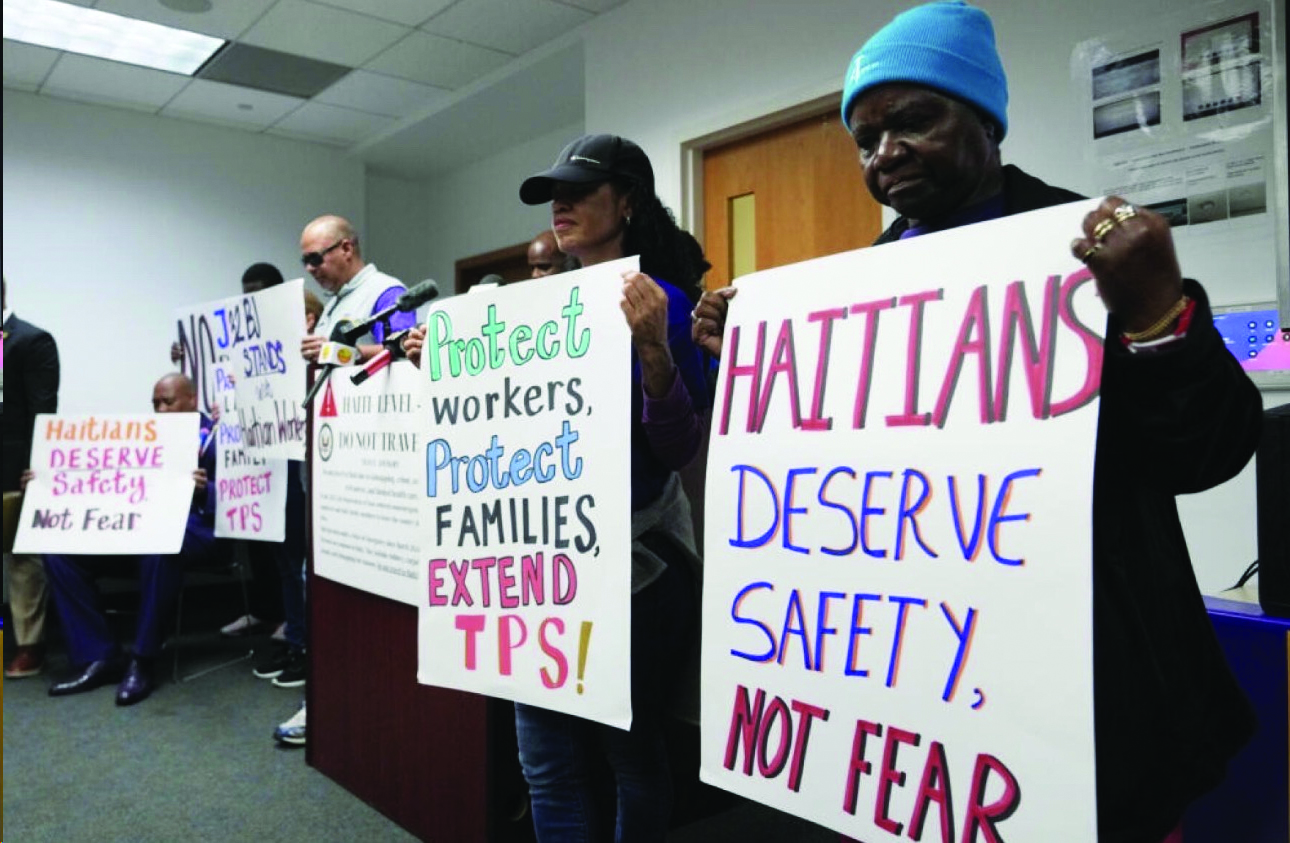
WASHINGTON, D.C. — A U.S. Supreme Court decision has dramatically altered the future of hundreds of thousands of Haitian immigrants living in the United States, clearing the way for the Trump administration to end Temporary Protected Status (TPS) for Haiti and move forward with deportation efforts.
The 6-3 ruling allows the federal government to terminate TPS protections that have enabled more than 350,000 Haitians to legally live and work in the United States while their homeland remains engulfed in political instability, gang violence, kidnappings, and humanitarian crisis. (Reuters)
For many Haitian families, the impact was immediate.
The decision means that thousands who have built lives, careers, businesses, and families in America could lose their legal work authorization and, ultimately, face deportation. Immigration advocates warn that many affected individuals also have pending asylum claims or other immigration cases that now face greater uncertainty. (Reuters)
Temporary Protected Status was created by Congress to protect nationals of countries devastated by war, natural disasters, or extraordinary conditions from being forced to return to unsafe environments. Haiti has remained on that list following the devastating 2010 earthquake, subsequent natural disasters, political assassinations, and an ongoing wave of gang violence.
The Supreme Court ruled that decisions to grant or terminate TPS largely fall within the authority of the executive branch and are not subject to broad judicial review, giving the administration significant discretion over the program. (Reuters)
Immigrant rights organizations condemned the decision, calling it a humanitarian setback that threatens families who have lived peacefully in the United States for years, paid taxes, and become essential members of their communities. Many Haitians work in healthcare, construction, hospitality, transportation, and home health services—industries that rely heavily on their contributions.
The ruling comes as Haiti continues to face one of the world’s most severe security and humanitarian crises, with armed gangs controlling large sections of the country and thousands displaced by violence.
For South Florida, home to one of the nation’s largest Haitian-American communities, the decision is expected to have profound social and economic consequences. Community leaders and immigration attorneys are urging affected individuals not to panic, but to immediately seek legal counsel to determine whether they qualify for asylum, family-based immigration relief, or other forms of protection before any enforcement action begins.
For many Haitian families, Thursday’s ruling was not simply another court decision—it marked the beginning of an uncertain chapter in which decades of hard work, sacrifice, and dreams of permanence in America suddenly became far less certain.
If you’d like, I can also rewrite this in the stronger, more emotionally resonant Westside Gazette editorial style while maintaining factual accuracy.
