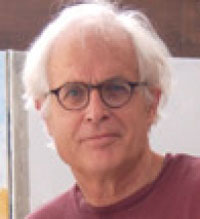
By Winslow Myers
High school students from Canada and from as far away as Japan gathered at the spectacular Canadian Museum for Human Rights in Winnipeg to share their thoughts on the challenge of preventing nuclear war. Called “The Moral Responsibility of Humanity,” this was the sixth iteration of the Youth Nuclear Peace Summit, the brainchild of some extraordinary citizens of Winnipeg, including David G. Newman K.C., retired school principal Estelle Lamoureux, and Kawser Ahmed, Executive Director of the Conflict and Resilience Research Center of Canada.
I was invited to participate in the conference as a former high school teacher and sometime writer on global issues. My impressions are entirely my own and do not reflect the views of my generous hosts or the staff of the various institutions that made the Summit possible.
Recently retired Parliamentarian Marilou McPhedran made the point in her talk to the students that we adults too often throw up our hands and say to the youth, “We failed; now it’s up to you,” an unfair delegation of survival tasks that remain intergenerational and, for that matter, international. Canada and the United States are geographically, militarily, environmentally, and morally interdependent. Neither country can achieve genuine security in isolation from the other. We’re all in this together, regardless of age or experience.
In private conversation Marilou also told me politely but firmly that Canadians know a lot about America and Americans don’t know very much about Canada. Point taken.
For example, progressive Americans romanticize Mr. Carney’s level-headed pushback against bizarre tariffs and even more bizarre visions of the outright annexation of Canada. But it didn’t take long for me to understand that Canadians want accountability from their Prime Minister just as much as Americans want accountability from our hapless, narcissistic president (now, fervently do we hope, to be at least somewhat declawed).
At the Summit, accountability naturally focused on nuclear issues, not only nuclear weapons but the entire nuclear fuel cycle. Indigenous participants, including Métis Elder Billie Schibler, made sure we were aware of the threats that both uranium mining and nuclear waste repositories pose to Indigenous lands and ecosystems. In addition, we explored the continued interdependence of Canada’s security—or lack thereof—with the security of the United States. This involves a fair amount of complex history which, in my amateur recounting, might further demonstrate American ignorance of Canada, but, in brief:
Prime Minister Carney may want to work toward increased security and defense independence from the U.S., but U.S. early-warning installations and infrastructure, which have required continuous upgrading as the arms race accelerates, have occupied Canadian soil for many decades. This raises an obvious but fundamental question: Can a country meaningfully retain independent control over its security choices when its geography makes it indispensable to a superpower’s defense? Canada must weigh the benefits of collective security agreements against the risks of deep integration with a much more powerful, and for the moment potentially unreliable, nuclear-armed neighbor.
The Youth Summit included previews of a powerful new documentary directed by filmmaker Paul Jay to be released in 2028 called “How to Stop a Nuclear War.” At the core of the film is the last testimony of the dying 90-year-old activist Daniel Ellsberg, who focused with laser moral force on the destabilizing effect of the land-based ICBMs not far south of the Canadian border. William Perry, Secretary of Defense under Bill Clinton, asserted that the U.S. could afford to stand down these weapons and that doing so would result in a net increase in everyone’s security. Instead, at breathtakingly vast expense, the U.S. is hell-bent on upgrading them.
President Trump’s vague fantasies of a “Golden Dome” of defensive, shoot-a-bullet-with-a-bullet antimissiles further blur the already unstable distinction between offensive and defensive weapons. The fundamental problem is that defensive systems can encourage an adversary to increase its offensive capabilities, while potentially giving the defending country a false sense of security.
And ultimately, what does Canada, or the U.S. for that matter, gain from even the most up-to-date early-warning system? In the unlikely event of a nuclear missile attack from Russia, the U.S. will have 15-20 minutes to contemplate our own annihilation, including making the decision to use our own missiles before we lose them, thereby doubling the degree of mass death. Fallout or nuclear winter would, of course, engulf Canada along with everyone else worldwide.
It’s all pretty insane and heavy-duty stuff to lay on teens, but their presentations were creative, concise, soberly reflective, and hopeful. The cliché would be to say that our future is in good hands. But the challenges for all of us, old and young, are immense. One takeaway was that in looking at the uranium mining and nuclear waste issue alongside the nuclear war issue, we see yet one more way in which peacebuilding and environmental sustainability are interwoven.
I appreciated my new Canadian friends, especially their forbearance of our recent American derangement. I was awed by the cathedral-like quality of the Canadian Museum for Human Rights and the powerful witness to the planet-wide struggle for compassion and justice its exhibits display. Most of all, I felt the poignant weight settling upon the teen participants as they struggled with the hard fact that the great powers haven’t yet figured out a way to global security that doesn’t involve perching on the razor’s edge of apocalypse.
Winslow Myers, syndicated by PeaceVoice, is a retired teacher and the co-author with Libby Traubman of One: One Humanity, One Earth, One Future.