Editor’s note: This commentary is provided by the Medical Marijuana Education and Research Initiative (MMERI) of Florida A&M University
At his 2021 Pro Football Hall of Fame enshrinement, Calvin Johnson challenged the sports world to recognize cannabis as medicine. “It’s about time that we recognize the potential of phytomedicines — plant medicines — to aid and improve the mental health and quality of life for so many,” Johnson stated. “These plants, primitive in nature, provide an alternative to their destructive counterparts: opioids.”
Around that time, the National Football League relaxed its marijuana policy, reducing fines and funding research into tetrahydrocannabinol (THC) and cannabidiol (CBD) for pain and concussion-related care. Other leagues—including the National Basketball Association, Major League Baseball, National Hockey League, and the National Collegiate Athletic Association—have also moved away from banning cannabis, though Olympic athletes still face testing.
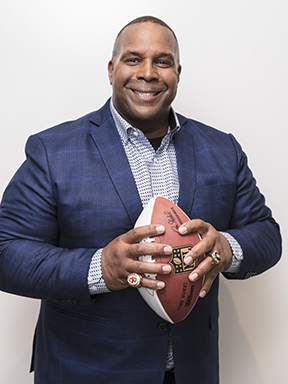
Former college football standout Keith Davis views the shift cautiously, especially its impact on younger athletes. A frequent speaker at youth leadership conferences, he encourages young people to avoid substance use and live a clean lifestyle. He finds the current cannabis-vaping trend among youths quite distressing.
“My mother began to use cannabis in a way that, at the time, wasn’t really popular,” Davis recalls. “But it began to help her with her pain.” He warns that growing acceptance—paired with rising vaping trends—can send the wrong message. “Especially with young high school players, a lot of them are into this vaping… and they don’t understand the dangers of vaping.”
In response, Florida A&M University’s Medical Marijuana Education and Research Initiative (MMERI) is developing a youth vaping education initiative that is preparing to launch soon.
Visit https://bit.ly/MMERIMarch2026 to watch MMERI’s Conversations on Cannabis Virtual Forum featuring Keith Davis discussing “Cannabis and Sports.”