
By Renada Toyer
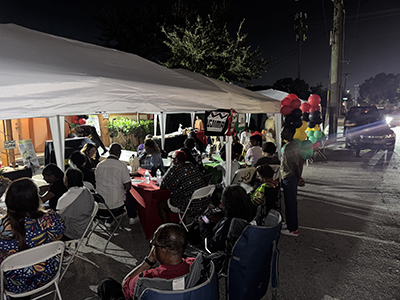
The unified spirit filled the parking lot of the Westside Gazette Office as the community gathered to celebrate the third day of Kwanzaa, Ujima—Collective Work and Responsibility–hosted by the one and only Bobby R. Henry. This event was more than a celebration, a unification of individuals from different walks of life. This gathering became a safe space for reflection, learning, and connection, reminding everyone that Ujima is not only a principle, but a way of life.
“Ujima,” derived from Swahili, translates to Collective Work and Responsibility. This principle plays a crucial role in the celebration of Kwanzaa, symbolizing the importance of community, collaboration, and accountability with one another. During this event, speakers and community members broke down what Ujima meant in their lives—taking responsibility for not only our own lives, but for the welfare of our families, neighbors, and generations to come.
The event created a welcoming environment for people of all ages to gain a deeper understanding and perspective on the third day of Kwanzaa. Stories were told, and in-depth conversations were held. The older generations within the community spoke about the importance of relying on one another during tough times, while voices of youth reflected on how unity can create in schools, social groups, and neighborhoods. During those moments, bonds were nourished, connections were formed, and the community united.
Ujima was not discussed as an idea, but as a daily practice throughout our lives. Reminding us that collective work occurs when neighbors check on one another, when coworkers work together to create a better work environment, and when community members take their time to uplift others. It’s evident when we support Black-owned businesses, organize change, mentor the youth, or even lend a helping hand without expecting reciprocated actions.
The Westside Gazette’s celebration made it clear that Ujima lives in action. It is choosing to solve problems together instead of being alone. We must recognize that individual success is connected to collective progress. Being in a world that advocates isolation and competition, Ujima stands as a reminder that unity is our superpower.
As the evening came to a closing, one message remained: Ujima does not end with the lighting of the candle. It continues in our lives—in how we represent ourselves, how we show up, how we care for one another, and how we take responsibility for building stronger communities. The celebration wasn’t just about honoring tradition; it was about recommitting to each other. Ujima must stay alive.