
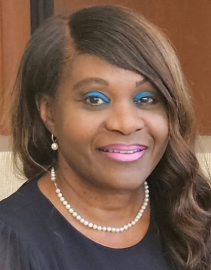
By Dr. Harleen Hutchinson
Part One of a Two Part Series
There is a critical difference between disagreement and disparagement. One strengthens justice. The other undermines it.
In courtrooms across our communities, professionals are called upon to provide expert insight to help inform decisions that profoundly shape the lives of children and families. These are not abstract decisions. They determine whether a child remains connected to their parent, whether a bond is preserved or severed, and whether families are given the opportunity to heal or are permanently altered by systems intended to protect them. As an infant mental health professional, my role in these spaces is to bring forward what is often invisible, the science of early relationships, the impact of trauma, and the deep emotional experiences of babies and young children who cannot speak for themselves.
Infants do not testify in court. They cannot articulate what it means to be separated from a parent, to lose the familiarity of a caregiver’s voice, or to experience disruption in the very relationships that shape their sense of safety. Yet we know, through decades of research, that these early experiences matter deeply. Attachment, connection, and relational stability are not luxuries; they are foundational to healthy development. When professionals enter the courtroom, we are not offering personal opinions; we are translating what babies and young children cannot say into language that systems can understand.
But what happens when that expertise is not simply challenged, but disparaged? What happens when disagreement shifts from a professional exchange of perspectives into language that diminishes credibility, questions integrity, or dismisses the value of a clinician’s work without meaningful engagement? When disagreement becomes disparagement, it no longer serves justice, it silences it.
Disagreement is essential in a functioning judicial system. Courts rely on multiple perspectives to arrive at informed decisions. In fact, when professionals bring different lenses, clinical, legal, cultural, it should strengthen the process. However, disagreement must remain grounded in professionalism, respect, and an acknowledgment that each perspective contributes to a fuller understanding of the case. When that line is crossed, and professionals are publicly discredited or dismissed in ways that undermine their integrity, it creates a chilling effect. It discourages others from speaking openly, from offering nuanced perspectives, and from advocating fully for the children and families who rely on their voices.
For those of us working in infant mental health and child welfare, advocacy is not optional, it is inherent in the work. To speak about trauma is to speak about systems. To speak about attachment is to speak about the consequences of decisions made within those systems. And for Black professionals, this work carries an added layer of responsibility and vulnerability. We do not enter these spaces as neutral observers. We bring lived experience, cultural knowledge, and a deep understanding of how systems have historically impacted families of color. We hold both a clinical lens and a contextual one, recognizing that behavior does not exist in a vacuum but is shaped by environments, histories, and structural inequities.
