
After Cuba, hope rises in Palestine and the Western Sahara
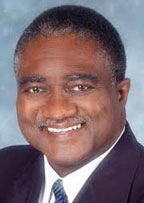
By George E. Curry, NNPA Columnist
The loudest shouting after the announcement of a thaw in the U.S.-Cuba icy relationship may not have been in Havana or Washington, but in Ramallah, the de facto capital of the Palestinians in the West Bank about 10 miles north of Jerusalem and among the Sahrawis exiled in Morocco, Mauritania and five refugee camps near the city of Tindouf in southwestern Algeria.
Of the two struggles, the Palestinian plight is the better known.
Joel Beinin and Lisa Hajjar, writing for the Middle East Research and Information Project, observed: “Jewish claims to this land are based on the biblical promise to Abraham and his descendants, on the fact that the land was the historical site of the ancient Jewish kingdoms of Israel and Judea, and on Jews’ need for a haven from European anti-Semitism.
“Palestinian Arab claims to the land are based on their continuous residence in the country for hundreds of years and the fact that they represented the demographic majority until 1948. They reject the notion that a biblical-era kingdom constitutes the basis for a valid modern claim. If Arabs engage the biblical argument at all, they maintain that since Abraham’s son Ishmael is the forefather of the Arabs, then God’s promise of the land to the children of Abraham includes Arabs as well.
They do not believe that they should forfeit their land to compensate Jews for Europe’s crimes against Jews.”
The already tense situation has worsened with Prime Minister Benjamin Netanyahu pressing for a new law that would declare Israel the nation-state of the Jewish people.
He said, “The state of Israel provides full equal rights, individual rights, to all its citizens, but it is the nation state of one people only – the Jewish people – and of no other people. And therefore, in order to bolster the status of the state of Israel as the nation state of the Jewish people, I intend to submit a basic law that will anchor this status.”
Israel has decided to dissolve the Knesset and hold new elections on March 17.
For the past 41 years, there has been a major dispute over who should control the Western Sahara, land that has been annexed by Morocco. Like Cuba, the Western Sahara is a former Spanish colony.
The U.S. State Department notes: “Morocco claims the Western Sahara territory and administers Moroccan law through Moroccan institutions in the estimated 85 percent of the territory it controls. The Popular Front for the Liberation of Saguia el Hamra and Rio de Oro (Polisario), an organization that has sought independence for the former Spanish territory since 1973, disputes Morocco’s claim to sovereignty over the territory. There has been no census since the Spanish left the territory…
“In 1988 Morocco and the Polisario agreed to settle the sovereignty dispute by referendum. The parties did not resolve disagreements over voter eligibility and which options for self-determination (integration, independence, or something in between) should be on the ballot; consequently, a referendum has not taken place.
“Since 2007 there have been various attempts to broker a solution in face-to-face negotiations between representatives of the two sides under UN auspices, most recently facilitated by the UN secretary-general’s personal envoy for the Western Sahara, Christopher Ross. Morocco has proposed autonomy for the territory within the kingdom; the Polisario has proposed a referendum in which full independence would be an option. During a ninth round of informal talks held March 11-13 [2013] in Manhassett, New York, each side maintained its position, as in previous rounds, unwilling to enter into negotiation.”
Sahrawis, the indigenous population, are living in Morocco and neighboring Algeria and Mauritania.
Under the sponsorship of both the Moroccan government and the opposing POLISARIO authority, I have seen both sides of the Western Sahara dispute up close. I have visited the cities of Dakhla and Laayoune in the Western Sahara, where Morocco controls 85 percent of the land. I returned to the U.S. Sunday after spending a week in Algeria, including several nights in the home of a family in the Boujdour Refugee Camp near Tindouf. In November, I spent two weeks in Israel and the Palestinian territories as part of an African American delegation sponsored by the Interfaith Peace-Builders.
There are some interesting parallels between the struggles of the Palestinians and the Sahrawis, both of whom are in a fight to regain their native land. Borrowing a page from Israel, Morocco erected a berm, a sand wall, to separate most of the Western Sahara from the remainding land controlled by POLISARIO. I will be writing two separate series on the Western Sahara dispute and the Palestinian issue for the NNPA News Service in coming weeks.
In the meantime, hope abounds among the Palestinians and Sahrawis that after a diplomatic breakthrough with Cuba, the U.S. will turn its attention toward their plight.
