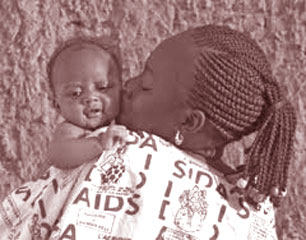
Exclusive breastfeeding for more than four months lowers mother-to-infant HIV risk
By Sarah Glynn
HIV-infected mothers who exclusively breastfeed for more than the first four months of life have a lower risk of transmitting the virus to their babies through their milk.
The finding came from scientists at Columbia University’s Mailman School of Public Health and was published in the journal Science Translational Medicine.
The authors explained:
“Women who stopped breast feeding earlier than four months had the highest concentrations of HIV in their breast milk, and those who continued to breastfeed, but not exclusively, had concentration levels in-between the two practices.”
Babies generally have a 10 percent to 15 percent risk of receiving the virus through their HIV-infected mother’s breast milk. However, since infectious diseases are widespread and often potentially fatal in sub-Saharan Africa, breastfeeding is crucial for keeping infants healthy. Several critical components that help developing immune systems ward off infectious diseases are found in breast milk.
A previous report found that stopping breastfeeding before 18 months was linked to considerable increases in mortality among children born to an HIV-infected mother.
Louise Kuhn, PhD, Mailman School professor of Epidemiology, and colleagues set out to examine whether changes in breastfeeding routines have an impact on HIV levels in breast milk.
In order to observe the successfulness of early weaning to decrease HIV transmission and infant mortality, the team conducted a randomized clinical trial.
More than 950 mothers infected with HIV in Zambia were advised to breastfeed their children at birth for at least four months.
Fifty percent of the women were persuaded to discontinue breastfeeding at four months, while the other 50 percent were encouraged to keep breastfeeding.
At four and a half months, the scientists collected breast milk from all of the moms. Additionally, the babies were analyzed on a regular basis for potential HIV transmission.
The highest HIV concentrations were found in the breast milk of women who stopped breastfeeding at four months, according to the experts.
Seventy-seven percent of the females who had stopped breastfeeding had detectable concentrations of HIV in their breast milk, as opposed to 39.5 percent of those who were solely breastfeeding when the baby was four and a half months.
No differences were identified when they were both breastfeeding two weeks earlier at four months, the researchers explained.
Mothers who kept breastfeeding, but not exclusively, had higher HIV concentrations in their breast milk than those exclusively breastfeeding.
The findings indicate that even subtle alterations in the frequency of breastfeeding during infancy can have an impact on HIV concentrations in breast milk.
Dr. Kuhn, who is also affiliated with the Gertrude H. Sergievsky Center at Columbia University Medical Center, concluded:
“Our results have profound implications for prevention of mother to-child HIV transmission programs in settings where breastfeeding is necessary to protect infant and maternal health. Our data demonstrate that early and abrupt weaning carries significant risks for infants.”