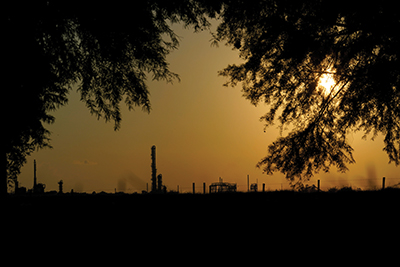
Researchers found the carcinogenic gas levels in Donaldsonville, Louisiana or “Cancer Alley” are much higher than previously discovered.
By Kalyn Womack
(The Root)
The southeast of Louisiana, dubbed “Cancer Alley,” is historically known for the proximity of toxic factory plants to its majority Black community resulting in decades of serious health issues and cancer diagnoses. Well, a new study says the conditions are even worse than we thought.
“We expected to see ethylene oxide in this area. But we didn’t expect the levels that we saw, and they certainly were much, much higher than EPA’s estimated levels,” said senior author Peter DeCarlo, an associate professor in the Department of Environmental Health and Engineering.
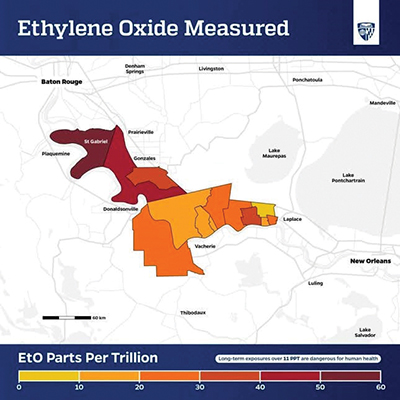
New Shocking Levels of Air Pollutants
Findings from a February 2023 study conducted by Johns Hopkins University’s environmental engineers reveal the levels of ethylene oxide in the area between Baton Rouge and New Orleans. That chemical is a man-made gas used commonly in the manufacturing of plastic or medical and food production equipment.
The last time The Root served you the deal on what’s going on down there, it was reported that the carcinogens (cancer-causing chemicals) being pumped out of the nearby factories were emitted at 14 times the recommended level for the surrounding (and majority Black) neighborhood and seven times the national average, per the Environmental Protection Agency.
This recent report suggests the toxin levels are 1,000 times worse than those prior measurements.
Read more from Johns Hopkins University:
Ethylene oxide is so toxic, red flag levels for long term exposure and human health start at anything over 11 parts per trillion. The team found levels as high as 40 parts per billion in spots close to industrial facilities. They were also able to follow air flow and detected concerning amounts of the gas as much as 10 kilometers downwind from the plants.
“We saw concentrations hitting 40 parts per billion, which is more a thousand times higher than the accepted risk for lifetime exposure,” DeCarlo said.
When the team compared their measurements with those able to be detected with the EPA’s current screening tools, their own measurements were significantly higher, translating to much greater risks for cancer for the nearby communities.
Previous Research Underreported Emissions
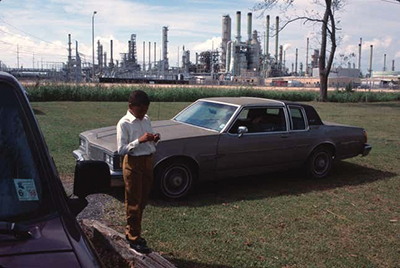
DeCarlo told The Root previous measurements were based on research models that didn’t accurately reflect the health risk for those exposed to the emissions.
“Other reports that have gone out tend to be modeled concentration and the problem with those, not that they didn’t show cancer risk, is that the modeled concentrations rely on underreported emissions. So, the concentrations the models produce are not reality,” he said. “The models are under predicting the concentrations that we observe and sometimes by a factor of 20.”
DeCarlo also clarified these findings were only based on a month’s worth of data. There’s no telling what the levels could look like if they studied the air for a whole year.
Denial of Wrongdoing from Chemical Company
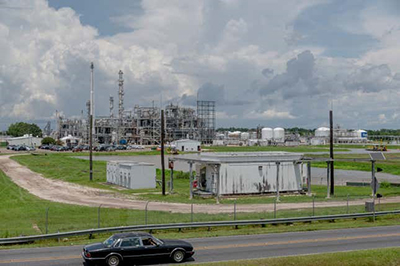
A spokesperson from Denka, the petrochemical company who’s been under fire for running a chemical plant located next to the local Black neighborhood of St. John the Baptist Parish, previously told NBC News there was no evidence their company operations increased the risk health impacts of the residents. They insisted their operations complied with the air permits under state law.
However, a Tulane report found toxic air pollution in the area was linked to nearly 85 cancer cases in impoverished communities annually in the state. It certainly seems there’s a correlation (if not, causation) between the dangerous levels of air pollutants and steady increase in terminal illness diagnoses.
A Severe Lack of Urgency and Action
Though plenty of research has been conducted to support the claim, very little action has been taken to mend the issue.
A report from the human rights officials at the United Nations called for an end to what they believed was environmental racism. In response, legislators introduced a bill to punish protestors who stepped on the chemical plants’ property.
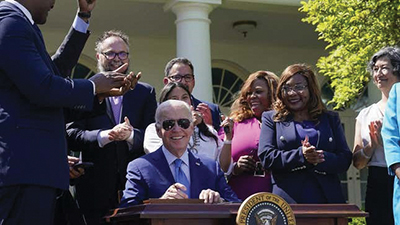
President Joe Biden signed an executive environmental justice order last year requiring federal agencies to meet with communities when toxic chemicals are being released from federal facilities. Though, it’s unclear how the order has addressed the issue occurring in Cancer Alley.
The latest action item was a lawsuit filed against Denka and another petrochemical company by the Department of Justice last year on behalf of the residents of St. John the Baptist Parish. Additionally, a source from the EPA enforcement division told NBC the EPA could’ve sent an order to shut down the plant altogether, but obviously, that never happened.
There’s no denying what’s going on in southeast Louisiana. It’s a matter of who’s going to take it seriously.