“We who believe in freedom cannot rest until it comes—fully, truly, for everyone” –Sweet Honey in the Rock
By Renada Ja Nae Toyer

By Renada Ja Nae Toyer
On a tranquil June evening, history unfolded in Pembroke Pines, Florida—a town long overshadowed by whispered reputations and quiet exclusion. For the first time ever, this community, often labeled one of the most racially indifferent in the state, hosted its Inaugural Juneteenth Celebration that was held at the Charles F. Dodge City Center. It wasn’t just a ceremony. It was a spiritual homecoming, a reckoning, and a reclamation.

This was the beginning of something revolutionary and powerful. A cultural shift. An act of communal valor.

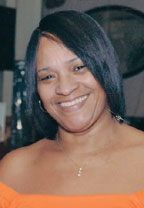
The driving force behind this historic event was Ms. Shauna Hicks-Lee, a woman of vision, conviction, and tenacity. “Juneteenth marks freedom,” she said in an interview held during the celebration, “but we know freedom didn’t come easy—and in many ways, we’re still fighting for it.” Black liberation today means visibility and ownership in spaces once closed off. “Once upon a time,” she reflected, “we didn’t have access to facilities like this. Now we do. Now people who don’t look like us see our vision and support us. That is part of liberation.”
With her leadership, along with the support of Holly Bonkowski and Frances Novo, the impossible became tangible. Even the city’s leadership stood behind them, signaling a rare, unified commitment to honoring all Black American history.
But the heartbeat of the night came from the resounding voice of keynote speaker Talitha Anyabwelle, who is a fierce, brilliant orator and cultural educator whose words swept through the crowd like a cleansing wind. Her speech was an invitation to wake up, to speak up, to feel. Her rules were clear– “If I say something that’s painful, I want you to say ‘Ouch.” If I say something that’s feels like truth, say ‘Speak!” The crowd responded, clapping, nodding, and calling out. This wasn’t a lecture, it was a dialogue, a call to collective memory.
She told her own story—of growing up in Georgia as the only Black child in her school, bused out of her community under the semblance of “opportunity.” She saw the faces of slave-owning presidents on classroom walls but never heard about the ingenuity of Black inventors or the resilience of her own people.
With such power and grade, Talitha reminded the audience that Juneteenth is not just for Black people it’s a day for everyone who believes in freedom. Freedom is not comfortable; it is hard work. It’s struggle and resilience.
Another one of the most profound moments of the evening came through the voice of the acclaimed poet and cultural truth-teller Darius Daughtry. His poetry did not simply echo the themes of Juneteenth, it embodied them. With every line, Daughtry peeled back the layers of historical deletion and exposed the raw, unvarnished truth of Black endurance and liberation. “As an artist,” he reflected, “my duty is to speak truth to power. If I don’t make someone uncomfortable, I haven’t done my job.” His performance was unapologetic, deliberate, and electric – a rejection of the sanitization that often dilutes Black narratives. Daughtry’s verses rang out like ancestral drums, reminding the audience that art is not decoration but declaration.
“Poetry,” he said, “Is how we see the light – how we climb out of inherited darkness. When we unearth what’s buried inside us, we begin to heal.” In a world that often commodifies Black creativity while ignoring Black suffering, his voice stood as both weapon and balm which challenged the status quo while honoring the sacred duty of remembrance. In that current moment, his words did what Juneteenth itself demands: they reclaimed space, told the truth, and pointed the way forward.
The event closed with local musicians playing soulful renditions of freedom anthems while the community danced. Vendors served traditional dishes, a muralist painted a live tribute, and a night filled with fun.
Pembroke Pines held its first Juneteenth and if this is any indication it will not be the last.
“We who believe in freedom cannot rest. Until it is won.”