
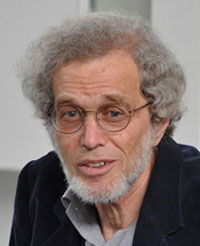
By Lawrence S. Wittner
On January 27, 2026, the editors of the Bulletin of the Atomic Scientists moved the hands of their famous “Doomsday Clock” to 85 seconds to midnight―the closest setting, since the appearance of the clock in 1946, to nuclear annihilation.
This grim appraisal has impressive evidence to support it.
The New Start Treaty, the last of the major nuclear arms control and disarmament treaties between the United States and Russia, expired on February 5, without any serious attempt to replace it. New Start’s demise enables both nations, which possess about 86 percent of the world’s 12,321 nuclear weapons, to move beyond the strict limits set by the treaty on the number of their strategic nuclear weapons (the most powerful, most devastating kind), thus enhancing the ability of their governments to reduce the world to a charred wasteland.
Actually, a nuclear arms race has been gathering steam for years, as nearly all the governments of the nine nuclear powers (which, in addition to Russia and the United States, include China, Britain, France, Israel, India, Pakistan, and North Korea) scramble to upgrade existing weapons systems and add newer versions. China’s nuclear arsenal is the fastest growing among them. “The era of reductions in the number of nuclear weapons in the world . . . is coming to an end,” observed Hans Kristensen, a highly regarded expert on nuclear armament and disarmament. “Instead, we see a clear trend of growing nuclear arsenals, sharpened nuclear rhetoric, and the abandonment of arms control agreements.”
The U.S. government is currently immersed in a $1.7 trillion nuclear “modernization” program that President Donald Trump has championed and repeatedly lauded. As early as February 2018, he boasted that his administration was “creating a brand-new nuclear force. We’re gonna be so far ahead of everybody else in nuclear like you’ve never seen before.” In late October 2025, to facilitate the U.S. nuclear buildup, Trump ordered the Pentagon to prepare to resume U.S. nuclear weapons testing, which had ceased 33 years before. In line with the Comprehensive Test Ban Treaty of 1996, signed by 187 nations (including the United States), no nuclear power (other than the rogue nation of North Korea) has conducted explosive nuclear testing in over 25 years.
Another sign of the escalating nuclear danger is the revival of implicit and explicit threats to initiate nuclear war. Such threats, which declined with the end of the Cold War, have resurfaced in recent years. When angered by the policies of other nations, Donald Trump, Kim Jong Un, and Vladimir Putin have repeatedly and publicly threatened them with nuclear destruction. According to the U.S. government’s Voice of America, the Russian government, in the context of its invasion of Ukraine, issued 135 nuclear threats between February 2022 and December 17, 2024. Although some national security experts have discounted most Russian threats as manipulative rather than serious, in November 2022 Chinese leader Xi Jinping thought the matter serious enough to publicly chide his professed ally, Putin, for threatening to resort to nuclear arms in Ukraine.
Underlying this drift toward nuclear war are the growing conflicts among nations―conflicts that have significantly weakened international cooperation and the United Nations. As the editors of the Bulletin of the Atomic Scientists put it, rather than heed past warnings of catastrophe, “Russia, China, the United States, and other major countries have instead become increasingly aggressive, adversarial, and nationalistic.” Consequently, “hard-won global understandings are collapsing, accelerating a winner-takes-all great power competition and undermining the international cooperation critical to reducing the risks of nuclear war.”
But this is not necessarily the end of the story―or of the world.
After all, much the same situation existed in the second half of the twentieth century, when conflicts among the great powers fueled a dangerous nuclear arms race that, at numerous junctures, threatened to spiral into full-scale nuclear war. And, in response, a massive grassroots campaign emerged to save the world from nuclear annihilation. Although that campaign did not succeed in banning the bomb, it did manage to curb the nuclear arms race, reduce the number of nuclear weapons by more than 80 percent, and prevent a much-feared nuclear catastrophe.
Furthermore, in the early twenty-first century, there have been new and important developments. The worldwide remnants of the nuclear disarmament movement regrouped as the International Campaign to Abolish Nuclear Weapons and, joined by farsighted officials in smaller, non-nuclear nations, drew upon the United Nations to sponsor a series of antinuclear conferences. In 2017, by a vote of 122 to 1 (with 1 abstention), delegates at one of these UN conferences adopted the Treaty on the Prohibition of Nuclear Weapons (TPNW). Although all nine nuclear powers strongly opposed the TPNW―which banned the use, threatened use, development, manufacture, acquisition, possession, stockpiling, stationing, and installation of nuclear weapons―the treaty secured sufficient national backing to enter into force in January 2021. Thus far, it has been signed by 99 countries―a majority of the world’s nations.
In addition to the efficacy of public pressure for nuclear disarmament and the existence of a treaty banning nuclear weapons, at least one other factor points the way toward a non-nuclear future: the self-defeating nature—indeed, the insanity―of nuclear war. With even a single nuclear bomb capable of killing millions of people and leaving the desperate survivors crawling painfully through a burnt-out, radioactive hell, even a nuclear “victory” is a defeat. In the aftermath of a nuclear war, as Soviet leader Nikita Khrushchev is believed to have said, “the survivors would envy the dead.” It’s a lesson that most people around the world have learned, although not perhaps the lunatics.
Lunatics, of course, exist, and some of them, unfortunately, govern modern nations and ignore international law.
Even so, although we are on the road to nuclear war, there is still time to take a deep breath, think about where we are going, and turn around.
Dr. Lawrence Wittner, syndicated by PeaceVoice, is Professor of History emeritus at SUNY/Albany and the author of Confronting the Bomb (Stanford University Press).
