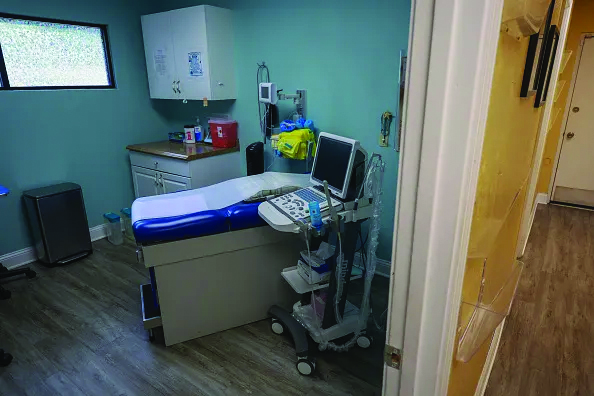
Federal one-year ban on Medicaid reimbursements to Planned Parenthood has expired, restoring coverage for routine care at some clinics, but state limits still apply.
By Jennifer Porter Gore
(Source: The Observer)
Healthcare providers, such as Planned Parenthood and similar clinics, are once again eligible to receive Medicaid reimbursements, enabling low-income individuals to resume routine healthcare services from these providers.
Last year, congressional Republicans fell short of their longstanding goal to ban abortion services nationwide during efforts to pass the One Big, Beautiful Bill Act.
But they managed to ban Medicaid reimbursements from going to Planned Parenthood and similar reproductive health care providers nationwide for one year. Since Congress didn’t renew the ban before taking its Independence Day recess, the ban automatically expired last week.
Medicaid can once again cover non-abortion services such as cancer screenings, birth control distribution, and testing for sexually transmitted infections at the clinics that were able to remain open. But individual states must decide to allow the clinics to be reimbursed.
Millions Left High and Dry
According to a KFF tracking poll from 2025, one in three women reporting having gone to a Planned Parenthood clinic for care, as well as one in ten men. Nearly half of Black women have gone to a Planned Parenthood clinic. Over four in ten individuals with Medicaid say they have received services at Planned Parenthood and one-third of those individuals had private insurance. One in five Republican women and four in ten Democratic women also said they had received care at a Planned Parenthood clinic.
A spending bill passed in the 1970s already blocks federal Medicaid dollars from covering abortion in nearly all cases.
During the debate over the OBBB Act, Republicans tried to make the abortion funding restrictions permanent, and Democrats tried but failed to get the restrictions removed altogether.
In 2025, however, the Supreme Court ruled that states may prevent providers from being paid through Medicaid programs. It also found that Medicaid enrollees can’t challenge the restriction in federal court. Laurie Sobel, associate director for women’s wealth policy at KFF, said the ruling marked a significant departure from longstanding interpretations of the Medicaid ‘free choice of provider’ provision, which guarantees enrollees the right to obtain care from any qualified and willing Medicaid provider. The ban passed last year forced Planned Parenthood to close nearly 30 of its healthcare centers.
Nora Walsh-DeVries, vice president of political and legislative affairs at Planned Parenthood Action Fund, said the impact of the cuts “is really horrible for us and some of it is unfortunately irreversible.”
Managing a smaller budget is even more challenging, DeVries said, coupled with “kind of also knowing that there is an intention from Republicans to permanently defund us.”
Medicaid covers roughly 96 million Americans and just over 21.4% of adult Medicaid beneficiaries ages 19 to 64 are Black Americans.
The Trump spending cuts have forced the closure of at least 14 hospitals across 13 states. More than 400 hospitals are at risk of closing or cutting staff and roughly 360 clinics have closed.
The Medicaid program also covers roughly 40% of pregnancies and births nationwide.
The ban forced Planned Parenthood to close nearly 30 of its health centers since July 2025. Two out of three of the closed health centers were in rural areas, medically underserved areas, or in areas suffering a shortage of primary care health professionals.
All of the closed centers were in counties recognized as “contraceptive deserts.”
Some states provided roughly $400 million in emergency funding during the ban. But Planned Parenthood health centers in states that only partially covered lost federal dollars — or provided no funding at all — were more likely to close than states that completely replaced funding from Washington.
States Have the Final Word
Several states, most of which are in the Bible Belt or rural states with significant Black populations, have either permanently blocked or tried to block Medicaid reimbursements to Planned Parenthood, according to Sobel’s analysis. These include Alabama, Arizona, Arkansas, Florida, Iowa, Kansas, Louisiana, Mississippi, Missouri, Nebraska, Oklahoma, South Carolina and Texas.
Since the ban is now lifted it’s possible that several more states will pass permanent bans.
Marjorie Dannenfelser, president of the nonprofit Susan B. Anthony Pro-Life America, and other anti-abortion groups want congress to insert the ban in the 2027 tax and spending bill.
“Defunding Big Abortion is now the default expectation of the pro-life movement,” Dannenfelser wrote in a statement. “When they return to D.C., Republicans must do all they can through reconciliation to once again block taxpayer dollars from Planned Parenthood and abortion businesses.”
Last year’s budget cuts will slash Medicaid by almost $1 trillion. Experts say the cuts will force roughly 10 million Americans to lose their coverage.