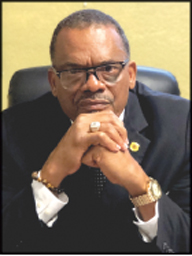
A MESSAGE FROM THE PUBLISHER
By Bobby R. Henry, Sr.
Black America built its power through unity. Churches became meeting halls for strategy. Barbershops became forums for debate. Front porches became classrooms for the next generation. Every major advance the community achieved in the past two centuries grew from collective action rooted in shared purpose.
Today’s political season tests that foundation. Figures like Candace Owens, Tim Scott, Larry Elder, Ben Carson, and Thomas Sowell built national platforms around conservative political philosophy, drawing praise from some corners and sharp criticism from others. Clarence Thomas sits on the nation’s highest court, reshaping rulings on affirmative action and voting rights that generations of civil rights leaders fought to establish. Byron Donalds, representing Florida in Congress, recently praised the stability of Black family structures during the Jim Crow era, a statement that pushed church members across the state to walk away from congregations they called home for decades.
Each of these moments carries real weight because the institutions affected by them matter deeply to Black communal life. A congregation divided over political loyalty loses something precious: the trust that built it, the fellowship that sustained it, and the shared mission that gave it purpose. A family split over support for a particular leader loses the ability to organize, vote, and advocate as a single force.
History offers a sobering lesson about what fractured unity costs. In 1822, Denmark Vesey organized one of the most ambitious uprisings in American history, drawing on networks of enslaved and free Black people across Charleston. Peter Prioleau and George Wilson, both enslaved men living under the constant threat of violence, informed their enslavers about the plan, and authorities crushed the rebellion before it began. In 1800, Gabriel built a similar movement near Richmond, Virginia, only to see it collapse after two enslaved men, Pharaoh and Tom, revealed the plot under the same brutal pressure. Those informants lived inside a system that held their lives, their families, and their futures hostage. Their choices emerged from survival, not strategy.
Modern political fracture operates under entirely different circumstances. Today’s leaders make their choices freely, protected by full legal rights and personal security. The outcome still produces a familiar result: broken trust, scattered loyalty, and communities pulled apart at the moment unity matters most.
Black America holds the power to choose a different path. Collective strength grows from conversations that stay open even when political views differ. Churches grow stronger when congregations commit to shared values around justice, family, and faith, holding space for disagreement without abandoning the pews their grandparents built. Families grow stronger when generations commit to listening across political lines, recognizing that shared history runs deeper than any single election cycle.
The real work ahead centers on building bridges between disagreement and purpose. Every voice in this community, whether aligned with Thomas Sowell’s economic philosophy, that challenged the view of systemic racism being the driving force behind economic disparities affecting Black Americans or with the civil rights tradition that produced the Voting Rights Act, shares the same stake in a thriving, empowered Black America. Unity does not require uniform opinion. Unity requires a shared commitment to the collective good, strong enough to hold space for debate while standing firm against the forces working to pull the community apart.
The choice sits in front of every church, every family, and every voter this season: build power together, or watch division do the work that history’s harshest systems once did by force.