Father in racial dust-up leaves YMCA
By Layla Garms From the Winston-Salem Chronicle
The African American man who said that he and his family were called the n-word by a white woman at the Winston Lake Family YMCA has cancelled his Y membership.
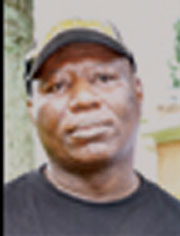
Kenneth Boston said the July 28 incident and what he calls Winston Lake Y officials’ lackluster response to it have negatively impacted his family. The 52-year-old father of seven said he and three of his children were subjected to racial epithets while exercising on the Y’s indoor track. Boston said he immediately reported the actions of the woman, another Winston Lake Y member whom Boston says repeatedly used the n-word to refer to him and his 16-year-old autistic twin boys. He is not satisfied with the Y’s response to the incident. He believes the woman’s actions warranted an immediate cancellation of her membership, but that has not happened.
Winston Lake Branch Director Terry Matthews told The Chronicle last month that both Boston – who admits to telling a staffer after the incident that he “should’ve thrown that white woman over the rail –” and the other member had been reminded of the YMCA’s Code of Conduct (a claim Boston denies) and that the issue had been resolved. The branch subsequently posted the Code of Conduct in several areas of the facility. It states, in part, that the YMCA “insists that individuals using this facility demonstrate caring, responsible, respectful and honest behavior” and that the organization does not permit “profane language or actions that can hurt or frighten another person.”
Earlier this month, Boston said he was asked to attend a meeting at St. Timothy’s Episcopal Church with Matthews, Vice President of Operations Richard Daniels, Winston Lake Y Board Chair Robin Richards, Y Board member Wayne Hosch and Rev. Willard Bass, founder of the Institute for Dismantling Racism and a Winston Lake Y member, to discuss the incident.
Boston said the meeting felt more like an “interrogation” than a mediation session.
“They weren’t hearing anything I was saying. The first thing that came out of their mouths was, ‘We call ourselves the n-word everyday, what’s the big deal?’” he said. “That was the way they came at me with it.”
Bass said he didn’t recall anyone specifically telling Boston that, but he said the group did discuss the various contexts in which the word is now used, including as a term of endearment.
“It’s unfortunate that he’s negating the whole meeting to say that it was useless,” Bass said. “He didn’t’ say that to us; it’s unfortunate that he feels that way.”
Bass, the president of the Ministers Conference of Winston-Salem and Vicinity, said Daniels, whom he has known for some time, had asked him to sit in on the meeting. He said the woman involved in the incident had agreed to adhere to the Y’s conduct policies going forward, and therefore, under no obligation to attend. It is unclear whether an invitation to attend was extended to her.
“We’ve not had a chance to sit down and hear both stories,” he said. “…It involves a deeper dialogue; the whole story needs to be heard by both parties in order for us to come to a resolution.”
According to the Institute for Dismantling Racism’s definition, the woman’s actions did not constitute racism, Bass said.
“Our definition of racism is racial prejudice plus the presence of power,” he said. “In this particular situation, the one individual did not have the power to change. Her action did not change anything, so in and of itself, we do not see it as an act of racism.”
Regardless of how it is defined, the incident was hurtful to him and to his family, Boston said, and it isn’t an experience that will be easily forgotten.
“They wanted me to work with them – showing the community that everything’s fine; everything’s alright; this was just a single incident; it’s not going to happen again – and I can’t do that,” he said of those present at the meeting. “This incident might be little and small to them, but it’s not to me. She didn’t just say this to me, but she said it to my children as well. They responded as if it’s no big deal, but it is a big deal to us.”
Boston said Y leaders did extend an olive branch.
“They said they were sorry that it wasn’t handled correctly,” he related. “They gave me their apologies, but they said that since I didn’t have a witness or anything, it was her word against mine and it was hearsay and the only thing they could do was dismissing both of our memberships or just let it go.”
But Boston claims several people heard the incident, including two Winston Lake employees. At the meeting, he was told by Y officials that those employees had subsequently signed statements asserting that they had not witnessed the other member using the slur.
Boston cancelled his family’s membership soon after the mediation session, severing ties with the facility he and his wife and children had visited several times a week for more than five years.
“I’d rather keep my civil rights than a membership up there at Uncle Tom’s Y,” he said. “…We cannot go under the conditions that the Y is responding to us.”
Y board Chair Richards declined to comment, because he said Boston had informed him that he was considering a lawsuit against the organization. Boston said he is not planning a lawsuit at this time.
YMCA of Northwest North Carolina Communications Director Chelsea Joslyn issued the following statement:
“…We take this issue very seriously. What occurred between the two parties involved does not in any way represent the values of the YMCA. Since the incident occurred, we have reemphasized policies with the members involved, as well as with Y staff and members. Our goal is to foster an environment of acceptance at our Y to help prevent incidents of this kind in the future.”