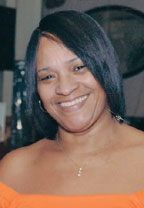
 Equipping students to make healthy sexual choices
By Ashley Young
One in a series of profiles of the 2013 Fellows in the Black AIDS Institute’s African American HIV University’s Science and Treatment College.
“I’ve always had an eye and an ear for helping others,” says 27-year-old Ashley Young of Little Rock, Ark., who says that this predilection has played a large role in guiding her life’s work: counseling, supporting and educating people infected with and affected by HIV.
For the past 10 months, she has carried out this work at Better Community Development, Inc. (BCD), a non-profit that serves disadvantaged people in and around Little Rock and provides outpatient services and residential treatment to those who are homeless, substance-addicted or affected by HIV/AIDS.
Young’s involvement with HIV work began right after college, when she landed a job as an HIV educator and school-based educator for Planned Parenthood. While in college, she was working at a summer after-school program with preteens when she watched a visiting health educator conduct a presentation on HIV/AIDS. This captured Young’s interest. “I knew then that this is what I wanted to do, so I approached the woman afterwards and asked if there were any jobs doing what she did,” she says. A short time later, Young was offered the job as an HIV-program coordinator at BCD.
There is no shortage of work for Young in Little Rock. According to the international HIV/AIDS charity AVERT, Arkansas ranks third in STD prevalence in the United States. The rate of Black male Arkansans living with an HIV diagnosis is four times that of white males; for Black women it’s 8.1 times that of white females.
After she’d spent only a short time at BCD, Young’s zeal and energy so thoroughly impressed her boss that she was encouraged to apply for the AAHU Science and Treatment College fellowship with The Black AIDS Institute. “I had been doing HIV education for four years and knew how to educate people on preventing infection, using condoms, lifestyle changes and safe sexual behaviors. The one thing I did not know was what to do once you were infected with the virus in terms of medication and treatment,” she said. “When I saw that the AAHU would be teaching us about the science and treatment of HIV/AIDS, I knew this would be another thing I could add to my arsenal.”
The training was initially rather intimidating for Young. However, being in a room with people who have worked with clients for far longer than she had, and some who had been living with the virus for years, did not intimidate her. “It was amazing how much information I was able to end up learning, and how much I was able to regurgitate,” she says.
One of her responsibilities in Little Rock is to do monthly presentations at BCD’s residential treatment program. Since returning from the training, she has incorporated much of the information she learned through AAHU.
“My target area of focus is teen health. I think it is not a coincidence that we don’t give our kids sex education and they end up with STDs. We all want our children to make better choices, but we don’t equip them with the tools to do so,” she says.
Today she is working primarily with high school students. Having grown up and been educated in Little Rock public schools, Young can look back and see the shortcomings that the lack of sex education created for her classmates. “That’s why it’s so important to me. Young people have questions,” she says. The demand for her presentations in high schools is so great that she now has to schedule them six to seven months in advance.
“We have to get them young. Kids and HIV is my thing, and I’m passionate about it,” she says. “It’s a fight, but I’m prepared, thanks to The Black AIDS Institute.”
AAHU’s Science and Treatment Fellows are blogging about their experiences.
As told to Glenn Ellis, a health writer and radio commentator who lectures nationally and internationally on ethics and equity in health care.