
 Despite unequal treatment, Black women will rise
Malveaux says that we can’t count on everybody to be “woke,” when it comes to Black women’s issues.
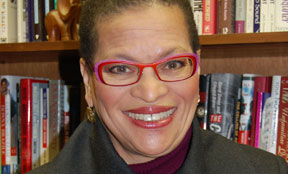
By Julianne Malveaux (NNPA Newswire Columnist)
Many women’s organizations commemorate Equal Pay Day, which this year was April 5. It meant that women, in general, would have had to work all of 2016, and until April 5, 2017, to earn the same amount of money that a White man earned in 2016. Few will recognize July 31, 2017, the day that the pay for African American women catch up to the 2016 earnings of White men—seven extra months. Hispanic women will have to work until October, or nearly 10 extra months, to earn the same money White men earned last year.
I wonder about our “women’s coalitions” when majority wo-men’s organizations, like the National Organization for Women, are basically silent on Black Women’s Equal Pay Day. I wonder how much Black women’s issues really matter to majority women’s organizations. It matters when they want to present a multiracial, multicultural “united front” at a Women’s March, but less so at other times.
The lesson, Black women, is a lesson some sisters remember from 1991, when Anita Hill testified during the Clarence Thomas confirmation hearings. People had all kind of explanations for Hill’s testimony, most of them woefully wrong and viewed through a lens, darkly. Led by feminists Elsa Barkley Brown, Deborah King and Barbara Ransby, more than 1500 women raised enough money to pay for an ad in the New York Times on Nov. 17, 1991. The ad, titled African American Women in Defense of Ourselves (AAWIDO), reminded Black wo-men that no one should speak for us, except us. No one can be relied on to defend us, except us. And no one can be depended on to celebrate us, but us. No one can lead advocacy for our equal pay, but us.
I’m not dismissing our allies—“woke” men of color, especially Black men, “woke” white women and other women of color—I’m just saying we can’t count on everybody to be woke. Evidence: How much noise did majority groups make on Black Women’s Equal Pay Day?
And in the Reign of Ignorance, there is likely to be even less noise, as the House Appropriations Committee has actually proposed defunding a program that collects salary data from employers. Without the data, we won’t know the ex-tent of pay discrimination. We know plenty now. We know that Black women earn 63 cents for every dollar paid to White men; White women earn 80 cents for every dollar White men make. We know that Black women in Louisiana earn the least compared to White men, about 48 cents on the dollar. In comparison, Black women in Missouri, Tennessee, Maryland and Pennsylvania earn 68 cents for every dollar a White man earns. Whatever we earn, it ain’t equal.
What we don’t know is how women fare inside some organizations and you can’t dismantle pay discrimination without having the details of it.
