Gina Brown: Making space for the next woman
Submited by The Black AIDS Institute
The Black AIDS Institute’s Heroes in the Struggle Gala and Award Celebration honors, in a star-studded event and photographic tribute, individuals and organizations that, over the past year, have made a heroic contribution to the fight against HIV/AIDS. Below, one in a series profiling the 2017 honorees.
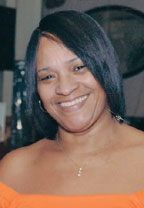
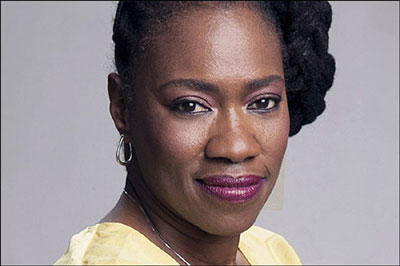
Gina Brown considers it an honor to be recognized as a Hero in the Struggle. “I didn’t believe it because my trauma tells me you’re gonna always be nothing; because that’s what I heard all my life—from people in the street, from home,” she says. Brown, who dropped out of middle school and overcame crack addiction as well as sexual and physical abuse, has turned her life around and has become an outspoken AIDS advocate and champion of the people, a feat worthy of celebration.
A New Orleans native, Brown has been actively involved in HIV concerns for 23 years. She started by speaking up for better conditions at her local HIV clinic. Since then, Brown “has had 999 jobs,” she says—all of which have helped her improve her skills.
She started her career with FACES, a Ryan White HIV/AIDS Part D Program, as a peer advocate, later advancing to become a case finder. Then Hurricane Katrina happened. She moved to Dallas—vowing never to return to New Orleans—for two years before returning to the Big Easy. “I came home because I felt like it was part of my obligation to help rebuild the HIV community,” she says. Brown returned to a previous job but discovered that the agency’s approach was no longer relevant to the Black community, noting a stark difference in how Black women living with HIV were viewed.
She didn’t stay in that position long, deciding instead to obtain her bachelor’s and master’s degrees from Southern University, and doing so in a mere five years. After graduate school, Brown set her sights on learning the administrative aspects of running a non-profit organization.
“My background had been in direct service; I liked working with people,” Brown says. “My focus in grad school was administrative planning and organizing. And I wanted to do that organizing around young people in the community who had experienced trauma, because that’s the thing that cuts them off from getting an HIV diagnosis, and I know how trauma can lead us to do different things. But I’d never really done anything in administration, so I went to the New Orleans Regional AIDS Planning Council to learn all of those skills.”
Currently, Brown is the community organizer at the Southern AIDS Coalition. Through its LEAD (Leadership, Education and Advocacy Development) Academy, she develops Black women and people who are living with HIV or at high risk of contracting HIV for future leadership positions. The three-part program begins with Beyond HIV, which focuses on the advanced biomedical and scientific tools that have recently become available; part 2 includes advocacy practices and learning to tell your story as a way to educate people; and the third part develops women to take direct action in the community.
Thus far, Brown has done trainings in New Orleans, Baton Rouge, La., and Columbus, S.C., and will be adding transgender women to an upcoming training session in Jackson, Miss.
Twenty-three years after receiving an HIV-positive diagnosis and being told that it was a death sentence, Brown is still going strong. Recently she also celebrated her 25-year anniversary of being clean. “When you tell me I can’t, that’s when I say I can. Or when you knock me down, I get back up. And when the lady told me in ’94 that I had AIDS and I was gonna die, I started trying to figure out then how could I live,” she says.
She also has advice for those who may receive a similar diagnosis: “If they do three things, I guarantee them they will be here: Attend all their doctor’s appointments, take their medication exactly as it’s prescribed, and learn everything they can about the virus. I’ve been on meds for 23 years and I’ve missed just three times, when oftentimes I couldn’t remember to take a birth control pill every day.”
Brown is working on a history of Black women in the AIDS movement and will continue to help develop women so that “they can step forward and I can step back,” she says, alluding to her many years of activism. “I just really wanna make space for the next woman to be able to walk through the door and for her to remember to leave it open for the next woman and the next woman.”
Thinking about those she advocates for, toward the beginning of the Trump administration, Brown left the Presidential Advisory Council on HIV/AIDS. “I walked away not for me but for my community,” she says. “I had to resign so that I can continue to say what I need to say, because my community is too important for me to just sit there. I’m about the people because I’m one of the people.”
The Heroes in the Struggle Gala and Award Celebration will take place Sept. 16, 2017, in the Darryl F. Zanuck Theater at 20th Century Fox Studios in Los Angeles. To purchase tickets, become a sponsor, join the host committee or place an advertisement in the program book, click here or contact Wendell Miller at Assistant@BlackAIDS.org or (213) 353-3610, ext. 105.