 Black lives still matters to grassroots and Black media
Hands Up Essence
By Jazelle Hunt, NNPA Washington Correspondent
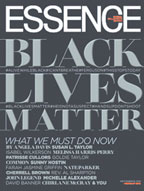
WASHINGTON, D.C. (NNPA) – The last several months have seen an outpouring of activism, with slogans coming in waves: “Justice for Mike Brown,” “Hands Up, Don’t Shoot,” and “I Can’t Breathe.” But the phrase “Black Lives Matter” has emerged to bind each flashpoint into one cause.
The 2012 murder of Trayvon Martin and acquittal of George Zimmerman served as the first of these flashpoints, snowballing in August with the murder of Michael Brown.
“Ferguson is the birthplace of what’s happening right now. In many ways, Ferguson is like ground zero of these protests,” says DeRay McKesson, who has been protesting and organizing in Ferguson since August. He also co-produces a daily Ferguson newsletter with Johnetta Elzie.
“When I think of Black Lives Matter, that’s the way people talk about the work as it spreads. It’s easier to say, ‘Black lives matter,’ but I think the Ferguson Movement and Black Lives Matter are one in the same.”
Although McKesson is currently focused on ending police brutality and unaccountability, he believes in the importance of eventually dismantling all social and political oppression, particularly the types that target Black communities.
“If all lives mattered, we wouldn’t have to be here talking about Black lives matter,” he explained. “What we’re seeing is people confronting injustice. You see a collective confrontation against injustice…it’s a creating of a radical new space in Black politics.”
Black Lives Matter has also become an organization. Three activists – Alicia Garza, Patrisse Cullors, and Opal Tometi co-founded the project in the wake of the Zimmerman’s acquittal in 2013. Initially, the partners set up BlackLivesMatter.tumblr.com and encouraged activists and organizations to share tactics and broadcast their efforts to uplift Black communities via the website.
“[The website] was an interactive project and a way to really promote the need for Black organizing in our communities,” said Tometi, who also serves as the executive director of the Black Alliance for Just Immigration, based in Brooklyn, N.Y. “Even if you’re not working on police brutality explicitly, there are many other issues that are impacting our communities.”
Today, there are approximately 15 chapters of Black Lives Matter across the nation and one in Canada that are focused on a range of concerns in Black communities, including housing, youth activism, and LGBTQ rights. Its other website, BlackLivesMatter.com, allows Black organizations to meet, network, and collaborate. The project has also adopted a list of demands, including the arrest of Darren Wilson, an end to supplying law enforcement with military weapons, and reinvestment in Black communities devastated by poverty.
“Our lives are being systematically attacked all across the board…it is not just at the hands of police,” Tometi says. “Black Lives Matter is a movement about bringing some of those issues and people who are on the margins to the center, and not forgetting about the Black undocumented immigrants, the Black trans person or Black queer person, or disabled people. All Black lives matter. It’s not just having a movement that’s solely about Black heterosexual men, but about all of us.”
For Chinyere Tutashinda, founding member of the Bay Area-based BlackOUT Collective, the movement is about love for Black people and a desire for justice.
“It [started] around dealing with deaths, dealing with the murders, because that’s right there in your face – a life has been taken, there’s a sense of urgency to that,” she said. “But it is beyond that as well. It’s also really about how are we ending the war on Black people, and ending the way Black people are oppressed in this country.”
On Nov. 28, members of the Collective chained themselves to a BART train as part of a series of actions to disrupt Black Friday consumerism. The Black Lives Matter movement had declared a national day of protest and economic boycott, with some groups successfully causing the closure of shopping malls, Wal-Marts, and other retailers.
The news of these protests and the Black Lives Matter movement in general, has primarily spread through social media and Black media instead of white-owned major main-stream outlets. Even when retailers saw an 11 percent drop in Black Friday sales, most mainstream media outlets did not include the movement’s efforts in their analyses of the profit loss.
“The media follows where the fire is. They have followed the fire really well… but I think that they’ve only done that because we made sure people were out on the streets,” Tutashinda explained. “The reason that Black media and Black journalism came to be was because we understood as a people and as a community that our stories weren’t being told. It’s ok [for Black journalists] to know that their role is to help this [movement] move forward.”