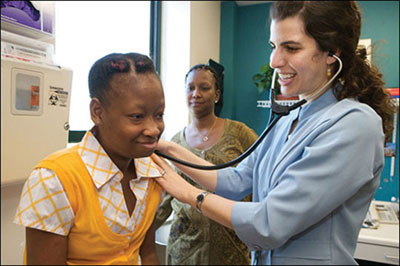
 Collaborative HIV Program Improves Long-term Care for Youths in the United States
Specialized care for adolescents and young adults living with HIV
By The SMILE and PEACOC Teams
A new article published recently highlights a multi-agency, collaborative demonstration program that addressed health care barriers unique to adolescents and young adults living with HIV, a study supported by the Health Resources and Services Administration (HRSA), the Centers for Disease Control and Prevention (CDC), and the National Institutes of Health (NIH).
The demonstration program was supported by a three-year investment of $1 million from the Secretary’s Minority AIDS Initiative Fund (SMAIF).
According to the Journal of the American Medical Association Pediatrics article, “Implementation of an Integrated Approach to the National HIV/AIDS Strategy for Improving HIV Care for Youth,” the demonstration program sequentially implemented three protocols – The Strategic Multi-Site Initiative for the Identification, Linkage to, and Engagement in Care of Youth with Undiagnosed HIV Infection (SMILE), SMILE 2, and the Project for the Enhancement and Alignment of the Continuum of Care for HIV-Infected Youth (PEACOC) – to increase the percentage of youths (ages 13-24 years) who remained in care.
Select Ryan White HIV/AIDS Program Part D sites, NIH Adolescent Medicine Trials Network for HIV/AIDS Interventions (ATN) sites, and CDC-funded health departments collaborated to enable 75 percent of nearly 4,000 youths to be linked to care, with 88 percent remaining in care throughout the study at up to 24 sites across the United States. In contrast, at the national level, about 68 percent of youths diagnosed with HIV are linked to care, with only 55 percent remaining in care, according to CDC estimates. The government agencies collaborated by signing a memorandum of understanding, participating in monthly calls, monitoring implementation and performance, providing technical assistance, feedback and guidance to local collaborators, and summarizing outcomes.
To improve health outcomes for adolescents and young adults with HIV, researchers created a unique multilevel, multiagency collaborative partnership at the Federal and local levels that addressed the national goals to end the HIV epidemic: increasing access to care, reducing HIV-related health disparities and improving coordination of the national response to HIV. As part of the demonstration program, partnerships were forged with memoranda of understanding between study sites and local health departments. In addition, formal referral networks between local HIV testing sites and service providers were expanded, full-time care coordinators were used to help the newly diagnosed youth navigate the clinic appointment process, and clinic staff embraced motivational interviewing techniques.
The Ryan White HIV/AIDS Program provides a comprehensive system of HIV medical care, medication, and support services to low-income people living with HIV. The Ryan White HIV/AIDS Program Part D provides direct funding to 115 recipients across the United States and Territories to provide HIV care and treatment to women, infants, children, and youth living with HIV. The NIH ATN is the only national, multi-center research network devoted to the health and well-being of youth living with HIV and at-risk adolescents and young adults. The CDC provides leadership in preventing HIV infection by working with community, state, national, and international partners in surveillance, program, research, evaluation and communication activities.
For more information on HRSA’s HIV/AIDS Bureau’s Ryan White HIV/AIDS Program, visit https:hab.hrsa.gov. For more information on the NIH ATN, please visit https://www.nichd.nih.gov/research/supported/Pages/atn.aspx. For more information on CDC’s Division of HIV/AIDS Prevention, please visit https://www.cdc.gov/hiv/dhap/about.html. For more information about the Secretary’s Minority AIDS Initiative Fund, please visit https://www.aids.gov/federal-resources/smaif/overview/.
Article citation: Fortenberry JD, Koenig LJ, Kapogiannis BG, Jeffries CL, Ellen JM, and Wilson CM. Implementation of an integrated approach to the National HIV/AIDS Strategy for improving HIV care for youth. JAMA Pediatrics DOI:10.1001/jamapediatrics.2017.0454 (2017)
This article was jointly authored by Carrie L. Jeffries, MPH, MS, RN, ANP-BC, NEA-BC, AACRN, AAHIVS, Chief Nursing Officer, Division of Community HIV/AIDS Programs, HIV/AIDS Bureau, Health Resources and Services Administration, U.S. Department of Health and Human Services; Bill G. Kapogiannis, MD, Program Director, Adolescent Medicine Trials Network for HIV/AIDS Interventions, National Institute of Child Health and Human Development, U.S. Department of Health and Human Services; Linda J. Koenig, PhD, MS, Chief, Prevention Research Branch, Division of HIV/AIDS Prevention, National Center for HIV, Viral Hepatitis, STD and TB Prevention, Centers for Disease Control and Prevention, U.S. Department of Health and Human Services
From AIDS.gov