
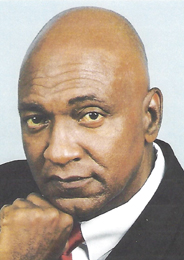
“The white supremacy ideology convinces poor whites to accept their plight believing the lie they’re superior to other races.” John Johnson II 08/05/26
By John Johnson
America’s greatest threat may not be a foreign adversary waiting beyond its borders. Critics argue that the nation’s most dangerous enemy has lived within its own political culture for generations, quietly weakening the democratic principles that once defined the Republic. They contend that the continuing influence of white supremacy ideology has eroded America’s democratic institutions from within.
Critics compare this process to a Formosan subterranean termite infestation. A house under attack by termites does not collapse overnight. The destruction is gradual, silent, and almost invisible. The interior framework slowly deteriorated until little more than a hollow shell remains. From the outside, the structure appears strong and secure. Only when severe stress is applied does its hidden weakness become obvious.
If termites can silently destroy a mighty structure, what invisible forces may be weakening America’s democracy today?
Critics argue that racism functions in much the same way. They contend that corruption, greed, ineffective leadership, and weakened constitutional oversight steadily erode democracy’s foundation. They also argue that the persistence of white supremacy ideology depends upon a segment of society willing to defend those beliefs politically and, at times, through intimidation or violence. According to these critics, such actions threaten the constitutional principles upon which democratic government depends.
Many historians argue that racial hierarchy became embedded within America’s earliest political and economic institutions. They contend that divisions between poor White laborers and enslaved Black people discouraged unified resistance against economic exploitation by wealthy elites. Critics maintain that similar political dynamics continue whenever racial resentment overshadows shared economic interests.
Critics and numerous historians argue that one of the most enduring functions of white supremacy ideology has been its ability to divide Americans who might otherwise unite around common economic concerns. According to these scholars, its greatest success has not simply been the oppression of Black Americans and other marginalized groups. Rather, it has been persuading many working-class White Americans to support political and economic arrangements that may not serve their own long-term interests because they believe those arrangements preserve their relative social status.
Has America’s greatest political deception been convincing many working-class White Americans to defend racial division rather than demand economic justice? Visual Capitalist reported that approximately 15.9 to 19.5 million white Americans live below the federal poverty line. Economists reported that it’s because they’re the largest racial population. What about affordability?
History offers sobering warnings. Historians attribute the decline of the Roman and Spanish Empires to political corruption, economic decline, military overextension, and weakening civic institutions. Critics argue that nations frequently decay from within before foreign rivals exploit their weaknesses.
Critics further contend that democracy weakens whenever citizens tolerate corruption, disregard constitutional safeguards, or accept unequal treatment under the law because it advances their preferred political objectives. They argue that a nation consumed by internal division risks ignoring challenges that threaten all humanity, including environmental decline, global instability, and widening inequality.
Will Americans recognize democracy’s deadly infestation before the foundation collapses, or will history record that they chose division over the common future of humankind?
Termites do not care who owns the house. When the foundation collapses, everyone falls together.
Before accepting—or rejecting—these ideas, pause. Question what you’ve been told. Question what you’ve read. Most importantly, question what you believe.
#QuestionWhatYouBelieve!
