By Charlene Crowell
As 2026 unfolds, affordability, which emerged as a critical issue last year, will become a more pressing concern for most people in America. A comment by a respondent to a recent student loan borrower survey by The Institute for College Access & Support (TICAS) summarized the complexity of the affordability problem for striving workers:
“With how the economy is, I can barely afford to live. I have to choose between rent, loans, or putting food on the table. There’s no help and it feels like [the] government doesn’t care,” said the consumer.
The feeling that economic realities are suffocating the aspirations of hard-working people provides a poignant backdrop leading to the January 19 official celebrations to honor the life, leadership and contributions of Dr. Martin Luther King Jr.
This year’s observance of the MLK holiday begs a key question: What would Dr. King do about an unsustainable economic crisis?
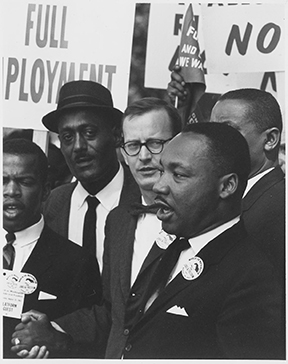
After riots in many urban areas in the summer of 1967, MLK planned the Poor People’s Campaign, a multi-racial effort to use mass civil disobedience as a constructive, rather than destructive, force.
On December 7, 1967, Dr. King announced the economic justice effort at a news conference at Atlanta’s Ebenezer Baptist Church. Although the cities of Detroit and Newark are often noted as the worst hotbeds of the nation’s summer riots in 1967, 158 riots erupted across America that year, resulting in 83 deaths and 17,000 arrests, according to a 2007 analysis of the landmark Kerner Commission report by The Journal of Economic History.
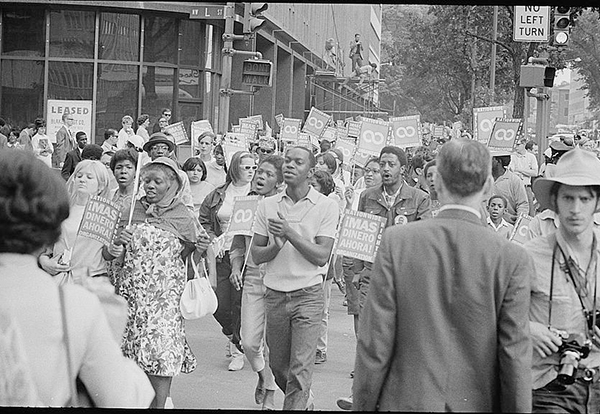
In the wake of King’s April 1968 assassination, plans proceeded under the joint leadership of his widow, Coretta and the Southern Christian Leadership Conference’s Ralph Abernathy. Their collaborative efforts led to weeks of demonstrations on the National Mall and meetings with policymakers in Washington, DC. The organizers demanded economic justice and inclusion for Americans of all backgrounds, including well-paying jobs with living wages, as well as financial rights and fairness, full employment, guaranteed annual income, and more housing affordable to low-income people.
“All of our cities are potentially powder kegs,” King said in a speech at Stanford University that was titled, The Other America. “I think America must see that riots do not develop out of thin air…All of these things have brought about a great deal of despair and a great deal of desperation, a great deal of disappointment and even bitterness in the Negro communities.”
For Dr. King, the nation’s lengthy and violent outrage was a clear signal that Black America would no longer tolerate its history of racial resentments and economic injustices. He also appealed for the Black community to cast aside class divisions.
But today, nearly 60 years later, many of the issues championed by the Poor People’s campaign remain or have worsened.
In late October, the DC-based Urban Institute released The American Affordability Tracker, which found that:
More than half of American families – 52 percent – lack the resources to cover what it really costs to live securely in their community;
Since 2019, the average monthly cost of groceries has increased 32 percent increase while annual income increased 29 percent; and
Since 2017, annual childcare costs for two young children have risen by 40 percent, rents by 50 percent, home sale prices by 80 percent, and the lowest-priced “Silver” health care plan on the Affordable Care Act Marketplace has risen 41 percent.
Trump administration changes taking effect in January 2026 will add to the ongoing financial challenges facing working people.
Beginning January 7, the Trump administration will start sending notices to millions of student loan borrowers who are in default – 270 days past due on their payments. Those who do not or are unable to begin regular repayments face having their paychecks garnished.
The Department of Education stated last April that of the nation’s 42.7 million student loan borrowers, only 38 percent are in repayment and current on their loans.
“At a time when families across the country are struggling with stagnant wages and an affordability crisis, this Administration’s decision to garnish wages from defaulted student loan borrowers is cruel, unnecessary, and irresponsible,” noted Persis Yu, Deputy Executive Director and Managing Counsel with the Student Borrower Protection Center.
Further, if Congress does not enact spending bills for the current fiscal year by January 30, another federal government shutdown will occur. Central to the budgeting crisis is whether to extend expired tax credits for the Affordable Care Act. Without these credits, many consumers will see their health insurance costs double, or even triple.
According to December 2025 poll by the KFF Foundation, 58 percent of respondents said an increase of just $300 per year in health insurance payments would significantly disrupt their household finances. An additional 20 percent say a $1,000 per year increase in health insurance payments would disrupt their finances.
While King’s lifelong quest for civil rights and economic justice deserves an annual observance, his Dream of a nation that fulfills its promises for all of its people still needs a diligent and ongoing effort. Lawmakers should heed the concerns expressed by its people, especially when ample research documents how people are suffering.
As Dr. King stated in his autobiography, “[T]here comes a time when one must take a position that is neither safe, nor politic, nor popular, but he must do it because Conscience tells him it is right.”