
By Staff Writer
As America continues to wrestle with questions of race, history, voting rights, education, economic inequality, and the very meaning of freedom, the story of Black emancipation in Florida feels less like distant history and more like a mirror reflecting the present day.
For many Americans, emancipation is remembered as a single moment January 1, 1863 when Abraham Lincoln signed the Emancipation Proclamation. But for Black Floridians, freedom did not arrive with the stroke of a pen. It came slowly, painfully, and only after generations of struggle, sacrifice, and survival.
Freedom was delayed but it was never denied.
And perhaps now more than ever, we must remember where we come from.
Before emancipation officially reached Florida, enslaved Africans and African Americans resisted in ways both bold and quiet. Some escaped into the wilderness and joined Seminole communities. Others risked beatings or death to learn to read, worship freely, or simply keep their families together. Even in chains, they carried within them a belief that one day freedom would come.
That belief would be tested.
Florida was a Confederate state deeply rooted in slavery. Plantations and businesses profited from Black labor while Black bodies were treated as property. Even after Lincoln issued the Emancipation Proclamation, Confederate forces controlled much of Florida, meaning many enslaved people remained in bondage long after they were legally declared free.
It would take Union troops, Black soldiers, and the collapse of the Confederacy before emancipation truly reached Florida.
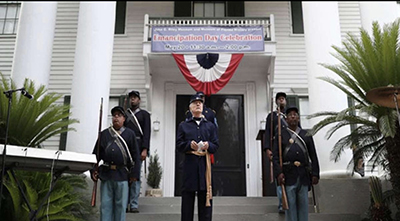
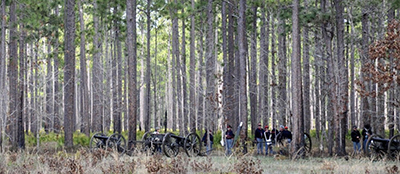
At the Battle of Olustee in 1864, Black Union soldiers fought courageously on Florida soil, many giving their lives for freedoms they themselves had never fully experienced. Then, on May 20, 1865, Union General Edward McCook publicly announced emancipation in Tallahassee a date now remembered as Florida’s Emancipation Day.
But the struggle did not end there.
Reconstruction brought hope, but it also brought backlash. Black Floridians built schools, churches, businesses, and newspapers while trying to establish political and economic power. In response came voter suppression, racial terror, lynchings, segregation, and organized attempts to erase Black progress.
Yet even in those difficult years, Black Floridians understood something powerful:
Education would become one of the greatest weapons against oppression.
Out of that determination rose historic institutions that became pillars of Black advancement in Florida.
Edward Waters University, founded in 1866 by the African Methodist Episcopal Church, became the first historically Black college in Florida. Born just one year after emancipation reached the state, Edward Waters stood as a declaration that formerly enslaved people and their descendants would not only survive they would learn, lead, and build.
Then came Florida A&M University in 1887, rising in the state capital as a beacon of higher education and Black excellence. Decades later, Mary McLeod Bethune founded what would become Bethune-Cookman University in 1904 with little more than faith, determination, and five young girls as students.
These institutions did more than educate students.
They produced leaders. Teachers. Ministers.
Activists. Scientists. Journalists. Athletes.
Dreamers.
They became living proof that a people once denied the right to read could one day shape the future of a nation.
And still, the battle for equality continued.
Communities like Rosewood Massacre became painful reminders that Black success was often met with violence and destruction. Yet despite bombings, burnings, segregation, and systemic discrimination, Black Floridians continued to rise.
Today, many see echoes of those same struggles resurfacing.
Across the country and especially in Florida battles continue over voting access, the teaching of Black history, diversity and inclusion programs, economic opportunity, and whose voices deserve to be heard. Protest movements rise while others work to silence dissent. Books are challenged. Historical truths are debated. Communities once locked out of power are again fighting to protect gains many thought had already been secured.
Some see efforts to erase or soften Black history as dangerous because a people disconnected from their history can more easily become disconnected from their power.
That is why remembering matters.
Remembering the courage of those who survived slavery.
Remembering those who built communities from nothing.
Remembering Black newspapers that told the truth when others refused.
Remembering institutions like Edward Waters, Florida A&M, and Bethune-Cookman that transformed pain into purpose and education into liberation.
Because history is not just about the past.
It is instruction for survival.
Our ancestors endured auction blocks, bombings, beatings, voter intimidation, economic exclusion, and laws designed to break their spirit. Yet somehow, they still built churches, colleges, businesses, civic organizations, neighborhoods, and movements that continue to bless generations today.
The story of Black emancipation in Florida is not simply about slavery ending.
It is about a people refusing to disappear.
And perhaps that is the greatest lesson emancipation teaches us today:
No matter how long justice is delayed, no matter how hard progress is challenged, and no matter how powerful the forces standing against truth and equality may appear a determined people who remember who they are can never truly be defeated.
Freedom was delayed.
But it was never denied.
