Cattle Herders Devastate Crops, Leading to Bloody Clashes
By Douglas Burton, Urban News Service
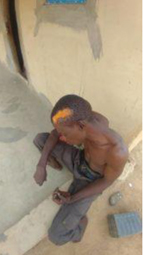
When Musa, a farmer in Northeastern Nigeria, heard the rustle of hooves, he knew there would be trouble. The 58-year-old told his wife and children to run to the next village for help. He knew the lumbering herd of long-horned cattle was likely owned by Fulani herdsmen. Armed with a single shot “Dane gun” he soon confronted a group of herders on his farm. However, despite his firearm, he was soon overwhelmed by Fulani herdsmen armed with machetes, according to Rev. Adamu, his pastor.
“He was slashed badly on his scalp and neck and left for dead,” says Rev. Adamu, who employed Musa as a part-time security guard at his parish house. “By the grace of God, he managed to stagger home, though bleeding badly.” Musa was taken to a hospital in Hong where he was admitted to the intensive care unit.
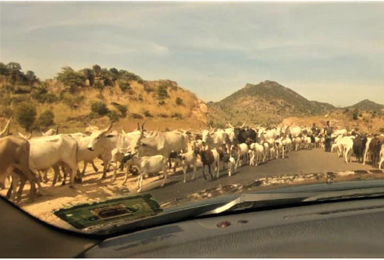
Late November means harvest time for many in West Africa, but it means tragedy and fear for thousands of small-plot farmers along with Nigeria’s savannah states. To the thousands of displaced persons in Adamawa State, the cattle herds are often compared to a Biblical plague. There are no fences to stop them from devouring three-acre plots of beans, corn, maize and yams in the Hong Local Governance Area, a part of the troubled state.
“See the cattle blocking the road, said Adamu, Nov. 21, as he pointed to the endless mass of long-horned white cattle on each side of his car. “There are tens of thousands of them. These are the animals that have been eating up all my people’s crops for two weeks,” he said on a call to Urban News Service. “My people will have no food this winter, and nothing to sell.”
As many as two million Nigerians have been internally displaced in recent years due to such herdsman attacks or terrorism, according to the International Committee on Nigeria, a U.S.-based NGO.
Many of the victims already had fled from bloody ethnic cleansing in other areas. Indeed, this part of Nigeria is home to two competing conflicts. Boko Haram and other Da’esh-linked Nigerian terrorists have been attacking uniformed security and hapless civilians since 2010. While this conflict has received much international attention, a less understood conflict over scarce water and arable land have been far bloodier in this region of Nigeria.
Such phenomena are happening every year all over the troubled states of Nigeria’s North and the central states called the Middle Belt. The clash over land and water in Africa’s most populous nation has a religious dimension too, according to some analysts. The cattle herders are predominantly Muslim and of the Fulani ethnicity, whereas many of the farmers are Christian.
“The farmer-herder conflict has become Nigeria’s gravest security challenge, now claiming far more lives than the Boko Haram insurgency” according to a report from the International Crisis Group
Adamu has seen the victims of both conflicts in his parish, which covers small churches in more than a dozen locations in Hong. He asked that his real name be withheld to reduce his chance of being kidnapped by Boko Haram, or Fulani-terrorist kidnapping gangs which are behind an epidemic of kidnapping for ransom.
Musa may have been one of the lucky ones. Seven people were killed. More than 30 were treated for wounds from machetes, arrows or gunshots within the Hong Local Government Area (LGA) alone, according to Adamu. Some believe the new Fulani raids on farms near Hong are deliberate.
“The herders deliberately have moved their herds to Hong where new plots have sprung up,” Adamu said.
Cattle ranching in Nigeria is rare, although the current government of President Muhammadu Buhari, who is himself a Fulani, believes it can provide a solution to the violence. During the last 30 years, open savannah has produced less forage for herds, possibly due to desertification and climate change. At the same time, the rapidly expanding population has put more entrepreneurial farmers into the open bushland to plant crops.
The Fulani tribe is one of the most influential groups in West Africa, whose numbers approach 35 million. Historically, the Fulani people are Sunni Muslims, although some Fulani are Christians. Many Fulani feel that farmers, pushed by Nigeria’s growing population, are encroaching on land they have grazed for centuries.
More than 2,000 people were murdered in herder-farmer clashes in 2018, the Associated Press reported.
Some Nigerian émigré communities in the United States have been advocating for the Trump Administration to intercede in the Nigerian conflict to force the Buhari-led government to stop what they consider ethnic cleansing in several Northern Nigerian States.
Stephen Enada, spokesman for the International Committee on Nigeria. “Evidence of the criminal culpability of the Muhammadu Buhari government has been piling up for four years,” says Stephen Enada, founder of the U.S. based ICON. “Criminal complicity of the government or collusion with lawbreakers in the Fulani community needs investigation, which is unlikely to happen while Buhari is in power.”
ICON has warned repeatedly that the continuing insurgency and ethnic cleansing is driving Nigeria towards a policy of two-tiered justice — where Christians are treated as second class citizens and their rights not respected.
“Buhari is the patron of the cattle-herding associations that are behind the ethnic cleansing,” said Chinedu Ukwuani, the president of the African Christian Fellowship (ACF) in Hyattsville, Maryland in an interview with Urban News Service.
The ACF has joined a letter-writing campaign organized by Africa United For Peace to appeal to the White House for formal sanctions against