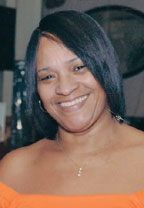
By Jacques Kelly
(Source Baltimore Sun eNewspaper):

Helena Hicks, a civil rights advocate who led a 1950s protest to desegregate the old Read’s drug store lunch counter, died of pneumonia complicated by Lewy body dementia Thursday at the William L. and Victorine Q. Adams Gilchrist Center Baltimore. She was 88 and lived in Northwest Baltimore.
“We think of our historic personalities primarily as male figures but it really was our amazing women who took up the challenge and were the bedrock of our struggle,” said the Rev. Alvin Hathaway, former pastor of Union Baptist Church. “Dr. Hicks stood tall and would never allow anyone to erase our history.
“She was small in stature but big in bravery and courage,” the Rev. Hathaway said. “She could challenge you but also encourage you. She did it to me and I’ve been the better for the relationship.”
Her daughter, Lynne Wilson, said, “She was a little spitfire. If she liked you, she liked you. But if she took on someone, watch out.”
Born in Baltimore and raised on Avalon Avenue, she was the daughter of William Sorrell, a bartender and Nabisco bakery worker, and Helena Butler, a homemaker. She was a Frederick Douglass High School graduate who earned a bachelor’s degree at Morgan State University, a master’s degree at Howard University and a doctorate at the University of Maryland, College Park.
“People think civil rights started in the 1960s. No, sir,” she told The Sun in 2016. “Lillie May Jackson collected a youth group of all the young people to try to teach us how to fight for freedom, and I was part of that youth group,” she said referring to the organizer of the Baltimore branch of the NAACP.
Ms. Hicks picketed Baltimore’s Ford’s Theater as a young girl in the 1940s to protest its Jim Crow admission policy.
“We were going to sit down and get warm, and they threatened to call the police. We got out of there. We were terrified. We thought we were going to get put out of school,” she told the paper.
Her involvement with civil rights began in the middle 1950s. Morgan State University students had sought counter service at the Read’s in the old Northwood Shopping Center near the school. A news account at the time said a Black waitress served them, but she was immediately transferred to another store.

She was among a small group — about five students — who successfully challenged the segregation policy at the old Read’s drug store at Howard and Lexington streets. A group of Congress of Racial Equality members also joined in the protests.
The Baltimore sit-ins predated the historic one in Greensboro, North Carolina, by five years.
“One reason the Baltimore sit-ins seem to have slipped from notice is that they were given very little press coverage at the time. The Sun, for instance, gave the integration of the Read’s lunch counters a one-paragraph mention in a story about integration efforts throughout the state,” said a 2011 Sun editorial.
Arthur Nattans, president of the drug chain, agreed to drop the race barrier at his eating establishments.
“I was in the 10th grade at City College student in Govans and the desegregation meant to me I could eat at the Read’s drug store counter,” said Larry Gibson, a law professor and author of a Thurgood Marshall biography. “Read’s was a large chain and I remember going to the counter and eating at Greenmount and 32nd.”
Later on, I interviewed Helena for an exhibit at the Morgan Student Center,” said Mr. Gibson.
“Helena was a determined person,” said Mr. Gibson. “Read’s was the first chain store with a lunch counter to desegregate in the South.”
As a young woman she ran a daycare business and later became a case worker for the old Baltimore City Department of Public Welfare. She later was part of the Housing Authority of Baltimore City.
She retired as the director of the Office of Policy, Planning and Program Evaluation for Baltimore’s Department of Human Resources.
She remained outspoken and took on the Baltimore City Board of School Commissioners in 2016. She defended Grove Park Elementary/Middle School, the school her children attended, against closing.
“They wouldn’t do this in Roland Park,” she said at a school board meeting. “You wouldn’t do it anywhere that was white. But you think you can march into a Black community, no matter what it looks like.” The school closed in 2018.
The Helena Hicks Emancipation School, a monthly speaker series, was named for her at the Billie Holiday Center for Liberation Arts at Johns Hopkins University.
A funeral will be held at 10:30 a.m. May 7 at the Joseph H. Brown Funeral Home at 2140 N. Fulton Avenue.
Survivors include her daughter, Lynne Wilson, of Baltimore; and a son, Wayne Hicks, of Gaithersburg. Her marriage to Samuel Hicks ended in divorce.