
 HIV Care Continuum: Controlling the virus is key
By Jonathan Mermin, M.D., M.P.H., director, National Center for HIV/AIDS, Viral Hepatitis, STD, and TB Prevention
The Centers for Disease Control and Prevention (CDC) has released a new Vital Signs Report on HIV. The data support the call-to-action to increase the number of people living with HIV who achieve viral suppression.
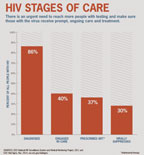
Having very low levels of HIV in the body, achieved by taking antiretroviral medicines allows people living with HIV to have nearly normal lifespans and greatly reduces their chances of transmitting the virus. Yet only 30 percent of all people living with HIV have achieved viral suppression, an important end-goal on the HIV Care Continuum. Of the 1.2 million people living with HIV in 2011:
- 86 percent had been diagnosed with HIV,
- 40 percent were engaged in HIV medical care,
- 37 percent were prescribed antiretroviral therapy (ART), and
- 30 percent had achieved viral suppression.
Of special concern are young people aged 18-24 who are living with HIV. Only 13 percent of this group had achieved viral suppression, compared with 37 percent of those aged 65 and over. The analyses also provide information about the 70 percent of people living with HIV who did NOT have their virus under control in 2011. Among the nearly 840,000 who had not achieved viral suppression:
- 66 percent had been diagnosed but were not engaged in HIV care,
- 20 percent did not know they were infected,
- 4 percent were engaged in care but were not prescribed antiretroviral treatment, and
- 10 percent were prescribed ART but had not achieved viral suppression.
We can change these numbers, but we must keep expanding our testing efforts to help those who are infected learn their status, stay in care, get treatment, and achieve viral suppression. Health care providers can play an active role by offering HIV testing to all of their patients; prescribing ART to patients with HIV regardless of CD4+ count or viral load; and helping to keep those living with HIV in care by using appointment reminders, providing referrals to support services, and other interventions that have been shown to be successful. CDC’s latest campaign, HIV Treatment Works, also pro-vides tools to encourage people living with HIV to Get in Care, Stay in Care, and Live Well.
Helping people with HIV know their status and stay in care will deliver a major prevention payoff, as well as help people live a long, healthy life.
The U.S. guidelines recommend that everyone with HIV should get treatment, regardless of their CD4 count or viral load.
We are committed to a high-impact prevention approach that ensures resources are directed to activities that have the greatest impact on preventing HIV infections and protecting the health of those living with HIV. Controlling the virus is key to controlling, and ending, the HIV epidemic.
Jonathan Mermin, M.D., M.P.H. is the director National Center for HIV/AIDS, Viral Hepatitis, STD, and TB Prevention, Centers for Disease Control and Prevention
