The HIV Treatment Cascade: The key to better care
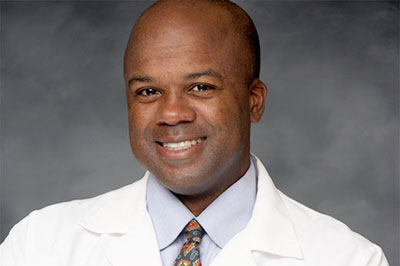
Derrick Butler, M.D., MPH, Associate Medical Director and HIV Specialist, T.H.E. (To Help Everyone) Clinic, Los Angeles.
Educating as many people as possible about HIV/AIDS is critical. However, in order for us to reach the end of the epidemic, every person must ultimately be willing and able to get the medical care that he or she needs. A Brown Bag Lunch Webinar sponsored by the Black AIDS Institute and Gilead Sciences in late August offered suggestions on ways to make that happen.
The webinar centered on the HIV treatment cascade, a model that identifies gaps in HIV care. Derrick Butler, M.D., MPH, associate medical director and HIV specialist at T.H.E. (To Help Everyone) Health and Wellness Centers in Los Angeles, explained that when gaps in HIV care are identified and bridged, more people are likely to get the treatment that they need.
There are five stages of HIV care (pdf):
- Stage 1 occurs when one is tested and diagnosed with HIV.
- Stage 2 takes place when a person diagnosed with HIV is linked to care, ideally within three months of diagnosis.
- Stage 3 describes someone who is being engaged and retained in care. In other words, the person living with HIV continues to follow up with his or her regimen and stays proactive about managing his or her health.
- Stage 4 occurs when one is prescribed HIV medications to control infection.
- Stage 5 refers to the adherence to medication, which ultimately leads to viral suppression.
Addressing Every Stage
Every stage must be addressed in order for treatment to be effective. Unfortunately, each stage also represents an opportunity for people to fall out of care.
For example, in 2011, of every 100 people living with HIV in the U.S:
- 86 knew they were infected, making it to stage 1 of care.
- 80 were linked to care, making it to stage 2.
- 40 stayed in care, making it to stage 3.
- 37 took medications, making it to stage 4.
- 30 achieved viral suppression, making it to stage 5.
When someone with HIV falls out of care at any stage, that person’s health suffers. Without adequate and continuous treatment, that person is more susceptible to HIV-associated illnesses and more hospitalizations. He or she also has a higher risk of developing AIDS.
There are also repercussions for the entire community when someone falls out of care. When a person living with HIV is not being treated, his or her viral load is not suppressed, so that person is more likely to transmit HIV to others.
Engagement in HIV care means getting a patient actively involved in the entire spectrum of care. When this is achieved, everyone benefits.
Closing the Gaps in the Treatment Cascade
Despite all of the gains made in the fight against HIV/AIDS, most people with untreated HIV develop AIDS within 10 years of being infected, and nearly 7,000 people died of AIDS in the U.S. in 2014.
Closing the gaps in the treatment cascade can help to create better outcomes.
To help close these gaps, you can serve as guides and educators to others in the community. For example, suggest that people get tested, and if they are diagnosed with HIV, encourage them to get into care, stay in care and take their HIV medications, Dr. Butler said.
You can also ask questions in order to figure out where someone is on the HIV care continuum and what areas of his or her engagement need improvement. Questions you might ask include these:
- Have you been tested for HIV?
- How can I help you arrange to get tested?
- Have you seen a health-care provider since being diagnosed?
- Have you started taking medications for HIV?
- Have you missed any doses of your medication?
There are 1.2 million people living with HIV in the United States (pdf). Approximately one-third are virally suppressed, Dr. Butler said. The rest could be getting better care, and paying attention to the treatment cascade can help.
Such statistics show where we must place more attention, Dr. Butler said, adding, “We still have a lot of work to do.”
Tamara E. Holmes is a Washington, D.C.-based journalist who writes about health, wealth and personal growth.