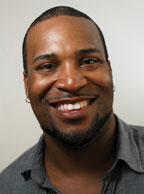
Invested in Living: Antoine Maxwell
One in a series of profiles of the 2013 Fellows in the Black AIDS Institute’s African American HIV University’s Science and Treatment College.
I am a native of Memphis, Tenn. About two years ago I moved to Chicago, where I got involved with HIV/AIDS work, doing public health consulting for some social agencies, and worked as a teaching assistant and tutor. My earliest connection with HIV/AIDS came out of my own personal situation. I was diagnosed 30 years ago, two days after birth, a result of what I would later find out was a blood transfusion that my mother had before I was even born. I’ve known about my status since I was 13-years-old. Around the age of 16, I began to do volunteer work.
I’ve been committed to developing my life and career around dealing with the way people see themselves, and what the real issues are that actually drive HIV incidence. It’s not just the virus, because with proper education and prevention, that’s something people can be protected against.
After having a career in this field for over 15 years, I decided to go back to school full time. I knew all too well how to tell my story and make people cry. I had learned that part and was good at it. But it wasn’t good enough for me.
In the 1990s I believed I wasn’t going to live to be 18, so why worry about college or getting a degree? I was on a slow decline, just waiting to die. I wish someone had told me, “Antoine, you’re not going to die; get your degree.” No one ever wondered why this young man who was articulate and bright and who could be trained to do anything was not preparing for college. My priority right now is getting my degree. Once I enrolled in school last January, I cried, because finally this is an investment in living instead of planning to die.
I came to realize that just doing HIV testing and prevention work wasn’t going to end the epidemic. I’m not a therapist or a doctor or a provider; I was only helping with what I believed was the smallest part, and I wanted to do more.
As part of the Black AIDS Institute’s BTAN in Chicago, I was encouraged to apply to AAHU’s Science and Treatment College. I really wondered what I could possibly learn, since I felt I already knew everything. I had also reached a point where I was beginning to question whether HIV work was really my path.
It turned out to be one of the best decisions I’ve ever made. It was so enlightening to hear people who were doctors and researchers, who had never been involved in the type of prevention work that I do, talk about the connection between psychosocial issues and HIV/AIDS.
But what impressed me most was to hear and learn about all the work being done around better treatments and potential cures for the disease. To be able to talk with the researchers in an academic setting helps me to now have another skill set.
I don’t know what the Creator has in mind in designing all this for me. But I intend to use my experience to help other people find their light and, to the best of my ability, become the best HIV/AIDS advocate and educator I can.
As told to Glenn Ellis, a health writer and radio commentator who lectures nationally and internationally on ethics and equity in health care.