By Bobby R. Henry, Sr.
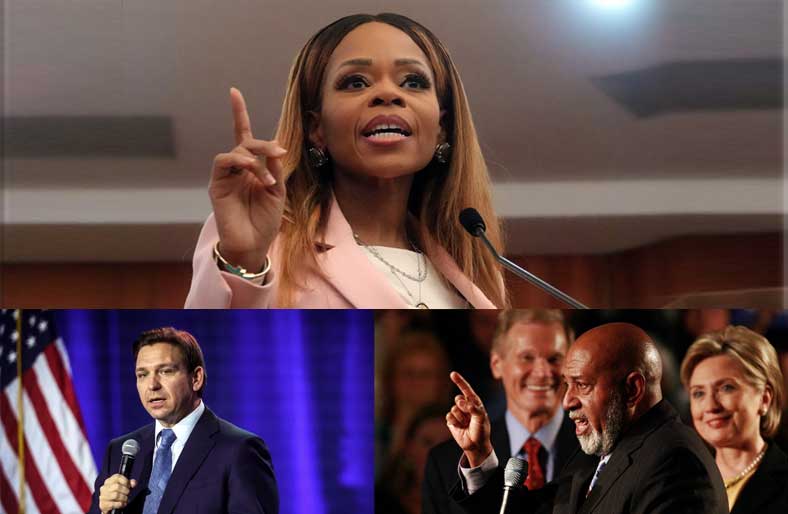
In what is quickly shaping into a political storm with far-reaching consequences, the proposed redistricting efforts by Ron DeSantis, combined with the resignation of Congresswoman Sheila Cherfilus-McCormick, have set the stage for a high-stakes battle that echoes the aftermath of the passing of Alcee Hastings.
For residents of Florida’s 20th Congressional District—a historically Black-majority district that has long served as a political and cultural anchor for African American communities—the question is no longer just about who will lead next. It is about whether the community’s voice, power, and priorities will remain intact.
A Familiar Political Crossroads
When Congressman Alcee Hastings passed in 2021, the district was thrust into a crowded, chaotic special election that drew national attention and divided local loyalties. Today, with Congresswoman Cherfilus-McCormick stepping away under controversial circumstances, the district once again faces uncertainty, fragmentation, and an influx of candidates eager to claim the seat.
But this time, the stakes appear even higher.
Governor DeSantis’ renewed push for redistricting has raised alarms among community leaders who fear that changes to district lines could dilute Black voting strength—potentially reshaping the district’s identity and political influence for years to come.
Redistricting: Power Shift or Political Strategy?
Critics argue that redistricting is not merely a routine political exercise but a strategic maneuver that could redefine representation across South Florida.
Historically, District 20 has been a majority-Black district, ensuring that communities from Broward to Palm Beach County had a unified voice in Washington. Any alteration to that balance could fracture voting blocs and weaken collective influence.
The question many are asking: Who benefits?
A Growing Field, A Missing Message
As potential candidates begin positioning themselves, concerns are mounting that the core issues affecting the community—economic development, education, and media representation—are being overshadowed by political ambition.
Community advocate Vern Dooling put it plainly:
“We need to understand whomever is elected. What are they gonna do for the businesses of our community?”
That concern is echoed by Guy Wheeler, who raised a critical gap in the conversation:
“What messaging are they saying that’s different from any other candidates? It seemed nobody is speaking up for Black businesses, especially Black-owned media.”
For a district that has historically relied on Black press institutions to inform, empower, and mobilize voters, the silence is deafening.
A National Pattern?
The situation unfolding in Florida may not be isolated
Cheryl Smith, Publisher of I Metro Media Group in Texas, sees troubling similarities across state lines:
“It appears to be similar situations here in Texas—just like Florida, we have that kind of governor too.”
Her statement underscores a broader concern that political strategies impacting Black representation are not confined to one state, but may reflect a national trend.
Local Concerns Beyond Washington
While political maneuvering dominates headlines, residents on the ground are asking more immediate questions about leadership and priorities.
See Whales, a Broward County school system employee, voiced frustration over issues closer to home:
“What is the governor doing to address the closings of schools in Broward County?”
This concern highlights a widening disconnect between state-level political agendas and the day-to-day realities facing families, educators, and students.
The Risk of Déjà Vu
The parallels to the post-Hastings era are undeniable:
- A vacant or soon-to-be-vacant seat
- A crowded and competitive candidate field
- Outside political influence
- And a community searching for clarity and unity
But this moment carries an added layer of complexity—redistricting, which could permanently alter the political landscape before a new representative even takes office.
What Comes Next
The coming months will likely bring a surge of campaign announcements, endorsements, and political messaging. But beneath the noise lies a deeper question:
Will this election cycle strengthen the voice of the community—or splinter it?
For the residents of District 20, the answer will not only determine who represents them in Congress, but also whether their collective power remains intact in the face of shifting political lines.
The Bottom Line
This is more than a race.
This is more than redistricting.
This is about representation, relevance, and the right to be heard.
And as history threatens to repeat itself, the community must decide—will it react, or will it lead?