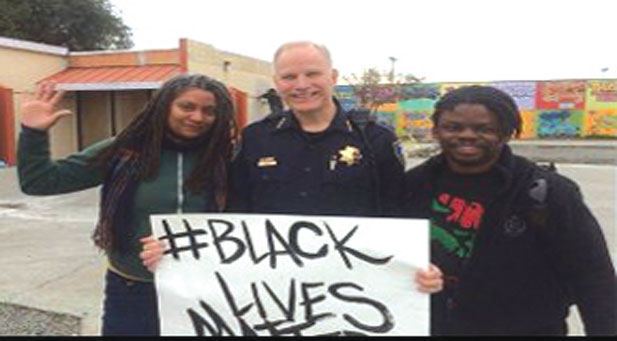
 Richmond, Calif. police chief: Why I joined a protest against police brutality
Richmond, Calif. Police Chief Chris Magnus. (Photo courtesy of Richmond Police Department via Facebook)
By Malcolm Marshall, From New American Media
Q: It’s interesting to see a police chief in the middle of a protest against police brutality. What is your reason for being here today?
A: The police and the community share a common goal. We want peaceful protests to be something that people feel comfortable participating in and to understand that the police are guardians, because we should be protecting people’s constitutional rights. But we also want to send a message that we care about everyone in the community. This needs to be a partnership between police and persons of color, Black, brown, whatever. We need to be working together.
Q: Does the department have a history of being a part of protests in Richmond?
A: We’ve been stewards of public safety, when there’ve been protests related to Chevron, protests around environmental issues, protests about political issues. It’s our job to make sure that everyone’s voice can be heard and that people feel safe exercising their First Amendment rights.
Q: A few weeks ago, you spoke at the peace rally in honor of Rodney Frazier, the 16-year-old who was murdered in front of his home in unincorporated North Richmond, which isn’t technically in your jurisdiction. Why did you choose to lend your presence and words to the community at that event?
A: He was a young man who was very much tied into our greater Richmond community. This was less about jurisdictional lines and more about fining common ground and working together to prevent future homicides, whether they’re in unincorporated Richmond or in the City of Richmond. We need to be joining together, and I think that was an important opportunity to do that.
Q: Your department first tried out using body cam-eras on four officers out on patrol in October 2013 and now has a plan to have all officers wearing body cam-eras by the end of January. What got you interested in the idea of body cameras?
A: I think the cameras provide an opportunity to show the community that we really are committed to professional policing, that we’re transparent in what we do, that we understand the importance of accountability, and I think they’re going to protect not only the public but police officers as well because sometimes there are complaints against officers that really are baseless.
But if there are actually issues and times where officers do behave inappropriately, we want a record of that as well, so we can address it and make things better.
Q: What are some of the challenges of having police use cameras?
A: The challenges involve privacy. People are concerned about how long we keep that kind of video evidence, especially if we’re wearing it into their homes, on calls for service or circumstances like that. So that’s one issue. I think police officers are concerned about how and when they’re used. They don’t want every private conversation that they have recorded, and I can understand that.
The other challenge, of course, as we’ve seen even in the news lately, is even when you’re wearing a camera, it may not show everything. It doesn’t necessarily show the totality of the circumstance. So these are all things we’re going to have to work through, but I think there’s still a net benefit, and I think that’s one of the reasons why even police unions in most places have come around to support body cameras. Because they see that this is going to be a net benefit for not only the police department but the community as well.