Close Menu
The Westside GazetteThe Westside Gazette
    Facebook X (Twitter) Instagram
    • About Us
    • Contact
    • Media Kit
    • Political Rate Sheet
    • Links
      • NNPA Links
      • Archives
    • SUBMIT YOUR VIDEO
    Facebook X (Twitter) Instagram
    The Westside GazetteThe Westside Gazette
    Advertise With Us
    • Home
    • News
      • National
      • Local
      • International
      • Business
      • Releases
    • Entertainment
      • Photo Gallery
      • Arts
    • Politics
    • OP-ED
      • Opinions
      • Editorials
      • Black History
    • Lifestyle
      • Health
      • HIV/AIDS Supplements
      • Advice
      • Religion
      • Obituaries
    • Sports
      • Local
      • National Sports
    • Podcast and Livestreams
      • Just A Lil Bit
      • Two Minute Warning Series
    The Westside GazetteThe Westside Gazette
    You are at:Home » The CDC Is Scaling Back a Major Food Safety Program—What It Means for You
    Health

    The CDC Is Scaling Back a Major Food Safety Program—What It Means for You

    September 3, 20256 Mins Read66 Views
    Facebook Twitter Pinterest Telegram LinkedIn Tumblr Email Reddit
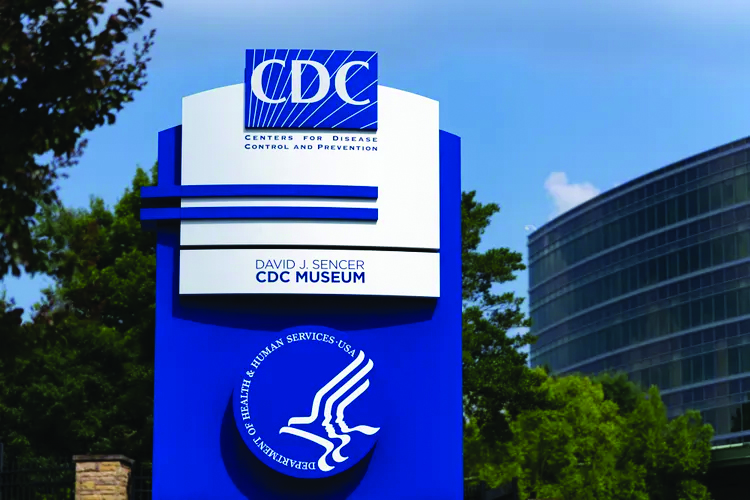
    The CDC has cut back on a surveillance program that monitors foodborne pathogens (Bloomberg/Contributor/Getty Images)
    Share
    Facebook Twitter LinkedIn Pinterest WhatsApp Email
    Advertisement

    By Jenna Anderson 

    Fact checked by Nick Blackmer

    A government program that monitors food poisoning on the national level has scaled back its operations, NBC News reported on Tuesday.

    The Foodborne Diseases Active Surveillance Network (FoodNet), a collaboration between federal health agencies and 10 state health departments, was previously required to track foodborne illnesses caused by eight pathogens.1

    As of July 1, it only has to monitor two: Salmonella and Shiga toxin-producing E. coli (STEC), according to NBC News.2

    A spokesperson from the U.S. Department of Health and Human Services (HHS) confirmed this information to Health, and said other systems at the Centers for Disease Control and Prevention (CDC) will continue national surveillance for the remaining six pathogens.

    Still, food safety experts are concerned that the change will compromise public health and increase the risk of food poisoning.

    “It would be like the FAA saying that we are just going to focus on airplane crashes from American and Delta, and we’re not [worrying] about any crashes that happen from Southwest, United, Alaska, Spirit, JetBlue, and Frontier,” Donald W. Schaffner, PhD, department chair, professor, and extension specialist in Food Science at Rutgers University, told Health.

    What Is FoodNet?

    FoodNet was created in 1995 to monitor and respond to foodborne illness in the U.S.1

    The network consists of the CDC, the U.S. Department of Agriculture (USDA), the Food and Drug Administration (FDA), and the health departments of 10 states: Colorado, Connecticut, Georgia, Maryland, Minnesota, New Mexico, Oregon, Tennessee, California, and New York.1

    FoodNet’s surveillance covers 16% of the U.S. population, or about 54 million people.1 But Teresa Bergholz, PhD, an associate professor in the Department of Food Science and Human Nutrition at Michigan State University, told Health that the data from this pool is used to estimate the incidence of foodborne disease for the entire U.S. population.

    FoodNet actively surveills for infections and tracks trends over time to see if our food supply is getting safer, riskier, or staying the same, Schaffner explained, which helps inform federal regulations and food industry practices.

    The network also plays a key role in the public health response during an outbreak. When an outbreak occurs, state health labs typically detect pathogens from patient samples and report the data to the CDC, explained Bergholz. FoodNet can then use this information to identify the contaminated food and inform the public of the threat.

    What Changed, and Why?

    Before July, FoodNet was required to track foodborne illnesses caused by six additional pathogens: Listeria, Campylobacter, Shigella, Cyclospora, Vibrio, and Yersinia.1

    According to the HHS spokesperson, the reason for the rollback is to “allow FoodNet staff to prioritize core activities.”

    NBC News also cited another reason for the change, taken from a list of CDC talking points shared with the Connecticut Public Health Department and obtained by NBC: “Funding has not kept pace with the resources required to maintain the continuation of FoodNet surveillance for all eight pathogens.”2

    As for the decision to keep monitoring Salmonella and STEC, the HHS spokesperson said the two pathogens are among the top five contributors to foodborne illnesses, hospitalizations, and deaths in America. They’re also targets of Healthy People 2030, an HHS initiative aimed at improving public health, including reducing foodborne illness.34

    It’s worth noting, however, that Listeria and Campylobacter are also included on those lists.

    So Will the Six Pathogens Be Monitored at All?

    The HHS spokesperson said there is still some national surveillance of the six pathogens, such as through the National Notifiable Diseases Surveillance System, but FoodNet is the only system that actively monitors foodborne illness at the national level, NBC News reported.2

    The states in FoodNet can choose to keep monitoring the pathogens, but according to NBC, the response has been varied, and will likely depend on funding.2

    For instance, the Maryland Health Department will continue monitoring all eight pathogens since it’s required at the state level. But the Colorado Department of Public Health and Environment told NBC it will need to scale back its active surveillance for some pathogens if funding is decreased in 2026.2

    Should You Be Concerned About Food Safety?

    The experts Health spoke to said this level of downsizing puts the safety of our food at risk.

    Schaffner pointed to CDC data revealing that the six pathogens still pose a risk to consumers, especially more vulnerable populations—infants, pregnant people, the elderly, and the immunocompromised—who are more likely to experience a life-threatening infection from a foodborne illness.5678

    “We know, and have known, that these are things that are associated with food poisoning,” added Lewis Ziska, PhD, an associate professor of environmental health sciences at Columbia University Mailman School of Public Health, who worked at the USDA for more than 20 years. “Why in the world would you suddenly decide that you want to stop monitoring it?”

    Schaffner was especially concerned about the decision to stop requiring surveillance for Campylobacter and Listeria illnesses.

    “CDC’s own data estimates that we have more illnesses and hospitalizations from Campylobacter than we do from Salmonella,” he said. “It would seem to me to be a terrible idea to discontinue important work on the bacterial species that causes more illnesses and hospitalizations than any other.”9

    As for Listeria, the pathogen may not cause many infections, but cases can be severe—it’s one of the leading causes of death from foodborne illness.910

    The change could also “impact how quickly some outbreaks are detected, as FoodNet focuses on active surveillance for the target pathogens,” Bergholz said. “Faster detection of outbreaks also means more information available to the public on the source of the outbreak and what product should be avoided.”

    What You Can Do

    While government oversight is the most effective way to keep pathogens out of food, Ziska told Health that it may be useful to pay extra attention to basic food safety practices at this time. These include:11

    Separating meat and produce in cooking

    Rinsing produce thoroughly

    Cooking meat to a safe internal temperature

    Cleaning cooking surfaces and utensils often

    Storing and refrigerating food properly

    According to the CDC, the most common symptoms of food poisoning are:12


    Diarrhea

    Stomach pain or cramps

    Nausea

    Vomiting

    Fever

    If you experience food poisoning, drink plenty of fluids to prevent dehydration, and consider talking to a doctor if your symptoms don’t go away within a week.

    “[Food poisoning] doesn’t necessarily result in your death—though, it can,” Ziska said. “But it’s very painful and something to be avoided at all costs.”

     

    as FoodNet focuses on active surveillance for the target pathogens The change could also “impact how quickly some outbreaks are detected ” Bergholz said. “Faster detection of outbreaks also means more information available to the public on the source of the outbreak and what product should be avoided.”
    Share. Facebook Twitter Pinterest LinkedIn Reddit WhatsApp Telegram Email
    Carma Henry

    Carma Lynn Henry Westside Gazette Newspaper 545 N.W. 7th Terrace, Fort Lauderdale, Florida 33311 Office: (954) 525-1489 Fax: (954) 525-1861

    Related Posts

    As state consider changes, new online tool eyes impacts of declining vaccination rates

    October 13, 2026

    Holy Cross Health Receives Emergency Nurses Week Proclamation from City of Deerfield Beach Emergency Nurses Week is October 11 to 17 Caption: Holy Cross Health nurses Lisa Alward, Angi Dionne, Karla Davis and Ian Worley receive an Emergency Nurses Week proclamation from City of Deerfield Beach Mayor Todd Drosky, Vice Mayor Michael Hudak and commissioners Ben Preston, Daniel Shanetzky and Tom Plaut. Photo Credit: Holy Cross Health Submitted by Paige Feigenbaum and Joseph Guastaferro DEERFIELD BEACH, FL– In advance of Emergency Nurses Week, Holy Cross Health received a proclamation from the City of Deerfield Beach at the city’s commission meeting on October 6. Emergency nurses are the first line of defense in the health care system, providing lifesaving care to patients during their most vulnerable moments. This year’s Emergency Nurses Week theme highlights the resilience, expertise and unwavering dedication these professionals bring to local emergency departments every day. “It is an honor for the City of Deerfield Beach commission to invite us to their meeting. This official proclamation means a great deal to our local frontline health care workers by helping raise public awareness of the critical role emergency nurses play in public safety and community health,” said Lisa M. Alward, BSN, RN, TNCC, SANE-A, Unit Base Nursing Council Chair at Holy Cross Freestanding Deerfield Beach Emergency Department. “On behalf of our council and my colleagues, I appreciate the time, leadership and constant support we receive from Mayor Drosky and Vice Mayor Hudak. The commission and Holy Cross Health both provide essential services to our community.” For more than 70 years, Holy Cross Health has been serving Deerfield Beach residents, but never more so than now. In May, the new Holy Cross Health Center & Emergency Care — Deerfield Beach opened to provide care closer to home. Holy Cross Health will fill even more emergency nursing positions when Holy Cross Health Center & Emergency Care – Fort Lauderdale at Sunrise, which is currently under construction, opens in August 2027. This year, Emergency Nurses Week will be celebrated from October 11 to 17 with Emergency Nurses Day on October 14. Emergency nurses care for patients on the worst days of their lives, and Emergency Nurses Week serves as an annual reminder to recognize the dedication, compassion and strength emergency nurses display, even in the most challenging times. Since 1989, the Emergency Nurses Association (ENA) has recognized the second Wednesday in October as Emergency Nurses Day to honor emergency nurses for their commitment to patient care. In 2001, ENA expanded the celebration to devote an entire week to celebrating emergency nurses. For more information on emergency nursing or Emergency Nurses Week, please visit the Emergency Nurses Association at www.ena.org. During Emergency Nurses Week and throughout the year, Holy Cross Health encourages patients and their families to show their appreciation for emergency nurses or any health care provider who goes above and beyond the call of duty and touched their lives by making a monetary gift through the Healing Heroes program, which honors exceptional service and advances Holy Cross Health’s mission of compassionate, patient-centered care. Each Healing Hero receives a special pin and a personal note of gratitude. Donors may contribute any monetary amount they feel comfortable giving and direct their funds to an area of the hospital that means the most to them, including cancer, heart and vascular, orthopedics, neurosciences, Institute for Nursing Excellence, medical equipment and technology, or they can customize their donation. Learn more, make a donation and share a story of gratitude at Holy-Cross.com/HealingHeroes. ABOUT HOLY CROSS HEALTH A member of Trinity Health, Fort Lauderdale-based Holy Cross Hospital, dba Holy Cross Health, is a full-service, not-for-profit, Catholic, teaching hospital operating in the spirit of the Sisters of Mercy for more than 70 years. Holy Cross Health earned High Performing ratings for five Types of Care in U.S. News and World Report’s 2026-2027 Best Hospital rankings; received the American Heart Association’s Commitment to Quality award for achieving high performance across three or more clinical areas in the Get With The Guidelines® program for two years running in 2025 and 2026; received “LGBTQ+ Healthcare Equality High Performer” designation from the Human Rights Campaign Foundation’s 2026 Healthcare Equality Index; and received four out of five stars in the Centers for Medicare & Medicaid Services Overall Hospital Quality Star Ratings for two consecutive years in 2025 and 2026. Additionally, Holy Cross Wound Healing and Hyperbarics program earned the 2025 Center of Distinction award by Healogics®, Physicians Outpatient Surgery Center at Holy Cross HealthPlex landed a spot on Newsweek’s list of America’s Best Ambulatory Surgery Centers 2025 and Holy Cross Health Foundation is designated as a High Performer from the Association for Healthcare Philanthropy. Holy Cross Health was also named among the 2024 America’s Best-In-State Hospitals by Newsweek and selected as a Forbes America’s Best Employers for Healthcare Professionals in 2025 and 2026. Through strategic collaborations and a commitment to being a patient-centered, transformative and healing presence, the 557-bed hospital offers progressive inpatient, outpatient and community outreach services and clinical research trials to serve as the community’s trusted health partner for life. Holy Cross Health also includes the new Holy Cross Health Center & Emergency Care — Deerfield Beach, which opened in May 2026; Holy Cross HealthPlex outpatient facility; The Holy Cross Health Family Health Center in Oakland Park; urgent care centers; and more than 40 Holy Cross Medical Group offices, a multi-specialty physician-employed group of 200+ physicians providing services throughout Broward County. Holy Cross Health Center & Emergency Care – Fort Lauderdale at Sunrise is currently under construction and is expected to open in August 2027. To learn more about Holy Cross Health, visit holy-cross.com, and connect with them on Facebook, LinkedIn, Instagram and YouTube.

    October 13, 2026

    Holy Cross Health is Only South Florida Hospital to Earn the American Heart Association’s Commitment to Quality Award

    October 13, 2026

    (Please enter your Payment methods data on the settings pages.)
    Advertisement

    View Our E-Editon

    Advertisement
    https://youtu.be/5prVj0eWVYg?si=cHOS4Gls9F52Yrk0
    Advertisement

    –>

    Advertisement
    Advertisement
    advertisement

    Advertisement

    –>

    The Westside Gazette
    Facebook X (Twitter) Instagram Pinterest
    © 2026 The Westside Gazette - Site Designed by No Regret Media.

    Type above and press Enter to search. Press Esc to cancel.

    Go to mobile version