Simple recipes that make SCHOOL DAYS a cinch
FAMILY FEATURES
(Source Florida Courier):
Resisting the weeknight urge to call for takeout or order delivery starts with an approachable at-home menu with recipes you can prep in an instant. Especially during back-to-school season when schedules are jam-packed with activities, easy meals and desserts you can rely on allow you and your loved ones to ease tension in the kitchen.
Simplicity is the key to putting dinner on the table in 30 minutes or less, and these Taco Salad and Taco Mac and Cheese recipes offer mealtime solutions that make cooking duty a breeze. Make all that classroom effort worth it with a kid-friendly dessert you can prepare over the weekend and keep refrigerated for weeknight treats with these No Bake Dragon Fruit Cheesecake Bars.
Find more recipe ideas to simplify hectic back-to-school schedules at Culinary.net.
Make dinner happen in 30 minutes
If you’re looking for a go-to meal for your hungry family, search no more. This Taco Salad calls only for pantry staples so you can spice up busy evenings in just half an hour.
Visit Culinary.net for more quick dinner solutions.
 TACO SALAD
Recipe courtesy of “Cookin’ Savvy”
Total time: 30 minutes
Servings: 6
1 pound ground beef
1 can (15 ounces) Black beans
1 can (15 ounces) corn
2 cans (14 ounces each) diced tomatoes with chilies
1/2 cup half-and-half or milk
2 tablespoons onion powder
2 tablespoons garlic powder
2 tablespoons mesquite seasoning
1 tablespoon Black pepper
salt, to taste
1 lime, juice only
1 cup chopped cilantro
romaine lettuce
2-3 cups shredded cheese
1 tub (16 ounces) sour cream
crushed tortilla chips
In pan over medium heat, brown beef until cooked through; drain. Add Black beans and corn. Stir in tomatoes with juices and halfand-half. Add onion powder, garlic powder, mesquite seasoning and pepper. Season with salt, to taste. Bring to simmer.
Add lime juice; stir. Sprinkle with cilantro.
Wash and chop lettuce. Place cheese and sour cream in bowls for toppings.
On plates, top crushed tortilla chips with meat sauce, lettuce, cheese and sour cream, as desired.
A sweet treat to make school days special
Sometimes a long day in the classroom and tough homework assignments call for a cool treat. Rewarding all that studying can be a cinch with a no bake cheesecake bar that lasts throughout the week.
These No Bake Dragon Fruit Cheesecake Bars allow you to keep things cool in the kitchen without cranking up the oven. Plus, they’re made with C&H Sugars that are perfect for adding a little something special to school days.
Find more back-to-school desserts at chsugar.com.
 NO BAKE DRAGON FRUIT CHEESECAKE BARS
Prep time: 35 minutes
Rest time: 6 hours
Yield: 16 bars
Crust:
1 1/2 cups graham cracker crumbs
6 tablespoons unsalted butter, melted
2 tablespoons C&H Light Brown Sugar
1 pinch salt
Bars:
1 small fresh dragon fruit, peeled and cubed small
1/4 cup C&H Granulated Sugar
12 ounces cream cheese, at room temperature
1 1/2 cups C&H Powdered Sugar
2 teaspoons pure vanilla extract
1 cup plain Greek yogurt, full fat, at room temperature
1/2 cup heavy whipping cream, cold
To make crust: Line 8-by-8-inch baking pan with parchment paper. Leave 2-inch overhang of paper on both sides. In medium bowl, mix graham cracker crumbs, butter, brown sugar and salt until well combined. Pour mixture into prepared pan and press into even layer. Place in freezer.
To make bars: In small saucepan over medium heat, cook dragon fruit and granulated sugar until sugar is completely dissolved, dragon fruit is soft and mixture reduces in size, 10-12 minutes, stirring occasionally. Remove from heat and cool completely.
In large bowl, beat cream cheese until soft. Add powdered sugar and mix until fluffy. Scrape sides of bowl. Add vanilla and yogurt. Beat until combined.
In separate bowl, beat heavy whipping cream until stiff peaks form. Fold cream into cream cheese mixture. Pour half of mixture into prepared crust. Add 5 tablespoons dragon fruit mixture to remaining cream cheese batter. Mix until well combined. Pour over plain cream cheese mixture. Place in refrigerator to set at least 6 hours, or overnight.
Cut into 16 bars
Macaroni and cheese is a beloved comfort food that’s easy to make on busy weeknights. With just a few extra ingredients and steps, you can turn boxed mac and cheese into a filling dinner.
To make this Taco Mac and Cheese, simply prepare your favorite boxed mac and cheese according to the package instructions and stir fry the meat and vegetables together. (Hint: You can even chop vegetables the night before to make cooking the next day even easier.) Then add taco seasoning and combine for a new take on a classic dish.
Visit Culinary.net to find more quick and simple recipes.
 TACO MAC AND CHEESE
1 box macaroni and cheese
1/4 cup milk
4 tablespoons butter
1 pound ground turkey
1 red bell pepper, diced
1 yellow bell pepper, diced
1 orange bell pepper, diced
1 onion, diced
2 teaspoons taco seasoning
Prepare boxed mac and cheese with milk and butter according to package instructions.
In skillet, brown ground turkey over medium heat. Add bell peppers and onion. Add taco seasoning.
Stir turkey mixture with mac and cheese to combine.
 What to Do if Your Child is Being Bullied
(Source: fldoe.org/)
What is bullying?
Bullying among children is aggressive behavior that is intentional and that involves an imbalance of power or strength. A child who is being bullied has a hard time defending himself or herself. Usually, bullying is repeated over time. Bullying can take many forms, such as hitting or punching (physical bullying); teasing or name-calling (verbal bullying); intimidation using gestures or social exclusion (nonverbal bullying or emotional bullying); and sending insulting messages by phone or computer e-mail (cyberbullying).
Effects of bullying
Bullying can have serious consequences. Children and youth who are bullied are more likely than other children to
- Be depressed, lonely, anxious;
- Have low self-esteem;
- Be absent from school;
- Feel sick; and
- Think about suicide.
Reporting bullying to parents
Children frequently do not tell their parents that they are being bullied because they are embarrassed, ashamed, frightened of the children who are bullying them, or afraid of being seen as a
“tattler.” If your child tells you about being bullied, it has taken a lot of courage to do so. Your child
needs your help to stop the bullying.
What to do if your child is being bullied
- First, focus on your child. Be supportive and gather information about the bullying.
- Never tell your child to ignore the bullying. What the child may “hear” is that you are going to ignore it. If the child were able to simply ignore it, he or she likely would not have told you about it. Often, trying to ignore bullying allows it to become more serious.
- Don’t blame the child who is being bullied. Don’t assume that your child did something to provoke the bullying. Don’t say, “What did you do to aggravate the other child?”
- Listen carefully to what your child tells you about the bullying. Ask him or her to describe who was involved and how and where each bullying episode happened.
- Learn as much as you can about the bullying tactics used, and when and where the bullying happened. Can your child name other children or adults who may have witnessed the bullying?
- Empathize with your child. Tell him/her that bullying is wrong, not their fault, and that you are glad he or she had the courage to tell you about it. Ask your child what he or she thinks can be done to help.
Assure him or her that you will think about what needs to be done and you will let him or her know what you are going to do.
- If you disagree with how your child handled the bullying situation, don’t criticize him or her.
- Do not encourage physical retaliation (“Just hit them back”) as a solution. Hitting another student is not likely to end the problem, and it could get your child suspended or expelled or escalate the situation
 Back to School: Red Cross Offers Safety Checklist
Submitted By Dariana Molina
Regional Communications Manager
If your student is younger or going to school for the first time, teach them:
*Their phone number, address, how to get in touch with their parents at work, how to get in touch with another trusted adult and how to dial 911.
*Not to talk to strangers or accept rides from someone they don’t know.
If your child walks to school, teach them to:
*Walk on the sidewalk. If no sidewalk is available, walk facing traffic.
*Stop and look left, right and left again to see if cars are coming.
*Cross the street at the corner, obey traffic signals and stay in the crosswalk.
*Never run out into the street or cross between parked cars.
If your student takes the bus to school, teach them to:
Get to their bus stop early and stand away from the curb while waiting for the bus to arrive.
*Board the bus only after it has come to a complete stop and the driver or attendant has instructed them to get on. And only board their bus, never an alternate one.
*Stay in clear view of the bus driver and never walk behind the bus.
If your student rides their bike to school, teach them to:
*Always wear a helmet.
*Ride on the right in the same direction as the traffic is going.
If you drive your child to school, teach them to:
*Always wear a seat belt. Younger children should use car seats or booster seats until the lap-shoulder belt fits properly (typically for children ages 8-12 and over 4’9”), and ride in the back seat until they are at least 13 years old.
If you have a teenager driving to school, make sure they:
*Use seat belts.
Don’t use their cell phone to text or make calls and avoid eating or drinking while driving.
If you are considering getting your student a cell phone:
*Download the free Red Cross First Aid and Emergency apps to give them access to first aid tips for common emergencies and real-time weather alerts. Find the apps in smartphone app stores by searching for the American Red Cross or going to redcross.org/apps.
*If your student is joining a sports team, make sure they:
*Wear protective gear, such as helmets, protective pads, etc.
*Warm up and cool down.
*Watch out for others.
*Know the location of the closest first aid kit and AED.
BACK TO SCHOOL CHECKLIST FOR DRIVERS
*Slow down.
*Yellow flashing lights indicate the bus is getting ready to stop ─ slow down and be prepared to stop. Red flashing lights and an extended stop sign indicate the bus is stopped and children are getting on or off.
*Motorists must stop when they are behind a bus, meeting the bus or approaching an intersection where a bus is stopped.
*Motorists following or traveling alongside a school bus must also stop until the red lights have stopped flashing, the stop arm is withdrawn, and all children have reached safety. This includes two and four-lane highways.
*If physical barriers such as grassy medians, guide rails or concrete median barriers separate oncoming traffic from the bus, motorists in the opposing lanes may proceed without stopping. Do not proceed until all the children have reached a place of safety.
*If you need more tips or information, I’d be happy to set you up for an interview with one of our spokespeople.
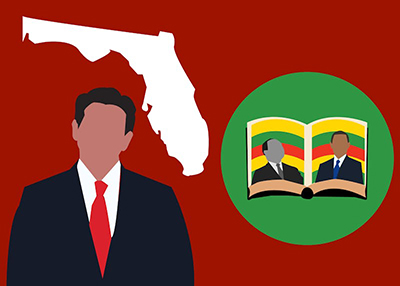
(Photo by Ben Nielsen /The Independent Florida Alligator)Florida education reform initiatives limit African American studies, DEI funds
K-12 schools, universities face impacts of old and new legislation
By Rylan DiGiacomo-Rapp
An email arrived in Kenneth Nunn’s inbox early February. Confusion creased his brow as he scanned the first line, discovering the great distance it had traveled to reach him, a newly retired UF professor of law.
The message was innocent, no more than 200 words, and it eagerly awaited an answer. Its purpose wasn’t what bewildered Nunn. He had seen his share of curious students.
Instead, it was where it arrived from.
“Dear Kenneth,” the message read. “We’re two 16-year old guys from Denmark, diving into a school project on racism in the USA.”
The boys posed three questions on the topic, and Nunn planned his response.
He hadn’t the slightest idea of how they discovered him or his area of expertise during his time as a professor. However, he did have a burning question.
“What kind of world do we live in where students who are [at a high school level] in a Scandinavian country can ask questions about the racial history and conditions in the United States but that students who live in the state of Florida in the midst of those conditions cannot?” he said.
Nunn, a specialist in topics including affirmative action, African studies, civil rights and race relations, still doesn’t have an answer.
Various education reform bills have altered curriculum and cut funding to certain programs in public K-12 schools and universities since the beginning of Gov. Ron DeSantis’ administration. The initiatives have targeted a wide variety of subject matter including diversity, equity and inclusion programs as well as all critical theory, a blanket term that encompasses the idea of critical race theory.
The passage of new legislation, both in support and opposition of past initiatives, faces the state legislature in 2024.
The Stanford Encyclopedia of Philosophy describes critical theory as the examination of social movements and systems of oppression. However, Nunn said, no one can truly define critical race theory.
“…They mean any information or teaching about Black people, Black lives, Black politics or Black history,” he said. “So, anything that would make a conservative person who believes in white superiority uncomfortable, those things can’t be taught.”
Signed into law in 2023, House Bill 999 enacted sweeping changes to Florida higher education. It prohibits state or federal grant money from being allocated to DEI programs or other university organizations promoting activism, as well as those that may pose discrimination on the basis of race, nationality, gender or religion. The measure also prohibits degree programs and course curriculum that include critical race theory.
Lawmakers in support of legislation limiting what can be taught about marginalized groups are creating an environment where racial violence can once again be directed to African American communities, among others, Nunn said.
“You can see the parallels between what is happening in Florida today and what happened in Florida in the years following reconstruction when there was a resurgence of white power and people were trying to oppress African Americans and keep them from exercising the rights that were won,” he said.
Following the murder of George Floyd by police officer Derek Chauvin in 2020, the Black Lives Matter movement staged demonstrations against police brutality and systemic racism.
The Armed Conflict Location & Event Data Project, a data collection and crisis mapping initiative, reported that approximately 94% of all pro-BLM protests were peaceful. However, authorities were three times more likely to intervene in those demonstrations than others.
The “Back the Blue” movement, a conservative-led initiative supporting the police, was formed in response. While over 9% of BLM protests were met with law enforcement intervention, only 2% of pro-police demonstrations were faced with similar treatment, according to ACLED.
“Those who don’t know their history are doomed to repeat it,” Nunn said.
HB 999 also eliminates diversity statements in not only student admissions but also faculty hires.
A ‘brain drain’ has descended upon UF in response to the bill and similar legislation, Nunn said, expressing that the majority of African American faculty he knows who haven’t left already are likely looking to leave.
“I think that would have a devastating effect,” he said.
Following his departure from UF, Nunn is currently teaching at Howard University School of Law in Washington, D.C., where he said it encourages his research.
Florida House Minority Leader Rep. Fentrice Driskell, D-Tampa, said the Democratic caucus will continue to advocate for an inclusive curriculum and a safe space for students moving into 2024.
“It’s important to teach history accurately,” she said in a press conference.
HB 899 “Academic Freedom,” a new initiative proposed by Rep. Yvonne Hayes Hinson, D-Gainesville, aims to reverse certain provisions of HB 999. According to the bill text, it would work to restore DEI programs and prevent “undue political influence” on academic affairs, including curriculum design, further seeking to protect education across “all academic disciplines” if enacted.
However, in matters of critical race theory, Driskell said it’s important to note that the discipline has never been a part of required curriculum in Florida K-12 schools, instead officially presented to students at the college level.
UF African American Studies Program Director David Canton said HB 999 had more of an impact on general education courses than the upper level electives he teaches, which have remained largely unaffected.
The controversy over the curriculum would be something he’d teach about, Canton said.
“We’re going to show the debates about these issues because they’re part of the discipline,” he said.
Due to stricter legislation, Florida K-12 schools have fared differently.
The 2022 Individual Freedom Act, nicknamed the “Stop W.O.K.E. Act” by critics, established that insinuating any race is inherently racist, sexist or oppressive could constitute discrimination. It also revised requirements for instruction on African Americans in K-12 public schools.
Florida banned the newly developed Advanced Placement African American Studies soon after in 2023, prohibiting the college level course in public high schools. The Florida Department of Education wrote the course was “inexplicably contrary to Florida law and significantly lacks educational value” but did not indicate which law was violated.
“The question is why can’t this information be presented to a 15-year-old, 16- or 17-year-old?” Canton said.
The course’s curriculum has since been modified, but the College Board did not indicate that its subsequent approval in Florida was a driving factor behind the changes. The new curriculum includes topics like intersectionality but only lists classwork on reparations and BLM, which were previously required as optional, and Black Queer studies were excluded completely.
The College Board hopes to officially launch the finalized AP course in Fall 2024.
Education reform is a battle of interpretation hinged on the version of information teachers provide their students more than anything else, Canton said.
He described the AP African American Studies curriculum, specifically the issue of reparations, through the lens of a violent crime that took place less than 50 miles west of Gainesville.
The 1923 Rosewood Massacre resulted in the deaths of at least six individuals and the destruction of a historically Black community. A 1994 Florida bill still offers descendants of victims of the massacre scholarships that could fully cover tuition for state universities.
Canton said it’s ironic to move from a time when Florida was actively attempting to right historic injustices to the present day where the discussion of reparations isn’t required.
“That’s an interesting paradox right there,” he said.
The short-term elimination of AP African American Studies was disappointing to Chiemela Onwuchekwa, a 16-year-old Buchholz High School junior.
“It made me really sad,” she said. “In our history classes, when they do talk about African American history, it’s not to a deep enough extent that people can actually fully grasp African American history and how it has a big impact on Black people currently and also U.S. history as a whole.”
Senate Bill 928 proposed by Sen. Geraldine Thompson, D-Orlando, would require public schools to include ample curriculum on African American history and the Holocaust if passed, instituting annual verifications that educational standards are being met.
On the other hand, the state also faced criticism after the Florida Department of Education approved a new curriculum in 2023 on African American studies that instructs students beginning in middle school that enslaved African Americans experienced what DeSantis described as “personal benefit” by learning life skills.
An initiative sponsored by Sen. Blaise Ingoglia, R-Spring Hill, could take the current standard further by putting an emphasis on the Democratic Party’s pro-slavery stance prior to the Civil War and the Republican Party’s creation as a countermovement if enacted. The bill has been dubbed the “Kamala Harris Truth in Slavery Teaching Act” after Vice President Harris, a member of the Democratic Party, criticized Florida’s current curriculum.
Onwuchekwa, president of the Buchholz Black Student Union, said she would internally laugh if a teacher insinuated slavery had any type of positive impact on the Black community.
“It’s a joke,” she said. “There is no way anyone who is qualified in their job as a history teacher should say that and actually believe it.”
That type of instruction would be false and misleading, she said.
If passed in 2024, Senate Bill 344 proposed by Sen. Shevrin Jones, D-Miami Gardens, would directly prohibit this part of the curriculum.
Onwuchekwa said she hopes to see more legislation opposing DeSantis’ education reform because current laws could perpetuate ignorance and cultural divides.
“Younger generations who are growing up and coming into high school and beyond, they’re not actually going to learn anything,” she said.
Contact Rylan DiGiacomo-Rapp at rdigiacomo-rapp@alligator.org. Follow her on X @rylan_digirapp.
What to know about the Kids Online Safety Act that just passed the Senate
By Barbara Ortutay
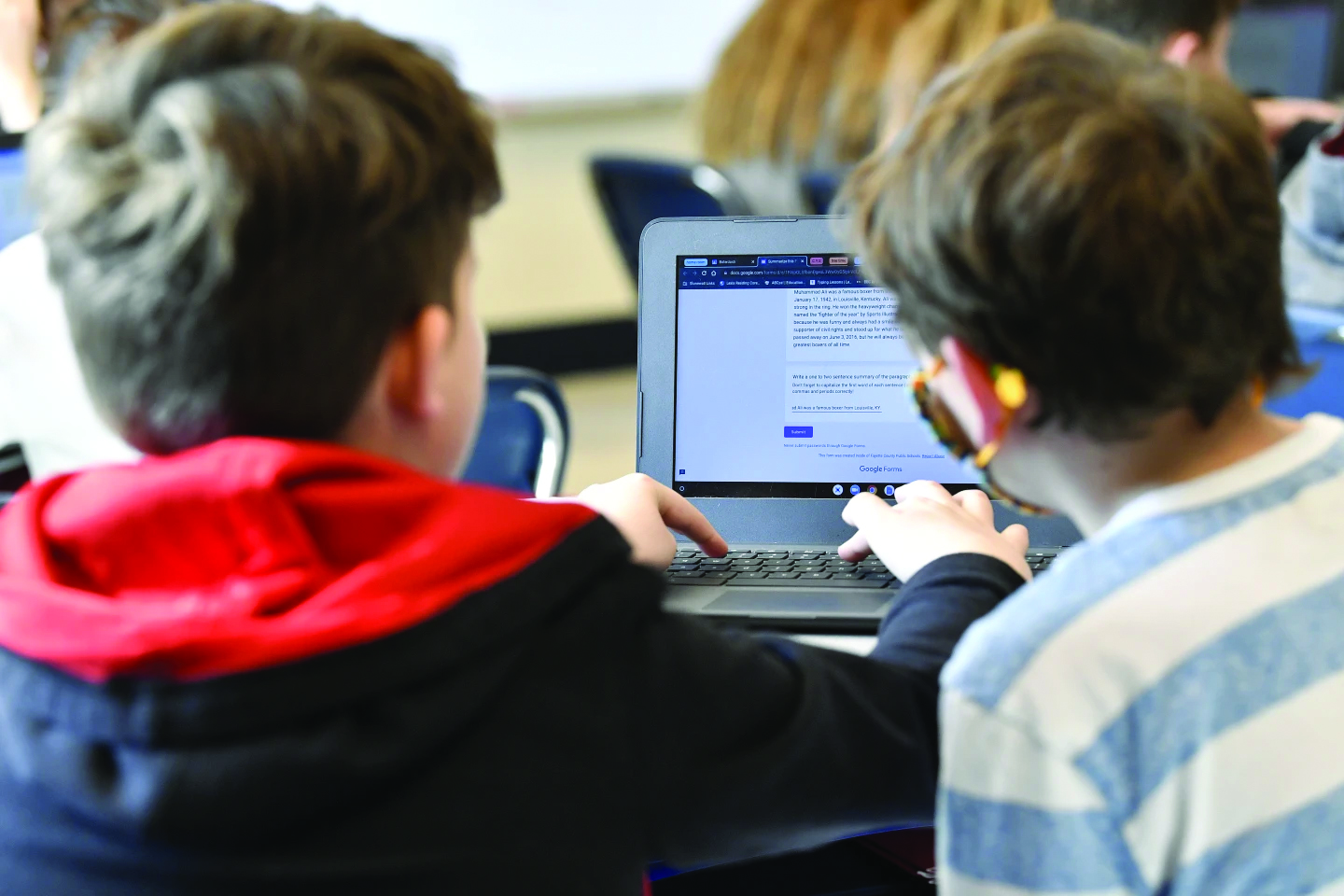
The last time Congress passed a law to protect children on the internet was in 1998 — before Facebook, before the iPhone and long before today’s oldest teenagers were born. Now, a bill aiming to protect kids from the harms of social media, gaming sites and other online platforms has passed in the Senate with overwhelming support. Its fate is less certain in the House, but President Biden has indicated he would sign it if it passed.
Proponents of the Kids Online Safety Act include parents’ groups and children’s advocacy organizations as well as companies like Microsoft, X and Snap. They say the it is a necessary first step in regulating tech companies and requiring them to protect children from dangerous online content and take responsibility for the harm their platforms can cause.
Opponents, however, fear KOSA would violate the First Amendment and harm vulnerable kids who wouldn’t be able to access information on LGBTQ issues or reproductive rights — although the bill has been revised to address many of those concerns, and major LGBTQ groups have dropped their opposition to the legislation.
Here is what to know about KOSA and the likelihood of it going into effect.
What does KOSA do?
KOSA would create a “duty of care” — a legal term that requires companies to take reasonable steps to prevent harm — for online platforms minors will likely use.
They would have to “prevent and mitigate” harms to children, including bullying and violence, the promotion of suicide, eating disorders, substance abuse, sexual exploitation and advertisements for illegal products such as narcotics, tobacco or alcohol.
Social media platforms would also have to provide minors with options to protect their information, disable addictive product features, and opt out of personalized algorithmic recommendations. They would also be required to limit other users from communicating with children and limit features that “increase, sustain, or extend the use” of the platform — such as autoplay for videos or platform rewards. In general, online platforms would have to default to the safest settings possible for accounts it believes belong to minors.
“So many of the harms that young people experience online and on social media are the result of deliberate design choices that these companies make,” said Josh Golin, executive director of Fair play, a nonprofit working to insulate children from commercialization, marketing and harms from Big Tech.
How would it be enforced?
An earlier version of the bill empowered state attorneys general to enforce KOSA’s “duty of care” provision but after concerns from LGBTQ groups and others who worried they could use this to censor information about LGBTQ or reproductive issues. In the updated version, state attorneys general can still enforce other provisions but not the “duty of care” standard.
Broader enforcement would fall to the Federal Trade Commission, which would have oversight over what types of content is “harmful” to children.
Who supports it?
KOSA is supported a broad range of nonprofits, tech accountability and parent groups and pediatricians such as the American Academy of Pediatrics, the American Federation of Teachers, Common Sense Media, Fairplay, The Real Facebook Oversight Board and the NAACP. Some prominent tech companies, including Microsoft, X and Snap, have also signed on.
ParentsSOS, a group of some 20 parents who have lost children to harm caused by social media, has also been campaigning for the bill’s passage. One of those parents is Julianna Arnold, whose 17-year-old daughter died in 2022 after purchasing tainted drugs through Instagram.
“We should not bear the entire responsibility of keeping our children safe online,” she said. “Every other industry has been regulated. And I’m sure you’ve heard this all the time. From toys to movies to music to, cars to everything. We have regulations in place to keep our children safe. And this, this is a product that they have created and distributed and yet over all these years, since the ’90s, there hasn’t been any legislation regulating the industry.”
KOSA was introduced in 2022 by Senators Richard Blumenthal, D-Conn., and Marsha Blackburn, R-Tenn.
Who opposes it?
The ACLU, the Electronic Frontier Foundation and other groups supporting free speech are concerned it would violate the First Amendment. Even with the revisions that stripped state attorneys general from enforcing its duty of care provision, EFF calls it a “dangerous and unconstitutional censorship bill that would empower state officials to target services and online content they do not like.”
Kate Ruane, director of the Free Expression Project at the nonprofit Center for Democracy and Technology, said she remains concerned that the bill’s care of duty provision can be “misused by politically motivated actors to target marginalized communities like the LGBTQ population and just politically divisive information generally,” to try to suppress information because someone believes it is harmful to kids’ mental health.
She added that while these worries remain, there has been progress in reducing concerns.
The bigger issue, though, she added, is that platforms don’t want to get sued for showing minors content that could be “politically divisive,” so to make sure this doesn’t happen they could suppress such topics — about abortion or transgender healthcare or even the wars in Gaza or Ukraine.
NetChoice, a tech industry group whose members include Meta, Google and X among others, also opposes KOSA — and has four injunctions against similar state laws.
Last year, for instance, after NetChoice’s challenge, a federal judge has halted implementation of a California law that would require businesses to report to the state on any product or service they offer on the internet that is likely to be accessed by minors and provide plans to reduce any harms children might suffer. It also would ban businesses from collecting certain types of data from young users.
“The State has no right to enforce obligations that would essentially press private companies into service as government censors,” U.S. District Judge Beth Labson Freeman wrote in her ruling last September.
While Congress has “good intentions” wanting to protect kids from online harms, KOSA “fails to meet basic constitutional principles and fails parents because it won’t make a single child safer online or address their concerns,” said Carl Szabo, NetChoice’s vice president and general counsel. “Taking away parents’ and guardians’ authority and choice, while forcing them to give up their and their children’s personal information to access and engage in free speech, is both dangerous and a violation of their rights.”
What happens next?
House Speaker Mike Johnson has been non-committal about whether he will bring the bill up in the House but has said that he is committed to trying to find consensus. If the House does pass the bill before the congressional session ends in January, President Biden has strongly indicated he will sign it.
In a statement Tuesday encouraging the House to pass the legislation, Biden said that “we need action by Congress to protect our kids online and hold Big Tech accountable for the national experiment they are running on our children for profit.”
 Why Are Teachers So Unhappy?
(Source Word In Black):
By Joseph Williams
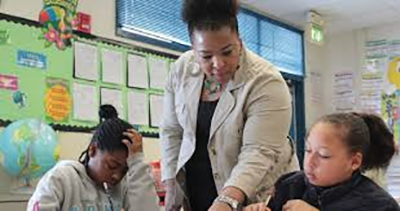
Four years after a global pandemic completely disrupted their profession, a new survey of the nation’s public-school teachers found disturbingly high, across-the-board percentages of them who are stressed out or upset about nearly every aspect of their career, from work-life balance to institutional support and low pay.
But the Pew Research Center survey also found even higher levels of frustration among teachers working in high-poverty schools, which tend to have large percentages of Black and Latino students.
Besides dealing with poverty, chronic absenteeism, and mental health issues in the classroom, those teachers say they also must manage disengaged parents, student disruptions that sometimes become abusive, and school administrators who they believe don’t really support them, according to the survey. And, like their colleagues in more affluent districts, they wouldn’t recommend the job to anyone.
“Teachers are really not happy with their jobs,” says Luona Lin, a Pew research associate focusing on social and demographic research. “Seventy-seven percent say they frequently find their job to be stressful. Sixty-eight percent say it’s overwhelming. And it’s also quite interesting to see the extent to which poverty, chronic absenteeism and mental health stand out, as the major problems teachers say that other schools are facing.”
“The vast majority of teachers say that the overall state of public education has gotten worse,” she says. “We also asked them to look to the future, how it will be in the five years from now. And a narrow majority say that they expect the state of education to be worse.”
The Pew report shined yet another unsettling spotlight on the state of teaching, a workforce of 3 million charged with educating the nation’s children. Experts say the profession is at an inflection point, one that could shape the course of public education arguably for the next generation and beyond.
Even before the pandemic, educators reported increasing levels of burnout, stemming from long hours, relatively low pay, and the escalating academic, social, and psychological needs of students. Though it’s not unusual to hear them talk of the profession as a calling and not a job, rising disillusionment, and workload have led a growing number of teachers to call it quits.
The Extra Burden on Black Teachers
Things are even worse in high-poverty schools — long considered a euphemism for majority Black or Latino schools located in minority urban communities with high concentrations of poverty. Typically, under-resourced and underserved, Black teachers in those schools tend to carry an extra burden, serving as counselors, role models, and substitute parents for Black children who may come from dysfunctional or impoverished households.
According to the Pew Report, the Pew survey is based on questionnaires distributed to 2,531 K-12 teachers from Oct. 17-Nov. 14, 2023. Teachers were asked their opinions on a range of topics, including job satisfaction, classroom challenges, workload management, problems their students face, and what they think about the state of public education.
A Slew of Pressing Problems
The top issue among teachers in all districts was rising levels of poverty among students, with roughly 60% of teachers in both urban and rural schools identifying it as a significant problem, according to the survey. Next was absenteeism, defined as students missing a substantial number of days, particularly in high school; 61% of high school teachers said it affected their view of their job, according to the survey.
The third universal problem teachers identified was student anxiety and depression were significantly high: the survey found 69% of high school teachers and 57% of middle school teachers say this is a major problem among their students,
“Most teachers say that the impact of the pandemic on students behavior, academic performance, and emotional well-being has been negative,” Lin says.
While those issues cut across school socioeconomic levels, teachers in high-poverty schools identified more acute problems that drag down their job satisfaction and hinder students’ ability to learn.
Seventy-three percent of teachers in high-poverty schools say the academic performance and behavior of most students at their school are fair or poor, while 64% say students’ behavior at their school is fair or poor, according to the survey. The numbers around absenteeism are similar: “Majorities of teachers in high- and medium-poverty schools say chronic absenteeism is a major problem where they teach (66% and 58%, respectively),” according to the survey.
While 68% of all teachers say they have experienced verbal abuse from their students, such as being yelled at or verbally threatened, only about 1 in 5 say it happens at least a few times a month. In high-poverty districts, however, 67% of teachers say it’s a daily occurrence.
And while substantial majorities of high school teachers overall believe students’ parents aren’t engaged with their child’s attendance, don’t hold them accountable for misbehavior, or don’t help them with homework, those percentages jump north of 80% in high-poverty schools.
Teachers as Likely to Leave the Classroom Now as Last Year
From burnout to frustration with inadequate pay, educators aren’t feeling any better about the profession.
By Aziah Siid/Word In Black

It’s no secret. Teachers are tired, overworked, overlooked, and flat-out under paid. Although many of the conversations about hiring and retaining teachers — especially Black teachers — were being discussed long before COVID-19, times are particularly tough. Education budgets nationwide are being crunched due to the end of pandemic-era aid from the federal government, and teachers have fewer resources to catch students up — plus students also need high-dosage intensive tutoring, after-school programming, and academic summer school, which teachers end up staffing.
Now a new report from RAND reveals that just like they expressed a year ago, teachers — particularly Black teachers — who once wanted to do nothing more than educate children are saying they’re ready to leave the profession.
For the report, researchers pulled information from the 2024 State of the American Teacher survey, which takes a look at kindergarten through 12th-grade public school teachers. Here are three takeaways from the analysis:
- Black teachers were less likely to report experiencing job-related stress than white teachers, but they were significantly more likely to say that they intend to leave their school jobs — in addition to reporting lower base pay than their peers.
Despite studies showing Black students benefit from having at least one Black teacher during their K-12 education, Black teachers only make up 7% of the teaching workforce. If the Black teachers we do have quit, the result could be reduced academic achievement, lower self-esteem, higher absenteeism, and a higher likelihood of Black kids being referred to special education.
The impact of Black teachers quitting also shows up financially in majority-Black school districts. For example, among teachers in Philadelphia, “more than 15% of them quit each year, costing a district around $20,000 per lost educator in added recruitment and new training costs, not to mention disruptions to student learning,” according to the Learning Policy Institute.
To top things off, the issue of the ‘invisible Black teacher tax,’ is increasingly becoming a hot topic regarding the treatment and pay of Black teachers, especially in comparison to their white counterparts. Black teachers working in the K-12 public space are often subjected to longer hours, lower pay, and more responsibility, which are some of the reasons they are not only leaving the classroom, but also the profession entirely.
To counter this, organizations like the Center for Black Teacher Development work to help Black teachers stay in the classroom. But according to RAND, Black teachers are still more likely to say they’re walking out the door.
- Teachers overall reported experiencing about twice as much job-related stress or burnout as comparable working adults and nearly three times as many had a tough time coping with stress.
Teachers feel added pressures to make sure students that are significantly behind academically get up to grade level, are proficient in an academic subject area — and actually graduate. Some of the other sources of stress include the intrusion of political issues, their limited voice in school decision-making, lack of support from administration, and, for some, even physically feeling unsafe at their school site..
Indeed, in states like Florida and Iowa, book bans and restrictions on the rights and freedoms of LGBTQ+ school community members are leaving teachers feeling frustrated, and often confused about what they can do to protect themselves and students.
To counter this, organizations like the American Federation of Teachers have teamed up with educators nationwide to solve the problems causing such chronic levels of stress.
- Teachers overall desired roughly a $16,000 increase, on average, to consider their pay adequate.
One of the factors leading to high levels of stress and wanting to leave the classroom is inadequate pay. Side hustles like second, and third jobs — as well as sticking around to run after-school tutoring or extracurricular activities — are some ways teachers have tried to pull in extra cash.
According to the National Center for Education Statistics, nearly 60% of public school teachers supplement their teaching salary with income through other jobs. Despite teachers working longer hours than comparable working adults in other professions, the only way educators feel like their pay is enough is to do more work.
How Do Schools Keep These Teachers?
As Travis J. Bristol, an associate professor of teacher education and education policy at Berkeley’s School of Education told Word In Black in February, it’s not rocket science what districts need to do to keep educators — particularly Black teachers — in the classroom. They need resources for their schools and classrooms, and support and training to help struggling students. And, as Bristol said, ”It’s important to say and note that the best recruitment strategy is a retention strategy.”
 Student Activities And Volunteer Service-Learning Hours
The purpose of the Service-Learning Graduation Requirement and the Student Volunteer Service Program is to acquaint high school students with the need to provide service to both their school and community.
Service Learning is defined as: An educational method by which participants learn and develop through active participation in service that is conducted in and meets the needs of a community. Service learning is coordinated with a school or community service program and with the community. It is integrated into and influences the lifelong learning of a participant and includes structured time for the participants to reflect on the service experience.
Service learning teaches the skills of civil participation and develops an ethic of service and civic responsibility. Students can provide service in the community on a voluntary basis to public, nonprofit agencies, civic, charitable and governmental organizations and school campuses.
Service Learning and Volunteer Service Program is divided into three tiers:
Tier I Service-Learning Hours required for graduation.
Tier II Service hours required to meet the Bright Futures Initial Eligibility Requirements.
Tier III Volunteer Service Hours required to earn a silver cord at graduation.
Service Learning Guidelines
Student Volunteer Service Application and Approval Form Student Volunteer Log SheetBright Futures – Paid Work Hours
Bright Futures Purposes ONLY. Cannot be used for graduation-required community service, nor the Silver Cord.
The paid work hours must have occurred on July 1, 2022, and after since this is when the state statute went into effect.
ALL Bright Futures awards require 100 paid work hours, regardless of the amount of community service required. (i.e., for the Medallion (FMS/75%) they need 75 service hours OR 100 paid work hours)
You cannot mix and match community service and paid work.
Bright Futures Paid Work Hours Log Form
- The Service-Learning Graduation Requirement
The School Board has incorporated Service Learning and volunteer service into the high school graduation requirements. Any student who wishes to earn a standard diploma must meet the graduation requirement of 40 documented hours in the Student Volunteer Service Program. The links provided will allow access to the rules governing exactly what will be accepted as service learning/volunteer service hours and what won’t, the log sheets necessary to document hours and the Service Application and Approval Form (used when a student is not performing a service as part of a school-sponsored organization).
Academic Electives, Specials, and Magnet Programs
Applied Learning strives to provide students with opportunities in engaging activities that will generate interest, spark passion, increase the application of skills and knowledge, and facilitate a community of students who will graduate prepared to tackle the challenges of the world around them.. We do this through seven areas: Civic Engagement, Driver’s Education, Music & Performing Arts, Physical Education, STEM & Computer Science, Visual Arts, and Magnet Programs.
Applied Learning is Experiential Learning
Experiential learning is learning through doing. It encompasses critical thinking and reflection, student initiative and accountability, student engagement on intellectual, creative, social, emotional, and physical levels, and recognizes the ability to learn and grow from these experiences.
The graphic below demonstrates student-centered learning which focuses on putting students’ well-being and interests at the center of their educational journey. Electives and Specials provide an environment that supports social-emotional learning while ensuring the retention of core skills through experiential learning. Encouraging social-emotional learning, strong core-content subject matter, and innovative electives acknowledge student voice to ensure a well-rounded educational experience.
 Back-to-School Transitions: Tips for Parents
By Ted Feinberg, EDD, NCSP, & Katherine C. Cowan, National Association of School Psychologists, Bethesda, MD
Getting a new school year off to a good start can influence children’s attitude, confidence, and performance, both socially and academically. The transition from August to September can be difficult for both children and parents. Even children who are eager to return to class must adjust to the greater levels of activity, structure, and, for some, pressures associated with school life. The degree of adjustment depends on the child, but parents can help their children (and the rest of the family) manage the increased pace of life by planning ahead, being realistic, and maintaining a positive attitude.
BEFORE SCHOOL STARTS
The following suggestions can help ease the transition and promote a successful school experience:
Be sure your children are in good physical and mental health. Schedule doctor and dental checkups early. Discuss with your pediatrician any concerns you have over your children’s emotional or psychological development. Your doctor can help determine if your concerns are normal, age-appropriate issues or require further assessment. Your children will benefit if you can identify and begin addressing potential problems before school starts.
Review the material sent by the school as soon as it arrives. These packets include important information about your children’s teachers, assigned classrooms, school supply requirements, sign-ups for after-school sports and activities, school calendar dates, bus transportation, health and emergency forms, and volunteer opportunities.
Mark your calendar. Make a note of significant dates, especially back-to-school nights. This is especially important if you have children in more than one school and need to juggle obligations. Arrange for a baby-sitter well in advance of the visit with your child’s teachers, as other parents will be seeking baby-sitting services for the same night.
Make multiple copies of all your child’s health and emergency information for reference. Health forms are typically good for more than a year and can be used again for camps, extracurricular activities, and the following school year.
Buy school supplies early. Organize supplies and backpacks a week or two before school starts. Older children can help do this, but make sure they use a checklist that you can review. Some teachers require specific supplies, so save receipts for items that you may need to return later.
Reestablish bedtime and mealtime routines (especially breakfast) at least 1 week before school starts.
Prepare your children for this change by talking about the benefits of school routines in terms of not becoming overtired or overwhelmed by schoolwork and activities. Help them to understand the reasons for these schedule adjustments so they do not view the changes as a punishment. Include prebedtime reading and household chores if these were suspended during the summer.
Turn off the TV.
Encourage your children to play quiet games, do puzzles, review flash cards, color, or read as early morning activities instead of watching television. This will help ease them into the learning process and school routine. If possible, maintain this practice throughout the school year. Television is distracting for many children, and they will arrive at school better prepared to learn each morning if they have engaged in less passive activities.
Visit school with your children. If your children are young or in new schools, schedule a school visit before classes begin. Meeting teachers and locating classrooms, locker, lunchroom, and so on will help ease anxieties and also allow your children to ask questions about the new environment. Call ahead to make sure the teachers will be available to introduce themselves.
Minimize clothes shopping woes. Buy only the essentials. Summer clothes are usually fine during the early fall, but be sure each child has at least one pair of sturdy shoes. Check with your school to confirm dress code guidelines.
Designate a study/work area for homework. Older children should have the option of studying in their room or a quiet area of the house. Younger children usually need an area set aside in the family room or kitchen to facilitate adult monitoring, supervision, and encouragement.
Select a spot to keep backpacks and lunch boxes. Designate a place for your children to put their school belongings and a place to put important notices and information sent home for you to see. Explain that emptying their backpack each evening is their responsibility, even for young children.
Freeze a few easy dinners. It will be much easier on you if you have dinner prepared so that meal preparation will not add to household tensions during the first week of school.
THE FIRST WEEK
Some helpful suggestions for the first week of school include the following:
Clear your own schedule. To the extent possible, postpone business trips, volunteer meetings, and extra projects. You want to be free to help your children acclimate to the school routine and overcome the confusion or anxiety that many children experience at
the start of a new school year. Providing calming, reassuring messages to your children may help them keep the stress manageable.
Make lunches the night before school. Older children should help or make their own. Give them the option to buy lunch in school if they prefer and finances permit.
Set alarm clocks. Have school-age children set their own alarm clocks. Praise them for paying attention to morning schedules and being ready for bus pickups.
Leave plenty of extra time. Make sure your children have plenty of time to get up, eat breakfast, and get to school. For very young children taking the bus, pin to
their shirt or backpack an index card with pertinent information, including their teacher’s name and bus number, as well as your daytime contact information.
Prepare for after school. Review with your children what to do if they get home after school and you are not there. Be very specific, particularly with young children.Put a note card in their backpacks with the name(s) and number(s) of a neighbor who is home during the day as well as a number where you can be reached. If you have not already done so, have your children meet neighbor contacts to reaffirm the backup support in person.
Review your children’s schoolbooks. Talk about what your children will be learning during the year. Share your enthusiasm for the subjects and your confidence in your children’s ability to master the content. Learning skills take time and repetition. Encourage your children to be patient, attentive, and positive.
Send a brief note to your children’s teachers. Let the teachers know that you are interested in getting regular feedback on how and what your children are doing in school. Be sure to attend back-to-school night and introduce yourself to the teachers. Find out how they like to communicate with parents (e.g., through notes, e-mail, or phone calls). Convey a sincere desire to be a partner with your children’s teachers to enhance their learning experience.
Familiarize yourself with the other school professionals. Learn their roles and how best to access their help if you need them. This can include the principal and front office personnel; school psychologist, counselor, and social worker; reading specialist, speech therapist, and school nurse; and after-school activities coordinator.
OVERCOMING ANXIETY
Thoughtful preparation is essential but will not necessarily eliminate all feelings of anxiety at the beginning of the school year. Here are other ways that parents can help ease their children’s worries and discomfort:
Let your children know you care. If your children are anxious about school, send personal notes in their lunch boxes or bookbags. Children absorb their parent’s anxiety, so model optimism and confidence. Let them know it is natural to be a little nervous anytime you start something new but they will be just fine once they become familiar with classmates, teachers, and school routines.
Do not overreact. If the first few days are a little rough, try not to overreact. Young children in particular may experience separation anxiety or shyness initially, but teachers are trained to help them adjust. If you drop your children off, try not to linger. Reassure them that you love them, will think of them during the day, and will be back.
Remain calm and positive. Acknowledge anxiety from a bad experience the previous year. Children who had a difficult time academically or socially or were teased or bullied may be more fearful or reluctant to return to school. If you have not yet done so, share your child’s concern with the school and confirm that the problem has been addressed. Reassure your child that the problem will not occur again in the new school year, and that you and the school are working together to prevent further issues. Be sure to let your children know that you are always available to listen to them and be of assistance, if needed.
Reinforce your children’s ability to cope. Give your children a few strategies to manage a difficult situation on their own, but encourage them to tell you or the teacher if the problem persists. Praise your children’s attempts at problem-solving difficult situations. Maintain open lines of communication with the school.
Arrange play dates. Try to arrange get-togethers with some of your children’s classmates before school starts and during the first weeks of school to help them reestablish positive social relationships with peers.
Plan to volunteer in the classroom. Doing so helps your children understand that school and family life are linked and that you care about the learning experience. Being in the classroom is also a good way to develop a relationship with your child’s teachers and classmates, and to get firsthand exposure to the classroom environment and routine. Most teachers welcome occasional parent help, even if you cannot volunteer regularly.
WHEN PROBLEMS ARISE These recommendations can contribute to a positive and
productive school experience for most children. Some children may exhibit more extreme opposition to or fear of school, or they may be coping with more specific learning
or psychological difficulties. If your child demonstrates one or more problems that seem more intense in nature or go on for an extended period, you may want to contact the
school to set up an appointment to meet with your child’s teachers and school psychologist. They may be able to offer direct or indirect support that will help identify and
reduce the problem(s). They may also suggest other resources available within the school and the community.
While children can display a variety of behaviors, it is generally wise not to overinterpret those behaviors. More often than not, time and a few intervention strategies will remedy the problem. Most children are wonderfully resilient. With your support and encouragement, they will thrive throughout their school experience.
 Back-to-School Transitions: Tips for Parents
By Ted Feinberg, EDD, NCSP, & Katherine C. Cowan, National Association of School Psychologists, Bethesda, MD
Getting a new school year off to a good start can influence children’s attitude, confidence, and performance, both socially and academically. The transition from August to September can be difficult for both children and parents. Even children who are eager to return to class must adjust to the greater levels of activity, structure, and, for some, pressures associated with school life. The degree of adjustment depends on the child, but parents can help their children (and the rest of the family) manage the increased pace of life by planning ahead, being realistic, and maintaining a positive attitude.
BEFORE SCHOOL STARTS
The following suggestions can help ease the transition and promote a successful school experience:
Be sure your children are in good physical and mental health. Schedule doctor and dental checkups early. Discuss with your pediatrician any concerns you have over your children’s emotional or psychological development. Your doctor can help determine if your concerns are normal, age-appropriate issues or require further assessment. Your children will benefit if you can identify and begin addressing potential problems before school starts.
Review the material sent by the school as soon as it arrives. These packets include important information about your children’s teachers, assigned classrooms, school supply requirements, sign-ups for after-school sports and activities, school calendar dates, bus transportation, health and emergency forms, and volunteer opportunities.
Mark your calendar. Make a note of significant dates, especially back-to-school nights. This is especially important if you have children in more than one school and need to juggle obligations. Arrange for a baby-sitter well in advance of the visit with your child’s teachers, as other parents will be seeking baby-sitting services for the same night.
Make multiple copies of all your child’s health and emergency information for reference. Health forms are typically good for more than a year and can be used again for camps, extracurricular activities, and the following school year.
Buy school supplies early. Organize supplies and backpacks a week or two before school starts. Older children can help do this, but make sure they use a checklist that you can review. Some teachers require specific supplies, so save receipts for items that you may need to return later.
Reestablish bedtime and mealtime routines (especially breakfast) at least 1 week before school starts.
Prepare your children for this change by talking about the benefits of school routines in terms of not becoming overtired or overwhelmed by schoolwork and activities. Help them to understand the reasons for these schedule adjustments so they do not view the changes as a punishment. Include prebedtime reading and household chores if these were suspended during the summer.
Turn off the TV.
Encourage your children to play quiet games, do puzzles, review flash cards, color, or read as early morning activities instead of watching television. This will help ease them into the learning process and school routine. If possible, maintain this practice throughout the school year. Television is distracting for many children, and they will arrive at school better prepared to learn each morning if they have engaged in less passive activities.
Visit school with your children. If your children are young or in new schools, schedule a school visit before classes begin. Meeting teachers and locating classrooms, locker, lunchroom, and so on will help ease anxieties and also allow your children to ask questions about the new environment. Call ahead to make sure the teachers will be available to introduce themselves.
Minimize clothes shopping woes. Buy only the essentials. Summer clothes are usually fine during the early fall, but be sure each child has at least one pair of sturdy shoes. Check with your school to confirm dress code guidelines.
Designate a study/work area for homework. Older children should have the option of studying in their room or a quiet area of the house. Younger children usually need an area set aside in the family room or kitchen to facilitate adult monitoring, supervision, and encouragement.
Select a spot to keep backpacks and lunch boxes. Designate a place for your children to put their school belongings and a place to put important notices and information sent home for you to see. Explain that emptying their backpack each evening is their responsibility, even for young children.
Freeze a few easy dinners. It will be much easier on you if you have dinner prepared so that meal preparation will not add to household tensions during the first week of school.
THE FIRST WEEK
Some helpful suggestions for the first week of school include the following:
Clear your own schedule. To the extent possible, postpone business trips, volunteer meetings, and extra projects. You want to be free to help your children acclimate to the school routine and overcome the confusion or anxiety that many children experience at
the start of a new school year. Providing calming, reassuring messages to your children may help them keep the stress manageable.
Make lunches the night before school. Older children should help or make their own. Give them the option to buy lunch in school if they prefer and finances permit.
Set alarm clocks. Have school-age children set their own alarm clocks. Praise them for paying attention to morning schedules and being ready for bus pickups.
Leave plenty of extra time. Make sure your children have plenty of time to get up, eat breakfast, and get to school. For very young children taking the bus, pin to
their shirt or backpack an index card with pertinent information, including their teacher’s name and bus number, as well as your daytime contact information.
Prepare for after school. Review with your children what to do if they get home after school and you are not there. Be very specific, particularly with young children.Put a note card in their backpacks with the name(s) and number(s) of a neighbor who is home during the day as well as a number where you can be reached. If you have not already done so, have your children meet neighbor contacts to reaffirm the backup support in person.
Review your children’s schoolbooks. Talk about what your children will be learning during the year. Share your enthusiasm for the subjects and your confidence in your children’s ability to master the content. Learning skills take time and repetition. Encourage your children to be patient, attentive, and positive.
Send a brief note to your children’s teachers. Let the teachers know that you are interested in getting regular feedback on how and what your children are doing in school. Be sure to attend back-to-school night and introduce yourself to the teachers. Find out how they like to communicate with parents (e.g., through notes, e-mail, or phone calls). Convey a sincere desire to be a partner with your children’s teachers to enhance their learning experience.
Familiarize yourself with the other school professionals. Learn their roles and how best to access their help if you need them. This can include the principal and front office personnel; school psychologist, counselor, and social worker; reading specialist, speech therapist, and school nurse; and after-school activities coordinator.
OVERCOMING ANXIETY
Thoughtful preparation is essential but will not necessarily eliminate all feelings of anxiety at the beginning of the school year. Here are other ways that parents can help ease their children’s worries and discomfort:
Let your children know you care. If your children are anxious about school, send personal notes in their lunch boxes or bookbags. Children absorb their parent’s anxiety, so model optimism and confidence. Let them know it is natural to be a little nervous anytime you start something new but they will be just fine once they become familiar with classmates, teachers, and school routines.
Do not overreact. If the first few days are a little rough, try not to overreact. Young children in particular may experience separation anxiety or shyness initially, but teachers are trained to help them adjust. If you drop your children off, try not to linger. Reassure them that you love them, will think of them during the day, and will be back.
Remain calm and positive. Acknowledge anxiety from a bad experience the previous year. Children who had a difficult time academically or socially or were teased or bullied may be more fearful or reluctant to return to school. If you have not yet done so, share your child’s concern with the school and confirm that the problem has been addressed. Reassure your child that the problem will not occur again in the new school year, and that you and the school are working together to prevent further issues. Be sure to let your children know that you are always available to listen to them and be of assistance, if needed.
Reinforce your children’s ability to cope. Give your children a few strategies to manage a difficult situation on their own, but encourage them to tell you or the teacher if the problem persists. Praise your children’s attempts at problem-solving difficult situations. Maintain open lines of communication with the school.
Arrange play dates. Try to arrange get-togethers with some of your children’s classmates before school starts and during the first weeks of school to help them reestablish positive social relationships with peers.
Plan to volunteer in the classroom. Doing so helps your children understand that school and family life are linked and that you care about the learning experience. Being in the classroom is also a good way to develop a relationship with your child’s teachers and classmates, and to get firsthand exposure to the classroom environment and routine. Most teachers welcome occasional parent help, even if you cannot volunteer regularly.
WHEN PROBLEMS ARISE These recommendations can contribute to a positive and
productive school experience for most children. Some children may exhibit more extreme opposition to or fear of school, or they may be coping with more specific learning
or psychological difficulties. If your child demonstrates one or more problems that seem more intense in nature or go on for an extended period, you may want to contact the
school to set up an appointment to meet with your child’s teachers and school psychologist. They may be able to offer direct or indirect support that will help identify and
reduce the problem(s). They may also suggest other resources available within the school and the community.
While children can display a variety of behaviors, it is generally wise not to overinterpret those behaviors. More often than not, time and a few intervention strategies will remedy the problem. Most children are wonderfully resilient. With your support and encouragement, they will thrive throughout their school experience.