
Across Florida, voting is still legal and elections are still scheduled. But recent changes in election laws, procedures, and court cases mean voting has become more complicated — and easier to get wrong.
Rather than stopping people from voting outright, many of the new rules rely on technical requirements, tighter deadlines, and additional verification. These changes affect all voters, but they have the greatest impact on first-time voters, seniors, formerly incarcerated citizens, and Black and Brown communities.
What Has Changed
- Voters are being asked to re-verify information more often
- Vote-by-mail requests must be actively renewed
- Signatures and paperwork are being scrutinized more strictly
- Citizen-led ballot initiatives face new legal hurdles
- Ongoing redistricting fights may affect community representation
Supporters argue these measures protect election integrity. Critics say they create unnecessary barriers that reduce participation without improving access.
Who Is Most Affected — and How
First-Time Voters
Young voters and students are more likely to miss deadlines, misunderstand requirements, or assume registration is automatic. Small mistakes can now mean a ballot is rejected.
Seniors
Many seniors vote by mail and have voted the same way for decades. Changes in signature-matching rules, renewal requirements, or physical limitations can place long-time voters at risk of disqualification.
Formerly Incarcerated Citizens
Although many Floridians with past felony convictions are legally eligible to vote, confusion over fines, fees, and eligibility has caused some to avoid registering out of fear of making a mistake.
Black & Brown Communities
Communities with higher rates of renting, name or address changes, and limited access to legal assistance face more challenges navigating complex rules. Restrictions on citizen ballot initiatives also reduce opportunities for communities to bring issues directly to voters.
Why This Matters
Voting is not just about casting a ballot, it is about being counted, being heard, and shaping policy. When rules become harder to navigate, fewer people participate, and decisions are made by a smaller slice of the population.
The result is not always loud or dramatic. Often, there are missed deadlines, rejected ballots, discouraged voters — and entire communities feeling pushed further from the process.
The Takeaway
Florida elections are still happening. But voters must now be more informed, more proactive, and more precise than ever before. Democracy doesn’t disappear all at once, sometimes it fades through complexity.
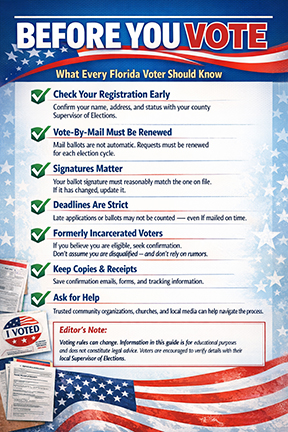
BEFORE YOU VOTE
What Every Florida Voter Should Know
✔ Check Your Registration Early
Confirm your name, address, and status with your county Supervisor of Elections.
✔ Vote-By-Mail Must Be Renewed
Mail ballots are not automatic. Requests must be renewed for each election cycle.
✔ Signatures Matter
Your ballot signature must reasonably match the one on file. If it has changed, update it.
✔ Deadlines Are Strict
Late applications or ballots may not be counted — even if mailed on time.
✔ Formerly Incarcerated Voters
If you believe you are eligible, seek confirmation. Don’t assume you are disqualified — and don’t rely on rumors.
✔ Keep Copies & Receipts
Save confirmation emails, forms, and tracking information.
✔ Ask for Help
Trusted community organizations, churches, and local media can help navigate the process.
Editor’s Note
Voting rules can change. Information in this guide is for educational purposes and does not constitute legal advice. Voters are encouraged to verify details with their local Supervisor of Elections.
