A MESSAGE FROM THE PUBLISHER
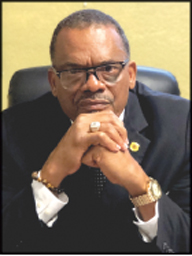
By Bobby R. Henry, Sr.
As this newspaper goes to press, the final votes have not been counted, and the polls have not yet closed. But one troubling story has already emerged from this election day: voter participation appears to be lagging.
The easy response is to blame the voters.
We won’t.
Instead, perhaps those of us who call ourselves leaders, political leaders, church leaders, community leaders, civil rights leaders and, yes, those of us in the Black Press need to look in the mirror.
Have the people given up on politics or has politics given up on the people?
We can remind people that our ancestors marched, bled, and died for the right to vote. We can tell them that every election matters. We can chastise those who stay home.
All of that may have some truth in it.
But eventually leadership must ask itself a harder question:
Did we give the people something worth coming out for?
Perhaps voters are uninspired by the candidates.
Perhaps redistricting and constantly changing political boundaries have left some people feeling that their communities and political power are being carved up before their eyes.
Perhaps voters are watching a Democratic Party wrestling with its own identity a new progressive generation challenging an older political establishment that believes experience and relationships still matter.
Perhaps Donald Trump’s stench has cast an enormous funky cloud over American politics that has exhausted people to feeling that every election has become another referendum on one man.
Or perhaps people are simply tired of watching leaders fight over the chair while their communities fight to survive.
Everybody Can’t Be the Leader
There is something else we need to talk about.
Nobody seems to want to give up leadership.
Everybody has the right candidate. Everybody has the right organization. Everybody has the right strategy. Everybody believes his or her way is the way.
Everybody wants to lead.
But who wants to listen?
Who is willing to admit that someone else might have a better idea?
Who among our established leaders is willing to say, My greatest contribution now may be preparing the next generation to take my place?
And who among the younger generation is willing to acknowledge that before tearing down everything that came before them, there may be wisdom to gain from people who survived battles they have never had to fight?
This cannot become young versus old.
Progressive versus establishment.
Activist versus politician.
We need the energy of youth and the wisdom of age.
Experience without new ideas can become stagnation.
But new ideas without the wisdom of experience can repeat old mistakes.
And What About the Church?
The Black church must ask itself some uncomfortable questions too.
For generations, the church was not simply where Black people went on Sunday morning. It was where we organized.
Where we registered voters. Where movements were born. Where candidates answered questions. Where young people learned leadership. Where preachers didn’t simply tell us how to get to Heaven, they challenged us to improve the world we lived in before we got there.
The Gospel hasn’t changed.
But the way we reach people must.
If young people aren’t coming through our doors, perhaps our first question shouldn’t be, What’s wrong with them?
Maybe we should ask:
Are we meeting them where they are?
Has Anybody Sought Wise Counsel?
Proverbs 11:14 tells us:
“Where no counsel is, the people fall: but in the multitude of counsellors there is safety.”
Maybe that is what we are missing. Wise counsel. Not political consultants. Not entourages. Not social-media followers applauding everything we say. Not people who are afraid to tell the person in charge that he or she might be wrong.
Wise counsel.
When was the last time our political, religious, business and community leaders, sat around the same table not to decide who would be chairman, not to endorse somebody, not to take a photograph but simply to ask: What is best for our people?
Not my organization. Not my candidate. Not my church. Not my generation. Not my political faction.
Our people.
Maybe the Turnout Is Trying to Tell Us Something
We should never excuse anyone for failing to exercise the right to vote. Too much blood was shed and too many sacrifices were made for us to possess that ballot.
But perhaps low voter participation is more than apathy.
Maybe it is a message.
Maybe people are tired of candidates who appear when they need votes and disappear afterward.
Tired of political parties taking their loyalty for granted.
Tired of churches speaking at them instead of speaking with them.
Tired of organizations where leadership changes only when somebody dies and suggesting while they yet live
Tired of being told who they should support instead of being asked what they need.
And tired of watching everybody fight to become captain while the ship itself is taking on water.
The answer isn’t simply younger leadership.
It isn’t simply older leadership.
It isn’t progressive or moderate.
It isn’t preacher or activist.
It isn’t Democrat or Republican.
Maybe the answer begins with something much simpler: Service.
Leadership is not ownership. A political office does not belong to the person sitting in it. A church does not belong to its pastor. An organization does not belong to its president. And a movement does not belong to the generation that started it.
They belong to the people and the purpose they were created to serve.
So, before we blame those who didn’t show up, perhaps every one of us who claims the title of leader should ask:
Did we give them something worth showing up for?
And then comes the question that may be even harder:
Do we care enough about the people to surrender our seat at the head of the table if somebody else can lead them farther than we can?
Because democracy doesn’t die only when people lose the right to vote.
Democracy is also in danger when people lose the belief that their vote can change anything.
A Positive Paper for a Positive People