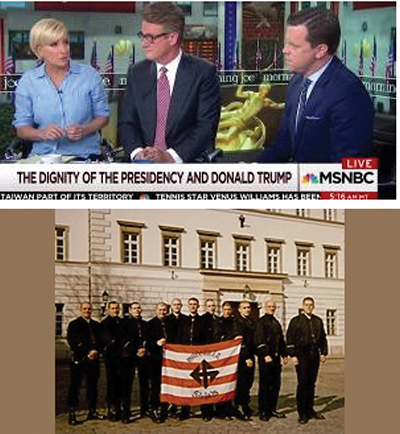
Neo-Nazis marching through Columbus, Ohio, hurling racial slurs, and the toxic rhetoric earlier this month at Trump’s Madison Square Garden rally, filled with racist comments, illustrate the consequences of his leadership.
By Stacy M. Brown, NNPA Newswire Senior National Correspondent@StacyBrownMedia
MSNBC’s Morning Joe hosts Joe Scarborough and Mika Brzezinski met with Donald Trump at Mar-a-Lago last week, rekindling a relationship strained for several years. While they defended the meeting as an effort to reestablish communication with the president-elect, critics have called it a glaring example of white privilege, mainly as Trump’s return to power is the proverbial knee on the necks of marginalized communities. Neo-Nazis marching through Columbus, Ohio, hurling racial slurs, and the toxic rhetoric earlier this month at Trump’s Madison Square Garden rally, filled with racist comments, illustrate the consequences of his leadership.
Brzezinski addressed the backlash Monday morning, explaining the meeting by invoking her father’s legacy. “What we did agree on was to restart communications,” she said. “My father [former Jimmy Carter national security adviser Zbigniew Brzezinski] often spoke with world leaders with whom he and the United States profoundly disagreed. That is a task shared by reporters and commentators alike.”
Scarborough added that conversations with Democratic leaders influenced their decision. “A lot of Democratic leaders we have talked to this past week since the election have told Mika and me, it’s time for a new approach,” he said, assuring viewers that they would continue to hold Trump accountable. “We will not defend or normalize Donald Trump,” Scarborough declared.
Yet, their willingness to meet with Trump—who has promised an all-white cabinet and a swift dismantling of diversity, equity, and inclusion (DE&I) initiatives through Project 2025—has raised questions about accountability. Many argue that this meeting demonstrates how privilege allows white commentators to engage directly with a figure who has actively worked against marginalized communities while those communities brace for the fallout.
The disparity is stark. Neo-Nazis marching openly in Ohio and hate-filled chants from Trump’s rallies, including slogans like “It’s her body but his choice,” are not abstract threats—they represent the tangible consequences of Trump’s policies and rhetoric. Trump’s administration has already signaled that Black Americans, women, and other minorities will face steep challenges. Prominent Black allies like Senator Tim Scott and Rep. Byron Donalds have been excluded from Trump’s cabinet, but a clear signal of the President-elect’s mission is his appointees, who include members of conservative media, conspiracy theorists, and authors of Project 2025.
Trump’s return has also emboldened hate groups. In addition to the march in Columbus, his Madison Square Garden rally highlighted the kind of racial hostility that has become synonymous with his leadership. For Black Americans, the implications are devastating, as Project 2025 seeks to destroy years of progress in equity and inclusion.
Critics of Scarborough and Brzezinski argue that their actions and rhetoric not only reflect a broader unwillingness to confront white privilege, but it reaffirms their own white privilege. Instead of addressing the overwhelming support Trump received from white voters who, like Scarborough and Brzezinski, seek to maintain their privilege at all costs, Scarborough deflected. The host blamed Harris’s loss on “racist Hispanics” and “sexist Black men.”