
Nineteenth-century Black newspapers helped broadcast African American diversity and agency, lighting the way towards a post-slavery era.
By Nadra Kareem Nittle
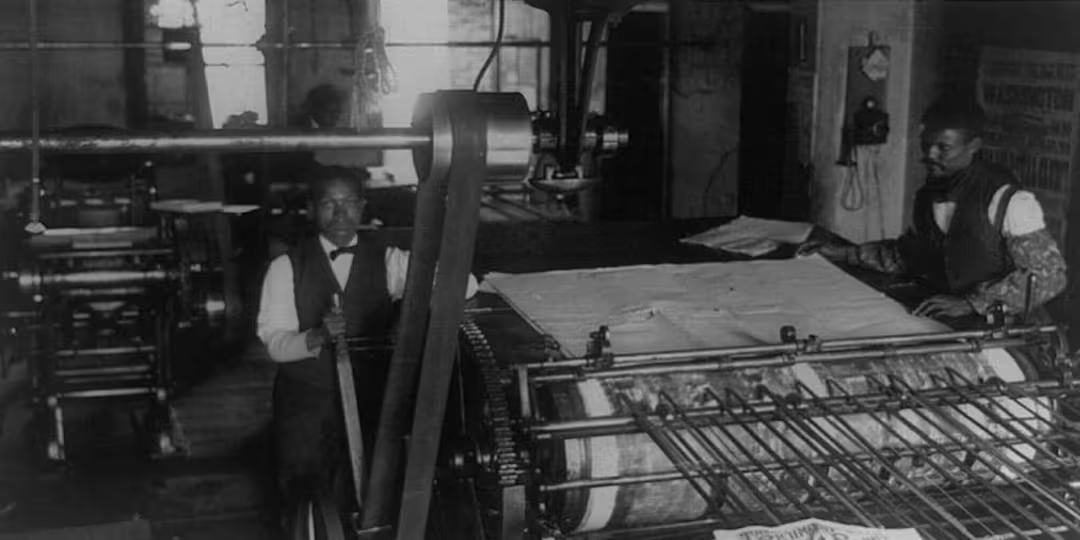
At a time when anti-literacy laws prevented the vast majority of enslaved people from reading, a group of free Black New Yorkers launched the nation’s first Black newspaper on March 16, 1827.
Aptly named Freedom’s Journal, as it started the same year that New York outlawed slavery, the publication helped shift the characterization of Black Americans, whom the mainstream press typically portrayed through a racially biased lens.
“Black people were really the subject of racist attacks in New York’s leading newspapers at that time,” says Trevy A. McDonald, associate professor of broadcast and electronic journalism in the School of Journalism and Media at the University of North Carolina.
Freedom’s Journal, which published current events, editorials, classified ads and highlighted issues around the civil rights and liberation of Black Americans, paved the way for other Black newspapers.
By the time the Civil War began in 1861, more than 40 Black-run newspapers were in circulation. These publications humanized Black Americans to readers worldwide and put pressure on the United States to end the “peculiar institution” known as slavery.
“One of the arguments in support of slavery was that Black people were not capable of living independently and autonomously, that they needed the control and ‘benevolence’ of the slave institution to guide them,” says Jane Rhodes, associate dean of the College of Liberal Arts and Sciences and professor in the Department of Black Studies at the University of Illinois Chicago.
“Well 10 percent or so of Black people in America in the 19th century were free-born, and they did live independent lives, incredibly difficult lives, but certainly independent.”
‘Freedom’s Journal’ Trendsetting Coverage
Samuel E. Cornish, a Presbyterian minister, and John B. Russwurm, the third Black American in the United States to earn a college degree, edited Freedom’s Journal. The paper functioned like many others, offering news of the day, as well as local perspectives. The newspaper’s reporters covered stories on the plight of free Black people who numbered in the hundreds of thousands and who faced discrimination in housing, education and employment.
The publication also reported on events in countries throughout the African diaspora, including Sierra Leone and Haiti. Freedom’s Journal was circulated in Haiti, Canada, Europe, 11 states and Washington, D.C. It cost $3 annually to subscribe to the paper.
The Black-owned publication may have been a trendsetter, but it was short-lived. Cornish resigned from the paper after six months, leaving Russwurm its only editor. Russwurm became heavily involved in the movement to return Black Americans to West Africa, an effort the paper’s readers largely opposed. Two years after it began, the Freedom’s Journal ceased publication.
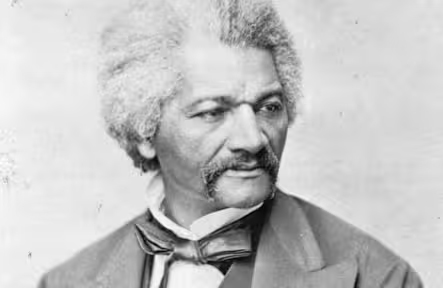
Frederick Douglas Founds ‘The North Star’
Determined to press on with the newspaper, Russwurm restarted Freedom’s Journal in May 1829 with a new name, The Rights of All, but the new version of the publication fizzled months later. Prominent abolitionist Frederick Douglass would eventually take up the mantle.
Born into bondage in 1818 in Tuckahoe, Maryland, Douglass knew firsthand how abhorrent slavery was, which he documented in his 1845 memoir Narrative of the Life of Frederick Douglass, an American Slave. He then published the first and most famous of his multiple periodicals, The North Star, launching on December 3, 1847, in Rochester, New York. The paper took its name from Polaris, the bright star that helped enslaved people fleeing bondage make their way to freedom in the North.

Mary Ann Shadd Cary Launches the ‘Provincial Freeman’ in Canada
Among other Black publications started in the 19th century, the Provincial Freeman held the distinction of being run by a woman. Mary Ann Shadd Cary made history as the first individual of her race and sex to put out a newspaper in North America.
The North Star became the leading anti-slavery newspaper run by a Black American. While Freedom’s Journal distributed 800 papers at the height of its readership, the North Star boasted a circulation of 4,000 in the United States, Europe and the Caribbean. The paper’s motto revealed both its anti-racist and feminist bent: “Right is of no Sex – Truth is of no Color – God is the Father of us all, and we are all brethren.”
In the paper’s debut issue, Douglass described the need for such a publication. He wrote: “It has long been our anxious wish to see, in this slave-holding, slave-trading, and negro-hating land, a printing-press and paper permanently established under the complete control and direction of the immediate victims of slavery and oppression.”
Four years after its launch, the North Star rebranded as Frederick Douglass’ Paper after a merger with the Liberty Party Paper of Syracuse, New York, in June 1851. From there, Douglass started an anti-slavery magazine called Douglass’ Monthly from 1859 to 1863, when the Civil War forced it to fold.
After the Civil War, in 1870, Douglass began running the New Era, renaming the weekly newspaper the New National Era. Based in Washington, D.C., the publication served the city’s Black population, covering Reconstruction and Congress. That governing body included Black members for the first time during this period.
A mother and educator, Cary’s weekly publication launched in 1853, becoming Canada’s first anti-slavery newspaper. Born in 1823 in Delaware to abolitionist parents, Cary encouraged other Black Americans to move to Canada where she’d settled in what was known then as Canada West (now the province of Ontario). Up to 40,000 Black Americans who’d fled enslavement were living in Canada then.
“Her newspaper is addressing Black folks on both sides of the border,” Rhodes, author of Mary Ann Shadd Cary: The Black Press and Protest in the Nineteenth Century, explained. “It’s for Black people who have moved to Canada and are seeking new lives, but it’s also for Black folks in the US who are debating, ‘What’s the best strategy? How do we survive?”
The paper urged Black people to seek legal recourse if they faced discrimination. It also advocated for women’s rights and celebrated women’s accomplishments, publishing articles about Black American women.
After her husband’s death and the start of the Civil War, Cary relocated to the United States, where she helped find recruits for the Union Army. She later enrolled in Howard University Law School and wrote for the Douglass-affiliated newspaper the New National Era.
Collectively, the array of 19th-century Black-run newspapers helped assert the identity, diversity and agency of African Americans, lighting the way towards a post-slavery era.
“The Black press was able to show that Black people were educated, that Black people ran businesses, that they had churches and other institutions,” says McDonald “That was a powerful tool for abolitionists to use.”
