A MESSAGE FROM THE PUBLISHER
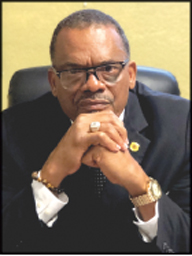
By Bobby R. Henry, Sr.
The Great Seal of the United States bears the inscription E Pluribus Unum, “Out of Many, One.” It is a powerful reminder that a nation can be strengthened, not weakened, by the contributions of many people united around a common purpose.
But there is another truth worth considering.
Out of One comes many.
Whether one approaches it from the biblical account of creation or the scientific understanding that humanity traces its origins to Africa, the conclusion is remarkably similar: we are one human family. From that one family emerged many nations, many languages, many cultures, many philosophies, and many ways of understanding the world.
That reality came to mind as I recently read an essay reflecting on humanity, humility, and our place on Earth. The author made thoughtful observations about the dangers of ego and the importance of recognizing our shared existence. I found myself agreeing with much of the message.
Yet something was missing.
The essay spoke of humanity but relied almost exclusively on European and Euro-American thinkers to explain what it means to be human.
The issue is not that Marcus Aurelius, Carl Sagan, or Rachel Carson should not be quoted. They have earned their place in the world’s intellectual conversation. The issue is what and who was left out.
When we discuss the human condition, why do we so often turn to one intellectual tradition while overlooking so many others?
Long before Europe experienced its Enlightenment, civilizations in Africa were building centers of learning, governing kingdoms, developing systems of ethics, and asking life’s deepest questions. Indigenous peoples understood that the Earth was something to be cared for rather than conquered. Asian philosophies explored humility, balance, and interconnectedness centuries before those ideas became popular in the West.
The Bible itself reminds us that “The earth is the Lord’s, and the fullness thereof.” That truth did not originate in Europe. It emerged from the ancient Near East, where people wrestled with humanity’s relationship to God, creation, and one another.
Africa gave the world concepts such as Ubuntu “I am because we are”, a philosophy that beautifully captures the interconnectedness many modern writers celebrate today. Black thinkers such as W.E.B. Du Bois, Howard Thurman, James Baldwin, and Dr. Martin Luther King Jr. expanded humanity’s understanding of justice, dignity, and moral responsibility in ways that continue to shape the world.
Their voices are not footnotes to humanity’s story. They are humanity’s story.
Perhaps this is why the phrase E Pluribus Unum still speaks to us today. America was never meant to become one by demanding that everyone think alike or draw wisdom from the same sources. Rather, the strength of the nation lies in allowing many voices to contribute to a common understanding.
The same should be true whenever we write about humanity itself.
If we genuinely believe that all people belong to one human family, then our intellectual curiosity should reflect that belief. We should not merely tolerate different perspectives; we should seek them out. We should welcome African philosophy alongside Greek philosophy, Indigenous wisdom alongside modern science, Asian traditions alongside European thought, and the lived experiences of ordinary people alongside celebrated scholars.
That is not political correctness. That is intellectual honesty.
A truly universal conversation requires universal participation.
As publishers, educators, ministers, journalists, and community leaders, we have a responsibility to ensure that no civilization is treated as the sole custodian of wisdom. Every culture has something to teach. Every people have contributed to humanity’s journey. Every generation adds another chapter to the story.
If we are to speak honestly about humanity, then let humanity speak in all of its voices.
Let Africa speak. Let Europe speak. Let Asia speak. Let the Indigenous peoples of this world speak. Let the descendants of those who endured slavery, segregation, and oppression speak. Let every culture take its rightful seat at the table.
For only then will E Pluribus Unum become more than a national motto. It will become a human principle.
‘Out of many, one. Out of one, many.’ One Creator. One humanity. Many voices. And every one of them deserves to be heard.