
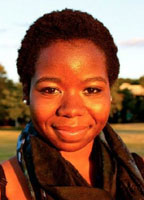
 The Black Print: Rise of the Black Millennial
Sands
By Tatyana Bellamy-Walker, Special to the NNPA from the New York Amsterdam News
Eleven years ago, teachers at the Clara H. Carlson School told Annis R. Sands of Elmont, N.Y., that upper-division courses would cause her excessive stress and anxiety.
At 12 years of age, Sands pressured the district to place her in the higher-level courses. The following year, she was the only Black student in her advanced placement classes.
“Children have less fear,” Sands said. “As an adult, you’re more afraid of what the world perceives you are doing. I have more fear now than when I was younger.”
Sands, 24, is a graduate of Dartmouth College and an innovator in the Black millennial movement. As the creator of Black Print, an Afro-centric media source, she is rising above the racial disparities that are presented across the nation.
“I’m still a fighter,” Sands said. “I wanted to get untraditional experiences. The fighter in me pushed me to do things that were unpredicted.”
Through the use of social media platforms such as Instagram, Facebook and Twitter, Black-print is used as a tool for social change and advocacy in the African-American community. This year, Blackprint hosted the fundraiser “New York City Stands With Ferguson,” an art showcase featuring 18 talented filmmakers, poets, musicians, writers and artists at the May-Day Community Space in Brooklyn, N.Y. The program included an array of live poetry performances, short film screenings and a silent auction of donated art pieces.
Sands, who is an enthusiastic leader of the “Black Lives Matter” campaign, decided to fundraise for the youth action group Millennials Activists United from her home in New York rather than join the thousands of supporters based in Ferguson, Mo.
“I wanted to show solidarity,” Sands said. “Art is activism … it is a space to tell stories. I gathered troops in New York to say, ‘We don’t have to physically be in Ferguson to stand with you.’”
Sands’ journey toward racial congruity started in the summer of 2012, when unarmed teenager Trayvon Martin was fatally shot in Sanford, Fla., by a neighborhood watch volunteer.
“What does it mean to be a young millennial in a state of crisis?” Sands asked. “The crisis didn’t start in Ferguson, my radical journey was triggered by Trayvon Martin.”
As Sands waved a “Black Lives Matter” sign in Union Square, she stood among the thousands of activists who rallied for the slain Florida teenager. After several days of marching, she became emotionally exhausted.
“I would rewind what was happening and I would break down in my home,” Sands said. “As a Black women, it is very triggering.”
At a Staten Island day care center, 5-year-old Sands recounts her earliest memory of racism.
“A little girl said, ‘I don’t want to play with you because you’re Black,’” she recalled. “I did not play with anyone that day.”
As an entrepreneur in the Black millennial community, Sands spends 15 to 20 hours a week working on her upcoming projects. Her latest venture, the Ivy Startup magazine, is an online platform that profiles Ivy League students, professors and alumni in the startup world.
“All of these spaces are important because there is too much to cry about,” Sands said. “I want people in my community to be happy and know their voices are being acknowledged.”
This year, Sands is a producer on the web series “Here We Wait,” a character-driven drama based in a local restaurant. Since June, her magazine has reached thousands of consumers nationwide.
