A MESSAGE FROM THE PUBLISHER
From Historical Trauma to Healing, From Faith to Political Power
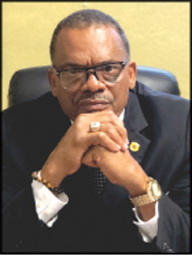
By Bobby R. Henry, Sr.
An Editorial Perspective Westside Gazette
“Now that we have God’s approval by faith, we have peace with God because of what our Lord Yeshua Christ has done.” — Romans 5:1 (NOG)
There is an old saying that many of us grew up hearing: “Ain’t no fun when the rabbit has the gun.”
Think about that for a moment.
The rabbit is one of the most timid creatures in the woods. It doesn’t hunt. It doesn’t threaten. It spends much of its life running, hiding, and trying to survive. Yet imagine what happens when that rabbit suddenly finds itself in a position of power.
The hunter who once enjoyed the chase may suddenly discover that being on the other end of the gun is no laughing matter.
For generations, African Americans have known what it means to be the rabbit.
We have been hunted by hatred, chased by discrimination, cornered by unjust laws, and wounded by a society that too often treated our humanity as something to be negotiated rather than respected.
From the auction blocks of slavery to the lynching trees of Mississippi, from segregated classrooms to discriminatory housing practices, the African American experience has carried wounds that cannot always be seen with the naked eye.
And some of those wounds have been passed from generation to generation.
We call it historical trauma.
But I wonder whether we have spent enough time talking about the healing.
When the Wounds of Yesterday Become the Burdens of Today
Racism does not simply disappear because a law changes. Its consequences can remain in families, neighborhoods, institutions, and the way people see themselves and others.
Sometimes trauma looks like anger. Sometimes it looks like fear. Sometimes it looks like distrust of government, frustration with our neighbors, or a belief that no matter how hard we work, the system will never treat us fairly.
And sometimes, without realizing it, we begin to carry the pain of our ancestors as though it were our own personal sentence.
That is why our communities need more than political victories.
We need healing.
We need mental health professionals who understand the historical experiences of African Americans. We need churches willing to address emotional wounds alongside spiritual concerns. We need intergenerational conversations where our elders can share their stories and our young people can learn their history without inheriting hopelessness.
We need to understand that seeking counseling is not a rejection of faith. Therapy and prayer can work together. One helps us examine the wounds; the other can help sustain our hope as we do the work of healing.
Mississippi: When History Comes Full Circle
If there is one state that illustrates both the painful history of racial injustice and the possibility of political transformation, it is Mississippi.
Mississippi is where 14-year-old Emmett Till was brutally murdered in 1955. It is where civil rights leader Medgar Evers was assassinated in 1963. It is where Fannie Lou Hamer challenged a political system that sought to silence Black citizens.
It is also where Freedom Summer volunteers risked their lives in 1964 to help African Americans exercise their constitutional right to vote.
Now, more than six decades later, Mississippi has witnessed another historic chapter.
On November 11, 2026, Democrat Scott Colom defeated Republican incumbent Cindy Hyde-Smith, becoming Mississippi’s first Black United States senator since Reconstruction.
According to Associated Press election results, Colom received approximately 49.4% of the vote compared with Hyde-Smith’s 48.5%, with nearly all ballots counted.
Imagine that.
In the very state where Medgar Evers was murdered, where Emmett Till’s death helped awaken a nation, and where Black citizens were once terrorized for attempting to vote, a Black man has now been elected to the United States Senate for the first time in more than 140 years.
Colom’s victory was not achieved by Black voters alone. It reflected a broader coalition of citizens concerned about economic conditions, political representation, and the future of their state.
And perhaps therein lies an important lesson.
The same Mississippi soil that once absorbed the blood of civil rights martyrs has now produced another historic milestone in the continuing struggle for representation.
But let us not confuse a political victory with the complete elimination of racism.
One election cannot erase generations of suffering. One elected official cannot heal every wounded community.
Nevertheless, history reminds us that circumstances can change when people refuse to surrender their hope.
Perhaps the rabbit has discovered that its greatest weapon is not a gun at all.
It is the ballot, the courage to organize, and the faith to believe that tomorrow can be different from yesterday.
Romans 4 and 5: Faith That Brings Joy
This is where the Apostle Paul’s message becomes especially meaningful.
In Romans 4, Paul reminds us of Abraham, who believed God’s promise even when his circumstances seemed impossible.
Abraham did not place his faith in what he could see. He placed his faith in the One who could accomplish what seemed beyond human understanding.
Romans 4:21 describes Abraham as being fully persuaded that what God had promised, He was able to perform.
Then Romans 5 takes us even deeper.
Paul teaches that suffering produces perseverance, perseverance produces character, and character produces hope.
And hope does not put us to shame.
What a powerful message for a people who have suffered through centuries of injustice!
But we must understand something.
Paul was not teaching us to celebrate oppression or accept mistreatment. He was teaching us that suffering does not have to have the final word.
Our joy is not proof that we have never been wounded. Our joy is evidence that our wounds have not destroyed our hope.
Faith does not erase the scars of racism, but it can give us strength to confront injustice without allowing hatred to consume our hearts.
When the Rabbit Discovers Its Power
Now consider the political landscape following the 2026 midterm elections.
The elections have raised important questions about political representation, racial equality, economic opportunity, voting rights, and the direction of American democracy.
Mississippi’s historic Senate result is one example of how political expectations can change.
And that brings me back to the rabbit.
For generations, many African Americans were expected to remain quiet, accept their circumstances, and be grateful for whatever opportunities were extended to them.
But what happens when the rabbit refuses to run?
What happens when people who have historically been denied political power begin exercising it?
What happens when communities once expected to remain silent demand accountability?
The old saying suddenly takes on new meaning.
There is a difficult question that deserves consideration by Republicans, Democrats, and independents alike: Are we equally committed to democracy when political power passes into the hands of people whose views or backgrounds differ from our own?
We must also recognize that racism is not the exclusive possession of any political party. Prejudice can exist wherever individuals place racial privilege above equal justice.
The test of democratic principle is whether we defend the same rights for our political opponents that we demand for ourselves.
Because equality cannot mean justice for one group and submission for another.
If democracy is to mean anything, it must mean that the rights of every citizen are protected, whether that citizen is holding political power or challenging those who do.
The Rabbit Must Not Become the Hunter
There is another side to this story.
After generations of being mistreated, there can be a temptation to believe that justice means turning the tables and inflicting the same suffering on others.
But that is not the lesson of Romans. That is not the promise of faith. And that is not the kind of freedom our ancestors struggled to achieve. The goal was never to become the oppressor.
The goal was to end oppression.
The goal was never to replace one form of racial domination with another.
The goal was to establish a society where dignity, opportunity, and justice are not determined by skin color, wealth, or political affiliation.
And that brings us back to healing.
A people who have been traumatized must be careful not to allow their pain to become the foundation of their power.
Because unhealed trauma can turn legitimate frustration into bitterness, and bitterness can rob us of the very joy that faith promises.
From Trauma to Triumph
Perhaps this is the moment for our churches, community organizations, educators, elected officials, and families to begin a different conversation.
Not simply about who won or lost the midterm elections.
Not simply about which political party controls the government.
But about what kind of people we are becoming as we exercise the rights for which our ancestors sacrificed so much.
Can we confront racism without becoming consumed by hatred?
Can we demand accountability without abandoning compassion?
Can we acknowledge historical trauma while refusing to allow it to define our future?
And can we recognize that true political power means little if we remain imprisoned by the emotional wounds of yesterday?
Romans 5:3-5 reminds us that tribulation can produce perseverance, character, and hope. And that hope is grounded in the love of God.
That is where our joy comes from. Not from another person’s defeat. Not from political revenge. Not from watching the hunter become afraid.
But from knowing that our future is not limited by our past.
So yes, there may be some truth in that old saying:
“Ain’t no fun when the rabbit has the gun.”
But perhaps the greatest victory comes when the rabbit finally has the power to defend itself and chooses to build a world where nobody has to live in fear.
Mississippi has reminded us that history can change.
Romans reminds us that faith can sustain us through the changing.
And the work of healing reminds us that freedom must reach beyond the ballot box and into the hearts, minds, and lives of our people.
That is more than political power. That is healing. That is freedom. And that is the kind of faith that brings joy.