A MESSAGE FROM THE PUBLISHER
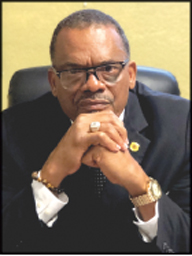
By Bobby R. Henry, Sr.
As students across Florida fill their backpacks, sharpen their pencils, and prepare for another school year, adults should be preparing for another important responsibility, the upcoming primary election.
Education does not begin and end in the classroom. It begins at the ballot box.
Every election has consequences, but few have consequences as lasting as those that affect our public schools. The officials we elect determine education budgets, teacher salaries, curriculum standards, school safety policies, student services, and whether our neighborhood public schools receive the resources they need to succeed.
For Black communities, the stakes are even higher.
Public education has long been one of the greatest pathways to opportunity. From the days when it was illegal to teach enslaved Africans to read, to the establishment of Rosenwald Schools across the South, to the courageous students who integrated schools following Brown v. Board of Education, education has always been at the center of the struggle for freedom and equality.
Those victories were not accidental. They were won through civic engagement, political action, and people who understood that democracy and education are inseparable.
Today, new debates continue over what can and cannot be taught in classrooms. Black history has too often become a political battleground rather than an essential part of American history.
The truth is simple: Black history is American history.
When students learn about Dr. Carter G. Woodson, Harriet Tubman, Frederick Douglass, Mary McLeod Bethune, the Tuskegee Airmen, the Freedom Riders, Fannie Lou Hamer, Congressman John Lewis, and countless others, they are not learning “special interest” history. They are learning the story of America its struggles, its contradictions, and its triumphs.
An honest education prepares students to think critically, appreciate diversity, and understand the sacrifices that built our nation.
Parents, grandparents, educators, pastors, civic leaders, and every registered voter should ask candidates one fundamental question:
Do you support strong public schools that serve every child, regardless of ZIP code?
That question is about more than buildings. It is about teachers who deserve respect and competitive pay. It is about students who deserve access to advanced coursework, career training, technology, music, art, and safe learning environments. It is about ensuring that every child has the opportunity to succeed without diminishing the opportunities of another.
As another school year begins, let’s remember that children are watching us. They will learn as much from our participation as they will from their textbooks.
When they see adults standing in line to vote, discussing issues thoughtfully, and holding elected officials accountable, they receive a lesson in citizenship that no classroom alone can provide.
Back-to-school season should remind us that education is a shared responsibility. Parents prepare children. Teachers prepare lessons. Schools prepare futures.
Voters prepare the future by choosing leaders who value education, defend public schools, and recognize that teaching Black history strengthens and not weakens our democracy.
Before the first bell rings this school year, make sure your voice is heard at the ballot box.
Our children are counting on us.
The lesson is clear: The future of public education and the preservation of our history depend not only on what happens in our classrooms, but on what happens in our voting booths.