By Bobby R. Henry, Sr.
Publisher & CEO, Westside Gazette
This week marks a moment that too few Americans recognize but one that has profoundly shaped the course of our nation’s history.
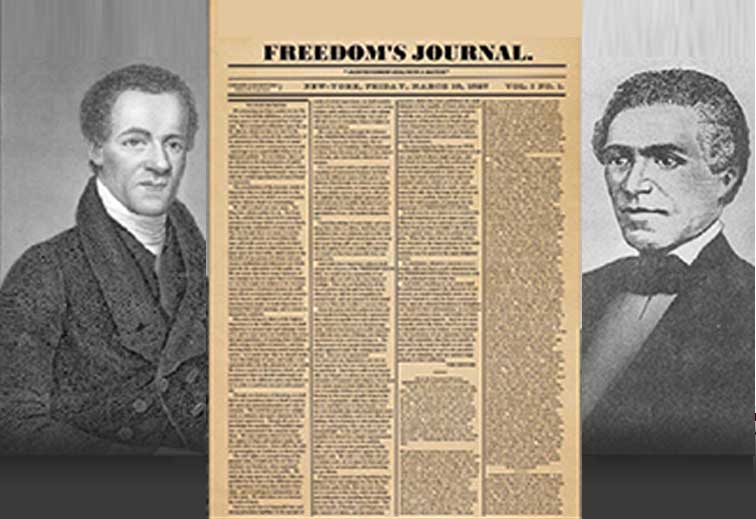
In March of 1827, two courageous Black men—Samuel Cornish and John B. Russwurm—published the first edition of Freedom’s Journal in New York City. With that bold act, they established what we now know as the Black Press of America.
Their declaration in that first issue remains one of the most powerful statements in American journalism:
“We wish to plead our own cause. Too long have others spoken for us.”
That statement did more than introduce a newspaper. It announced the birth of a movement.
 At a time when enslaved Africans were still in chains and when the voices of free Black people were largely ignored or distorted by mainstream publications, the Black Press became the first organized institution created by and for Black Americans to control our narrative.
And here is a historical truth that should never be forgotten:
The Black Press came first.
Before the establishment of most Black churches as organized institutions of power in our communities…
Before the founding of our historic Black colleges and universities…
Before the civil rights organizations that would later reshape America…
There was the Black Press.
It was the Black Press that documented injustice when others ignored it.
It was the Black Press that exposed the horrors of slavery and later the brutality of Jim Crow.
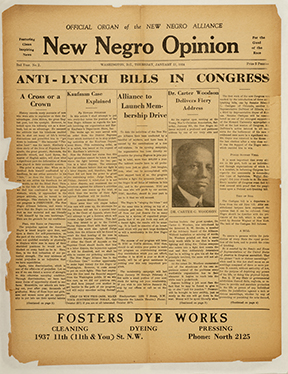
It was the Black Press that carried the voices of Frederick Douglass, Ida B. Wells, W.E.B. Du Bois, and countless others who refused to let America look away from its contradictions.
 The Black Church would soon rise as the moral anchor of our communities.
The Black College would emerge as the intellectual engine that prepared generations of leaders.
But the Black Press was the messenger, the institution that connected the people, informed the people, and mobilized the people.
Through its pages, communities learned how to organize, how to vote, how to resist, and how to hope.
When Ida B. Wells exposed lynching in the pages of Black newspapers, the nation could no longer deny the terror that gripped the South.
When the Black Press encouraged Black migration during the early twentieth century, millions of African Americans moved North and West seeking dignity and opportunity.
When the Civil Rights Movement began to rise in the 1950s and 1960s, the Black Press was there—documenting protests, encouraging voter registration, and challenging the conscience of America.
For nearly two centuries, the Black Press has carried the burden of telling the truth when truth was inconvenient.
Today, as we recognize this founding week of the Black Press of America, we must also recognize that its mission remains as urgent as ever.
The threats may look different, but the stakes are the same.
Misinformation spreads faster than truth.
Voter participation remains under pressure.
Communities still struggle to ensure that their voices are heard.
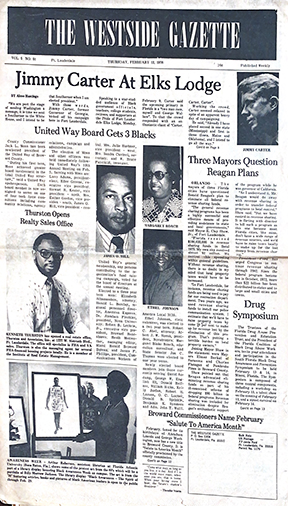
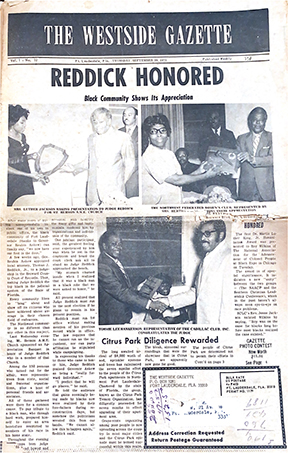
And in the midst of these challenges, Black-owned media continues to serve as one of the most trusted institutions within our communities.
Yet far too often, these institutions are overlooked when it comes to public information campaigns, political engagement, and even the support of those who benefit most from an informed electorate.
If we truly value democracy, we must also value the institutions that make democracy possible.
That means recognizing the importance of Black-owned media—not simply as businesses, but as civic pillars that have shaped the political consciousness of our communities for nearly 200 years.
It means encouraging election officials to communicate through Black media outlets so that voters receive accurate information.
It means reminding candidates and elected officials that if they seek the support of Black voters, they must also respect and support the institutions that inform those voters.
The Black Press was never simply about printing news.
It has always been about protecting the voice of a people.
This week, as we reflect on the founding of the Black Press in 1827, we should remember that the institutions that followed—the Black Church, the Black College, the Civil Rights Movement—were all strengthened by the power of the written word carried in Black newspapers.
Those pages told our story.
They preserved our history.
They fueled our struggle for justice.
And they continue to do so today.
Nearly two hundred years later, the mission first declared in Freedom’s Journal still guides the work of Black-owned media across this country:
To plead our own cause.
Because when our communities control their voice, they also strengthen their power.
And when the Black Press remains strong, our democracy remains stronger.