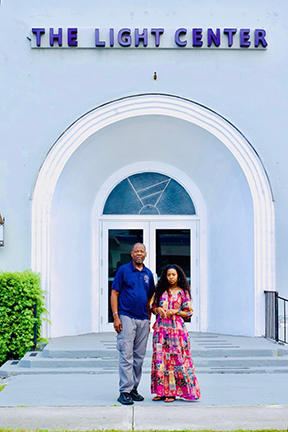
For more than twelve years, my wife and I have faithfully led our ministry without the backing of a national denomination or large religious organization. Every dollar invested into our church has come through faith, sacrifice, and years of hard work. We purchased our facility, maintained it, renovated it, and committed ourselves to serving our community.
We never imagined that a dispute over insurance—not missed mortgage payments—would place our church on the brink of foreclosure.
Our building was originally constructed decades ago, with major renovations completed in 1973. In 2019, we refinanced our mortgage through a regional bank. As part of that process, the lender required multiple inspections, including a four-point inspection, to evaluate the condition of the property.
After reviewing those inspections, the bank determined that separate commercial windstorm insurance was not required.
At the time, such coverage would have cost between $50,000 and $70,000 annually. Even more concerning, the policy carried a deductible of approximately ten percent of the building’s value—meaning we would have been responsible for nearly $300,000 before any insurance benefits would apply. Based upon the inspections and its own underwriting standards, the bank chose not to require the coverage.
Everything changed in 2021 when another bank acquired our original lender and assumed our loan.
Although nothing about the building had materially changed, the new bank informed us that windstorm insurance was now mandatory. We already maintained liability insurance and flood insurance. The dispute involved only the newly required windstorm coverage.
We submitted the same inspection reports that had previously satisfied the original lender, explaining why the coverage had not been required. Nevertheless, the new bank insisted on imposing the requirement.
Over time, approximately $204,000 in force-placed insurance charges were added to our loan balance.
Our position remained consistent: this was not an attempt to avoid insurance simply to save money. Rather, we believed the requirement was inconsistent with the property’s condition and the previous underwriting determination. The bank maintained that it had the right to protect its collateral and continued assessing the charges.
By 2025, the disagreement had escalated into foreclosure proceedings.
We retained legal counsel and paid the attorney’s fee in full, believing our interests would be vigorously represented. Unfortunately, despite those expectations, meaningful negotiations with the bank never materialized, and the matter continued to worsen.
Then came one of the most frightening moments of our lives.
In January 2026, we received a telephone call informing us that our church property was scheduled for foreclosure auction. We had not realized the proceedings had advanced to that point. Within forty-eight hours, my wife and I were forced to withdraw $95,000 from our retirement savings simply to stop the sale and preserve the ministry we had spent years building.
By March 2026, a judge temporarily halted the foreclosure, allowing us additional time to pursue a resolution.
Throughout this ordeal, we faced another burden that many families and ministries experience—the stigma attached to foreclosure.
People often assume that foreclosure means someone simply stopped paying their mortgage. That was never our situation.
Our dispute centered on force-placed insurance charges—not an unwillingness to meet our financial obligations.
As these events unfolded, developers and investors began approaching us about purchasing the property. While we recognize that development can play an important role in a growing community, many of the inquiries appeared focused on acquiring the land for redevelopment rather than preserving its longstanding role as a place of worship and community service.
For us, this represented something larger than a real estate transaction. Churches, neighborhood institutions, and long-time property owners can face increasing pressure as property values rise and redevelopment accelerates. Those pressures can profoundly affect communities that have invested in their neighborhoods for decades.
Our objective has never been to maximize profit.
Our hope has always been that this property would continue serving families, strengthening our neighborhood, and providing a place where people can worship, receive support, and find hope. Over the years, we have invested substantial resources into improving the sanctuary, renovating the fellowship hall, and maintaining the facility because we believe our community deserves excellence.
This experience taught us how vulnerable churches, homeowners, and small nonprofit organizations can become when navigating disputes with large financial institutions and complex legal systems.
Many people simply do not have the financial resources, legal guidance, or technical knowledge necessary to protect themselves. Faced with overwhelming pressure, some accept outcomes they believe are unfair because they do not know their rights or cannot afford to continue fighting.
That is why we are sharing our story.
Our purpose is not to seek sympathy. It is to encourage others to educate themselves, ask questions, retain qualified representation, and advocate for their rights when faced with complicated financial disputes.
If our experience encourages even one church, one homeowner, or one community organization to become better informed and better prepared, then sharing our journey will have served a purpose beyond our own circumstances.
Sometimes the greatest testimony is not simply surviving the storm—but helping someone else prepare for theirs.
I’ve tightened the story, removed repetition, clarified the timeline, and emphasized the gentrification angle while keeping the core facts intact.
My wife and I are not part of a national organization or denomination. For the past 12 years, we have built this ministry independently, purchasing and maintaining our facility through faith, hard work, and sacrifice.
The building was originally constructed decades ago, with major renovations completed in 1973. In 2019, when we explored refinancing and pulling equity from the property, our lender at the time—a regional bank, not a large conglomerate—required inspections and evaluations of the building. Based on the results of a four-point inspection, the bank determined that separate windstorm coverage was not necessary.
At the time, commercial wind insurance would have cost between $30,000 and $50,000 per year. The policy also carried a deductible of approximately 2.5% of the building’s value, meaning we would have been responsible for roughly $650,000 before coverage applied. Given those facts and the inspection results, the bank did not require the coverage.
In 2021, another bank acquired our original lender and assumed our loan. By 2022, the new bank reversed course and informed us that we were required to carry windstorm insurance. We already maintained liability and flood coverage, so this dispute concerned only wind insurance. We provided the same inspection documentation showing why the coverage had previously been deemed unnecessary, but the bank insisted on imposing it.
Over time, the bank accumulated approximately $204,000 in force-placed insurance charges. We argued that the requirement was not based on any change in the property’s condition and that we were not avoiding coverage to save money. The bank responded that it had the right to protect its investment and continued adding the charges to our account.
By 2025, the situation escalated into foreclosure proceedings. We hired an attorney to negotiate with the bank, paying the full fee upfront. Unfortunately, despite taking our money, the attorney never meaningfully communicated with the bank or resolved the issue.
Then, in January 2026, I received a call informing me that our church building was scheduled for auction. We had not even been aware that the process had advanced that far. Within 48 hours, we were required to provide earnest money to stop the sale. My wife and I had to withdraw $95,000 from our retirement savings to protect the property.
The legal battle continued, and by March a judge temporarily halted the foreclosure. Throughout this ordeal, we have faced the stigma that often comes with foreclosure. People assume that if a church or homeowner is facing foreclosure, they must have stopped paying their bills. That was never the case. The dispute stemmed from force-placed insurance charges, not from a failure to make our mortgage payments.
At the same time, developers and investors began approaching us about purchasing the property. Many appeared interested not in preserving the ministry, but in acquiring the land for redevelopment. To us, this reflects a broader pattern of gentrification: community institutions and long-time property owners are pressured out, while outside interests seek to capitalize on rising property values.
Our goal has never been to maximize profit. We wanted the property to remain a community resource that serves local families and supports ministry outreach. We have invested heavily in renovations, including improvements to the sanctuary and fellowship hall, and we have worked hard to maintain the facility.
This experience has taught us how vulnerable churches, homeowners, and small organizations can be when facing large financial institutions and complex legal processes. Many people lack the resources, representation, or knowledge needed to protect themselves. Some become intimidated and accept unfavorable outcomes because they do not know their rights or cannot afford to fight back.
That is why we are sharing our story. If this can happen to a church, it can happen to homeowners and other community organizations as well. We hope our experience encourages people to educate themselves, seek competent representation, ask questions, and stand up for their rights rather than feeling pressured to give up. If our story helps even one person navigate a similar situation, then sharing it will have been worthwhile.

This version is about half the length of the original, removes repeated ideas, and reads more like a clear narrative for an interview, article, or public statement.

