To honor Martin Luther King Jr. honestly is to remember that he was organizing to make the dream real—and to decide whether we are willing to carry that dangerous, unfinished work forward.
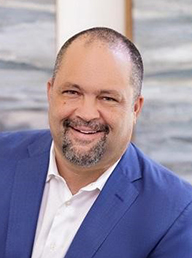
By Ben Jealous
This year, let’s honor Dr. Martin Luther King Jr.’s birthday by remembering his final mission—and by picking up the mantle he left behind.
Every year, America remembers a dream. But the work that placed Dr. King in the greatest danger was not dreaming. It was organizing to make the dream real.
Dr. King was assassinated in Memphis in April 1968 while supporting striking sanitation workers and preparing to launch the Poor People’s Campaign. He was there because he had come to understand something fundamental about American life: that racism and economic exploitation are intertwined, and that neither can be defeated without confronting both.
He was not killed while leading a desegregation battle in a northern suburb. He was killed while trying to unite economically struggling Americans across racial lines around shared demands for dignity, wages, and opportunity.
When that unity fails—when workers and the poor are kept divided—the consequences are not abstract. Wages stagnate. Healthcare becomes conditional. Food insecurity spreads quietly. People turn on one another while decisions that shape their lives are made far out of reach. Division does not just weaken movements; it deepens suffering.
The Poor People’s Campaign was designed to confront that reality directly. King envisioned a coalition of poor people drawn from many communities—Black and white, Native American, Latino, Asian American, and other communities pushed to the margins—coming together to demand economic rights that democracy had long promised but rarely delivered.
History reveals a pattern we are often reluctant to name.
In the United States, one of the most dangerous roles a leader can take on is the work of uniting poor and working people across racial lines—especially when that unity threatens systems that depend on division to function.
Fred Hampton understood that early.
Most people remember Hampton only as a Black Panther, frozen in time at age 21, killed during a predawn police raid in Chicago in December 1969. But before joining the Panthers, Hampton first gained recognition as a teenage organizer in the NAACP. As a youth leader, he showed a rare ability to mobilize people, build coalitions, and translate moral clarity into action.
That instinct carried forward.
As a Panther leader, Hampton helped build the original Rainbow Coalition—bringing together the Black Panthers, the Puerto Rican Young Lords, and the Young Patriots Organization, made up largely of poor white Appalachian migrants. In one of his most consequential public moments, Hampton stood at a press conference alongside William “Preacherman” Fesperman, a leader of the Young Patriots, to declare that poor and working people had more in common with each other than with the forces exploiting them.
That image—Black, brown, and white organizers standing together, unapologetically—was the point.
Less than a year later, Hampton was killed by Chicago police in a predawn raid.
The same pattern appears, with devastating clarity, in the lives of Harry and Harriette Moore.
Harry Moore was the founding president of the Florida NAACP and one of the most effective organizers the association ever produced. Under his leadership, Black voter registration in Florida surged despite poll taxes, intimidation, and violence. He fought for equal pay for Black teachers and worked closely with labor and progressive allies, believing racial justice and economic justice could not be separated.
Harriette Moore was not simply his wife. She was an organizer, educator, and strategist who sustained the work under constant threat.
Despite Harry Moore’s effectiveness, he was never elevated into the national leadership of the NAACP. The historical record offers no single explanation. What it does show is that his work—rooted in voter power, labor solidarity, and interracial organizing—placed him at extraordinary risk in the Jim Crow South.
On Christmas night in 1951, a bomb exploded beneath their home in Mims, Florida. Both Harry and Harriette Moore would die from their injuries. Their crime was not extremism. It was effectiveness.
Malcolm X’s life followed a similar arc. After returning from Mecca in 1964, he spoke and wrote about encountering a brotherhood that crossed racial lines. His politics remained complex and uncompromising, but the direction was unmistakable: away from race as destiny and toward coalition as possibility. Within a year, he was assassinated.
Dr. King came to the same conclusion.
His final campaigns were not a departure from civil rights work. They were its fulfillment. He understood that rights without economic security are fragile—and that democracy without solidarity is easily divided against itself.
That truth matters now.
Today, millions of Americans are hurting in concrete ways. Just look at the news. Families lose healthcare when a job disappears. Parents skip meals so their children can eat. Seniors choose between prescriptions and groceries. Workers live one illness or one missed paycheck away from crisis.
These outcomes are not inevitable. They are what happens when division succeeds.
Dr. King understood that uniting people across racial lines was not just morally right—it was practically necessary. It was the only way to build enough power to secure healthcare, fair wages, food security, and basic stability for everyone.
That is why the work was dangerous.
And that is why it remains unfinished.
So when we honor Dr. King, we should be careful to remember him accurately—not as a safely sanitized icon, but as a leader who followed justice to its most challenging conclusion.
This holiday should not simply reassure us. It should challenge us.
To remember Dr. King honestly is to remember that he died doing unfinished work—work that remains dangerous precisely because it remains necessary.
The question before us is the same one history keeps asking:
Are we willing to continue the work Dr. King died doing?
Because the pattern tells us what happens when we do.
And today’s headlines keep telling us what happens when we don’t.
Ben Jealous is a professor of practice at the University of Pennsylvania and former president and CEO of the NAACP.