By Dara Kam ©2024 The News Service of Florida.
TALLAHASSEE — State lawmakers for the second year in a row have signed off on expanding the number of medical-marijuana licenses earmarked for Black farmers, opening the door for three applicants who lost out earlier.
Expansion of medical-marijuana licenses for Black farmers was included in a wide-ranging Department of Health bill (SB 1582) that also addresses such issues as septic-tank inspections and screening for newborns and pregnant women.
A provision added to the bill in the last week of this year’s legislative session would help at least three Black farmers who had sought medical-marijuana licenses but were deemed ineligible to apply by state officials.
Passage of the bill is the latest twist in a drawn-out effort to allow Black farmers to join the state’s cannabis program, which has exploded in size since voters approved a constitutional amendment broadly authorizing medical marijuana in 2016.
If signed into law by Gov. Ron DeSantis, the bill would bring to six the total number of potentially lucrative medical-marijuana licenses earmarked for Black farmers with ties to decades-old litigation about discriminatory lending practices by federal officials.
A 2017 law that provided an overall framework for the industry required health officials to issue a license to a Black farmer with ties to the litigation, known as the “Pigford” cases. The law also required prospective licensees to show they had conducted business in Florida for at least five consecutive years before applying.
State health officials began accepting applications for the Black farmer license in March 2022, and six months later announced they intended to award the license to Suwannee County-based farmer Terry Donnell Gwinn. All of the 11 other applicants who lost out challenged the decision, including Moton Hopkins. Hopkins was the top-scoring applicant but the 84-year-old Ocala-area grower died before the state’s decision about the license was finalized.
Part of this year’s bill, however, appears to clear the path for Hopkins’ heirs and partners, who have launched numerous legal and administrative challenges in their quest for a license and have at least one court appeal pending.
The bill sets up a 90-day “cure” period for losing applications that meet certain criteria, including if “the applicant died after March 25, 2022,” which was the last day to apply for the licenses.
“In the case of the death of an applicant under this paragraph, the department must issue the license to the heirs of the applicant,” the measure says.
State health officials deemed the application submitted by Hopkins and Hatchett Creek Farms, LLC, of which he owned 51 percent, to receive the top score in 2022. But they maintained his death put him out of the running.
Hopkins’ team did not have a comment when asked about the legislation.
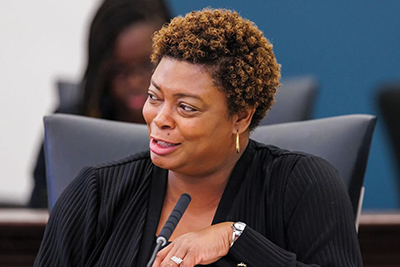
Sen. Tracie Davis, a Jacksonville Democrat who helped shepherd this year’s effort to expand the number of licenses, said the proposed changes would help Hopkins’ team as well as Leola Robinson and Henry Crusaw, two elderly Black farmers who could not meet the state’s standards to show they had been registered to do business in Florida for five years before applying.
“What prompted me to create the legislation that we submitted was those two applicants, but I also wanted to make sure this time that we didn’t leave out Moton Hopkins,” Davis told The News Service of Florida in a phone interview Monday.
The measure also would prohibit health officials from using the death of an applicant “who was alive as of February 1, 2024” but who died before the cure process or legal challenges are complete as a reason to deny a license.
That could benefit the heirs and partners of Robinson, a 101-year-old Escambia County farmer who got her start in agriculture in the cotton fields, and Crusaw, a Suwannee County nonagenarian whose business registration also was in doubt.
Davis said the provision was included in an attempt “to ensure that we had our oldest applicants taken care of.”
A law passed last year allowed losing applicants for the Black farmer’s license to “cure” deficiencies in their applications. But Crusaw and Robinson couldn’t do anything to meet requirements laid out by state health officials, Davis said.
Rep. Patricia Williams, D-Pompano Beach, offered an amendment that included the Black farmer changes on March 5. The amended bill subsequently passed the House and Senate. Davis credited Senate President Kathleen Passidomo, R-Naples, and House Speaker Paul Renner, R-Palm Coast, for the success of the proposal.
“We could not have made it happen without these two agreeing to the amendments,” Davis said.
If signed into law, the 90-day cure period could possibly open the door to other applicants who lost out in 2022, according to Davis.
Attempts to give Black farmers entry into Florida’s multi-billion-dollar cannabis industry have been riddled with problems since the inception of the state’s medical-marijuana program in 2014, when lawmakers authorized non-euphoric cannabis in anticipation of the passage of the broader constitutional amendment.
Black farmers complained that they were shut out of applying for the state’s original medical-marijuana licenses because none of them met the eligibility criteria, which required applicants to have operated as Florida nurseries for 30 years. The 2017 law setting up a framework for the industry tried to address the issue by requiring a license for a Black farmer. But the license was put on hold for several years because of unrelated litigation over the law.
When the application process for the Black farmer’s license was announced in 2021, potential applicants were hit by sticker shock because of a non-refundable fee of $146,000 — more than double what prospective operators paid in the past.
Legal wrangling over the denial of Hopkins’ application delayed the issuance of Gwinn’s license. Lawmakers sped up the process last year by passing a measure requiring health officials to issue licenses to Black farmers whose applications did not have any identified deficiencies. The 2023 law resulted in licenses for Gwinn and two additional applicants — Shedrick McGriff and Willard Meeks — and brought the number of licensed medical-marijuana operators in the state to 25.
The industry also is poised to nearly double in size as state health officials sift through applications for 22 additional licenses required under the 2017 law, which set up a schedule for new licenses to come online as the number of patients increases.
Meanwhile, the Florida Supreme Court is weighing a proposed constitutional amendment that would legalize recreational marijuana for adults ages 21 and older. The court has until April 1 to decide whether the initiative qualifies for the November ballot.