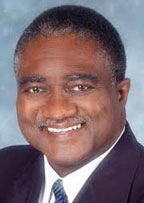
Time to raise minimum wage
By George E. Curry NNPA Columnist
The first federal minimum wage of 25 cents an hour was established in 1938. Since then, it has been raised 22 times. It’s time to increase the floor for the 23rd time, from its cur-rent $7.25 to at least $10 an hour.
According to the Center for Economic Policy Research, the value of the minimum wage peaked in 1968. If the minimum wage had been indexed to the official Consumer Price Index each year, the minimum wage today would be $10.52. The last time the minimum wage was raised was in 2007, when it was raised from $5.15 to $7.25.
Still, there is resistance.
Republican leaders say raising the minimum wage will cost jobs. But opponents, such as Washington Post columnist Jared Bernstein, argue that rather than job loss, employers compensate by charging higher prices and increasing productivity.
Another common myth is that employers shouldn’t be forced to pay young people the minimum wage. But 88 percent of workers who would be affected by raising the minimum wage are at least 20 years old and a third are at least 40 years, according to the Economic Policy Institute.(EPI)
EPI found that of the workers who would benefit from the raise:
* The average age of affected workers is 35 years old;
* 88 percent of all affected workers are at least 20 years old;
* 35.5 percent are at least 40 years old;
* 56 percent are women;
* 28 percent have children;
* 55 percent work full-time (35 hours per week or more);
* 44 percent have at least some college experience.
The federal minimum wage is covered by the Fair Labor Standards Act. There are approximately 3.6 million workers, or 4.7 percent of all hourly paid workers who are at or below the federal minimum wage of $7.25 an hour. Employers are allowed to pay students and the disabled – defined as those “who’s earning or productivity is impaired by age, physical or mental deficiency, or injury” – less than the minimum wage. It also places limits on workers who derive part of their income from tips.
A study by the Congressional Research Service found that 40 percent of those earning the minimum wage or less work in “food preparation and serving related occupations.” It also discovered that 72.2 percent have at least a high school diploma and 8 percent have a bachelor’s degree or higher.
Robert Greenstein, president of the Center on Budget and Policy Priorities testified before Congress in February: “I would note that over recent decades, the minimum wage has been allowed to erode and is now 20 percent lower, after adjusting for inflation, than in the late 1960s. For this and a number of other reasons (relating in part to globalization of the economy), wages for low-paid jobs have fallen.”
A fact sheet by Economic Policy Institute found, “A disproportionate share of minorities will benefit from a minimum wage increase. African Americans represent 11 percent of the total workforce, but are 18 percent of workers affected by an increase. Similarly, 14 percent of the total workforce is Hispanic, but Hispanics are 19 percent of workers affected by an increase.”
Washington State has the highest state minimum wage at $9.19, indexed to inflation. California enacted a law that will raise its minimum wage to $10 over three years. Some cities have wages that are even higher. The minimum wage is $10.55 in San Francisco. And in the recent election, New Jersey voters approve a constitutional amendment increasing the minimum wage from $7.25 to $8.25.
Where city or state minimums exceed the federal standard, workers receive the higher wage.
The movement to increase the federal minimum wage has stalled in Congress. In March, the House voted 233 to 184 against raising the minimum wage to $10.10 by 2015, with all Republicans voting in the majority.
Two Democrats, Senator Tom Harkin of Iowa and Rep. George Miller of California have sponsored legislation, called the Fair Minimum Wage Act, to raise the federal minimum wage. The hope to overcome past opposition by adding some sweeteners for small businesses, including allowing them to deduct the full cost of equipment and expansion up to $500,000 in the first year.
In his State of the Union address in February, President Obama proposed a federal minimum wage of $9.
The EPI study stated. “When describing who would see a raise if the minimum wage were increased, it is important to look at everyone who earns between the current minimum wage and the proposed new one, as well as workers earning just above the new minimum wage (who would likely also see a small pay increase as employers move to preserve internal wage ladders). The typical worker who would be affected by an increase in the minimum wage to $10.10 per hour by 2015 looks nothing like the part-time, teen stereotype: She is in her early thirties, works full-time, and may have a family to support.”