By Bobby R Henry, Sr.
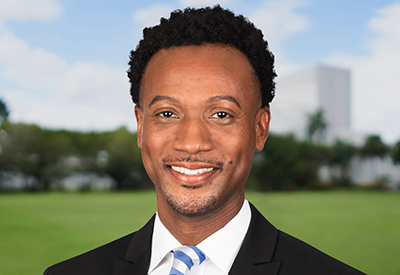
The battle over the future of Broward College President and CEO Torey Alston has moved beyond the boardroom and into the courts, as Alston pushes back against an effort to remove him from the leadership of one of South Florida’s largest institutions of higher education.
The latest development follows reporting by the South Florida Sun Sentinel that Alston is seeking court intervention to halt a Board of Trustees vote on his firing. The legal action adds another layer to an increasingly public dispute over Alston’s leadership, the performance of the college’s nursing programs and, perhaps most significantly, the proper division of authority between the president and Broward College’s governing board.
Alston became Broward College’s eighth permanent president and CEO after a unanimous vote of the District Board of Trustees in January 2025 and began serving in February 2025. Broward College’s own historical records identify him as the successor to former President Gregory A. Haile and interim President Dr. Barbara Bryan. (Broward College)
In comments provided to the Westside Gazette, Alston said his focus remains on protecting the institution rather than engaging in personal attacks against trustees.
“I will not use this moment to attack individual trustees or question anyone’s motives. My responsibility as President is larger than any disagreement between individuals. Broward College serves more than 55,000 students annually and employs more than 3,000 faculty and staff, and protecting the stability, integrity and reputation of this institution must remain paramount,” Alston said.
Alston Responds to Nursing Concerns
Among the issues surrounding the controversy is the condition of Broward College’s nursing programs.
Alston disputes any suggestion that the nursing difficulties originated during his presidency. According to Alston, the problems preceded his arrival.
“We have two fully accredited nursing programs, a bachelor’s and associates,” Alston told the Westside Gazette. “When I became President in February 2025, the nursing program was already 14 months into 24 months of being placed on probation.”
Alston said that after taking office, he worked with the previous provost and dean and ordered several corrective measures, including tougher admissions criteria, professional development for faculty, the hiring of additional faculty and NCLEX remediation support for students.
According to Alston, those corrective measures were presented to and accepted by the State Board of Nursing in February 2026.
He also points to the performance of the most recent graduating class as evidence that the interventions are producing results.
“Evidence of action steps that we put in place with nursing students, who graduated last semester, yielded a 89% passage rate,” Alston said.
Alston maintains that the Board of Trustees has been fully informed about both the nursing program’s previous difficulties and the steps his administration has taken to address them.
“All of this information is known and has been shared with the board of trustees,” he said.
Broward College records also show that the institution offers baccalaureate-level nursing education, which dates to state approval received in 2009. (Broward College Catalog)
A Larger Fight Over Who Runs Broward College
Beyond nursing, Alston is raising a more fundamental concern: governance.
He contends that members of the governing board have become too involved in the day-to-day administration of Broward College responsibilities that traditionally fall under the authority of the president and his administration.
“The governing board at the college is consistently in daily routine operations that interfere with the role of the President and puts accreditation at risk,” Alston said.
His allegations go further.
“During my tenure, significant operational decisions, hiring decisions and spending decisions have required board involvement, which is outside the norm of college governance,” he said.
Alston said he has repeatedly raised those concerns with the board chair but believes the governing culture has not changed.
“I have consistently shared this with the Board Chair, but the entire board has not changed its culture and approach to staying in their roles to deal with policy, budget and oversight of the college,” Alston said.
That assertion could become one of the most consequential elements of this controversy because the dispute is no longer simply about whether trustees approve of Alston’s performance. It raises questions about where the trustees’ oversight authority ends and presidential management authority begins and whether that relationship could affect the institution itself.
College records illustrate that the board has formally delegated certain contracting authority to the president. For example, official 2025 and 2026 board documents repeatedly state that Alston exercised authority delegated by the board to execute agreements and partnerships on behalf of Broward College. (Broward College)
Questions Remain Unanswered
The Westside Gazette previously forwarded questions to members of the Broward College Board of Trustees seeking their response and clarification concerning the issues surrounding Alston and the effort to remove him.
As of press time Tuesday, August 18, the Westside Gazette had not received a response to those questions.
Those answers are increasingly important.
The public deserves to know specifically what trustees believe Alston has done or failed to do that warrants termination; whether the nursing program’s probation and performance problems preceded his presidency; what corrective measures were implemented after he arrived; and how much involvement individual trustees have had in personnel, spending and other day-to-day operational decisions.
The board should also address Alston’s assertion that trustee involvement in college operations has become extensive enough to create accreditation concerns.
These are questions that extend beyond the employment status of one president.
Broward College is a public institution serving tens of thousands of students and families. Decisions affecting its leadership, accreditation, academic programs, employees, and reputation carry consequences throughout Broward County.
And now that the dispute has reached the courthouse, what began as an internal disagreement over leadership has become a public test of governance and accountability.
Alston says that despite the battle over his future, he intends to keep the focus on the institution.
“My responsibility as President is larger than any disagreement between individuals,” he said.
For Broward County, the question now is whether the Board of Trustees shares that same view and whether it will publicly answer the questions that remain.