By Amelia Orjuela Da Silva
(Source Miami Times Staff)
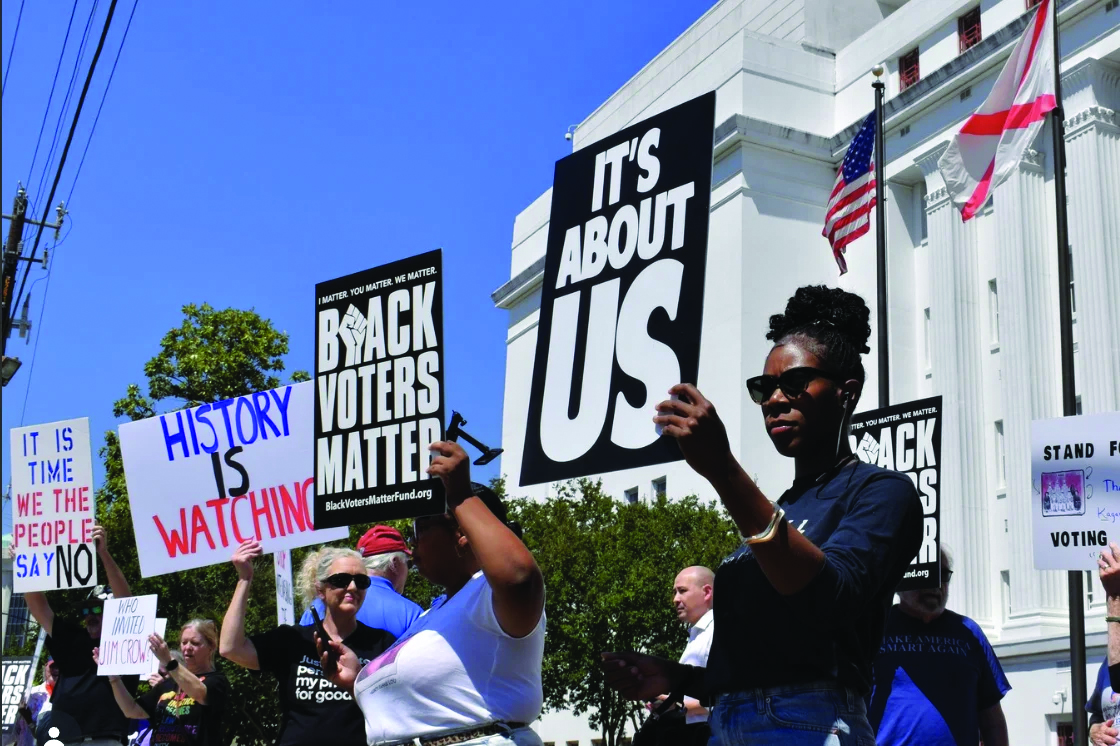
Florida’s newly signed congressional map is reshaping the state’s political landscape, with advocates warning it could alter voting power for years, particularly in Black communities.
Gov. Ron DeSantis signed the map into law on May 4, reworking 21 of Florida’s 28 congressional districts. The rewrite could give Republicans control of 24 U.S. House seats, leaving Democrats with just four, down from their previous eight.
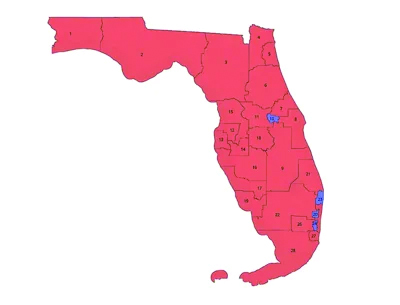
DeSantis argued the map is “race-neutral” and aligns with the recent U.S. Supreme Court decision in Louisiana v. Callais, which narrowed protections under the Voting Rights Act.
Critics argue the map intentionally weakens Black voting power and undermines Florida’s voter-approvedFair Districts Amendment. With federal qualifying approaching in June, South Florida leaders are sounding the alarm.
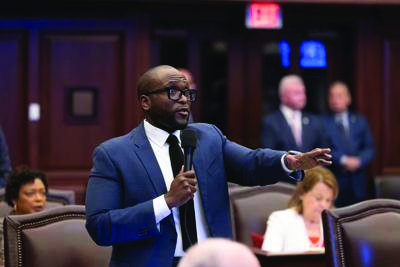
“There’s no such thing as race-neutral. It’s racism. This is a disrespect to Florida voters,” said State Sen. Shevrin Jones, calling the lines illegal and unconstitutional. “In 2010, the Florida voters voted by over 60% to make it known that they did not want partisan gerrymandered maps drawn in our state. The Fair Districts Act is still the law of the land.”
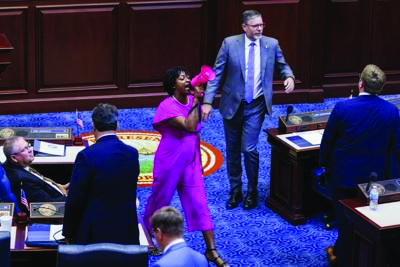
State Rep. Angie Nixon, who is running for U.S. Senate and was sanctionedfor protesting with a megaphone during the redistricting vote, accused DeSantis of overstepping his bounds.
“The governor’s office is not supposed to draw maps. That is what state legislators are supposed to do,” Nixon said.
The effort is part of a nationwide fight to gain control ahead of the midterms, sparked by Texas’ redistricting blitz. The issue will take center stage on Wednesday at Jones’ community strategy session, “The Truth,” which focuses on redistricting, voting rights and political organizing.
There’s no such thing as rac
What changes in South Florida?
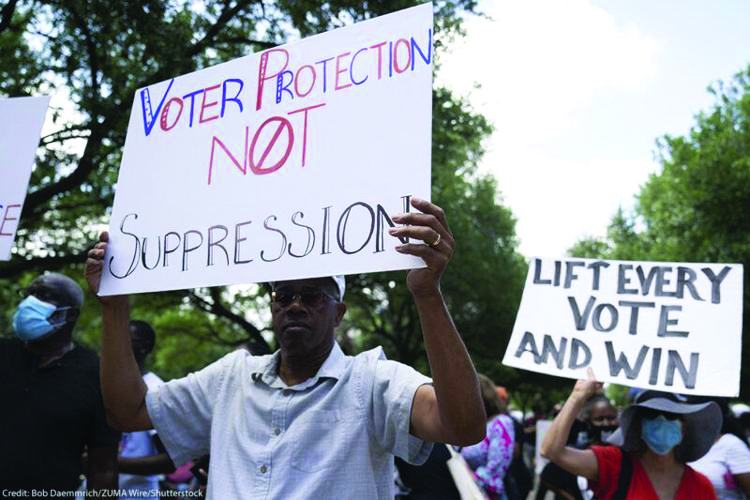
Florida’s new map has redrawn the two Democratic-leaning districts in South Florida represented by Black officials, making nearby districts more competitive for Republicans. This method, known as “packing” and “cracking,” consolidates minority communities to boost majority power.
The most dramatic local change centers on Florida’s 20th Congressional District, a heavily Black district left vacant after Sheila Cherfilus-McCormick’sresignation.
Originally drawn to comply with Voting Rights Act provisions weakened by the Supreme Court in May, Gov. DeSantis dismantled the original Palm Beach-Broward layout, calling it an “egregious race-based gerrymander.” Under the new map, neighborhoods previously in the district are pulled into surrounding white majority districts, “cracking” Black majority areas to weaken their collective voting power.
The new configuration is entirely within Broward County, consolidating cities such as Margate, Tamarac, Lauderhill and Lauderdale Lakes, along with parts of Fort Lauderdale, Coconut Creek, Coral Springs, Deerfield Beach, Plantation, Pompano Beach and Sunrise.
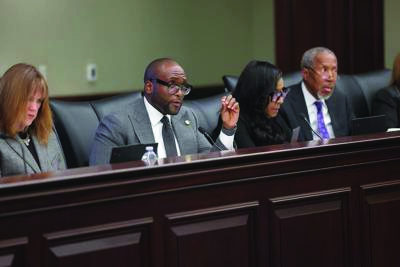
“The Voting Rights Act of 1965 was not a suggestion; these were mandates,” Jones said, linking the changes to a nationwide rollback of civil rights. “Now we’re slipping back into the Jim Crow era. It is a slap in the face to the people who bled and died for the Voting Rights Act.”
NAACP Miami-Dade President Daniella Pierre echoed the concern.
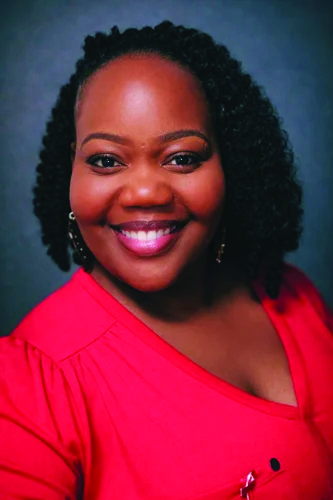
“Historically, that district has had the representation of Black leadership,” said Pierre. “We are concerned these changes may remove the representation that is so needed when it comes to making fair decisions that relate to public policy and Black people.”
Debbie Wasserman Schultz, who represented an area now fractured into five districts and whose old district (FL-25) was assigned to a coastal Palm Beach strip where she does not live, has faced pushbackagainst the possibility of her running in District 20.
Meanwhile, District 24, represented by Frederica Wilson, shifted north into Broward, adding parts of Hollywood while carving out Miami Beach. It remains Democratic-leaning and retains historically Black communities like Miami Gardens and Opa-locka, among others. The district is now more heavily concentrated, or “packed,” with Black voters, ensuring the surrounding districts have larger white majorities.
However, Jones warned that Central Florida’s aggressive map changes prove no region is safe.
“Although Congresswoman Wilson’s district is still a Black district, if they can break up districts like what they did in Orlando and they broke an original metro area district up into four, what makes you think that Miami Gardens is not next on the chopping block?” he asked.
In contrast, Republican-held seats saw minimal disruption. District 26, represented by Mario Diaz-Balart, dropped Collier County to take in parts of Pembroke Pines. Districts 27 and 28, represented by María Elvira Salazar and Carlos Giménez, remained largely unchanged.
Voting power diluted
Civil rights advocates emphasize that the impact of the new map extends far beyond Election Day, threatening the foundational resources of marginalized communities.
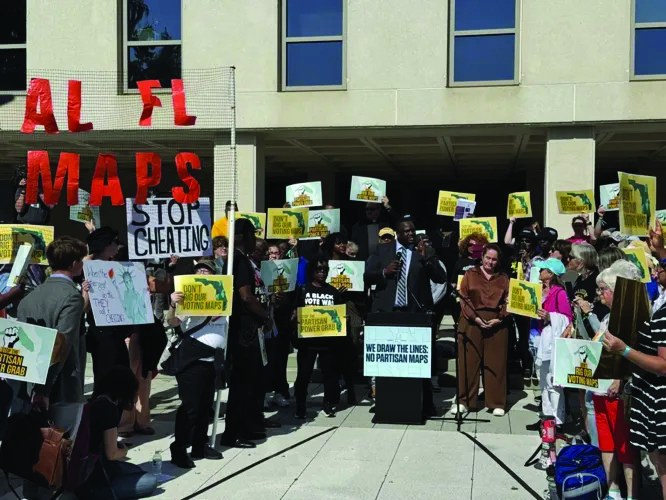
“We are very concerned that the Black vote has been potentially diluted,” Pierre said. “What it looks like is exactly going back to having no representation. That looks like erasing of Black history. That looks like an attack on our democracy.”
Genesis Robinson, executive director of Equal Ground, said communities often disengage when they believe their voting power has been intentionally weakened.
“When you deny an opportunity for communities to have a fair shot, people feel disempowered, and they don’t engage,” Robinson said. “They don’t vote, they don’t participate because the outcome has basically been decided before there’s a chance for them to even cast a vote.”
Jones noted that when representation is weakened, neighborhoods lose leverage to fight for investments.
“When you take people away from the table that look, feel and live like the community, you can start breaking down these communities in real ways,” he said. “In Black communities, we have very little already because of redlining, infrastructure problems — we’re seeing it.”
Nixon echoed these fears, warning that underrepresented communities face direct quality-of-life consequences in healthcare, education and public safety.
“We’re going to see less public education funding because the people who choose to elect them — a lot of them are going to private schools. They don’t need the advocacy,” Nixon said. “Who’s going to advocate for rural hospitals? Who’s going to advocate for the urban core? For health disparities that are running rampant in our communities? We stand to lose services, maybe be over-policed, treated as second- and third-class citizens.”
Litigation underway
As soon as the map was signed into law, lawsuits followed.
Three separate lawsuits have already been consolidated into a single case before Leon County Circuit Judge Joshua Hawkes, a DeSantis appointee, during the first hearing on May 15.
Equal Ground filed the initial 71-page lawsuit, arguing the map openly violates Florida’s Fair Districts Amendment.
“When a shift allows the Republican Party to potentially capture 24 of Florida’s 28 seats, that is a clear violation of the state constitution,” Robinson said.
While recent U.S. Supreme Court decisions weakened portions of the federal Voting Rights Act, Robinson said Florida’s constitutional protections remain separate.
“That’s what is so great about the Fair Districts Amendment,” he said. “People in Florida have a right to self-determine what happens in their state.”
As first reported by Florida Politics, during the May 15 hearing, plaintiffs argued the map’s partisan intent was undeniable, drawn to benefit Republicans and hurt Democrats in the midterm elections this fall. They highlighted Senate testimony from Jason Poreda, the governor’s senior analyst who drew the map, who admitted to using partisan data to craft the boundaries.
Much of the hearing focused heavily on timing. State attorneys argued that throwing out the existing map so close to an election would trigger administrative chaos. Plaintiffs have asked Hawkes to issue an immediate temporary injunction blocking the new map and reinstating the previous boundaries for the 2026 midterm cycle.
The federal candidate qualifying deadline has already been pushed to June 12, with pre-qualifying procedures beginning May 25. Hawkes did not immediately rule and said he would issue a written decision after reviewing transcripts and legal briefs.
Despite the legal uncertainty, local organizers insist the community cannot afford to disengage.
“This is not the time for voter apathy,” Pierre said. “This is the time we need everyone to register and get out the vote.”
Jones plans to use the “The Truth” strategy session — taking place Wednesday, May 20, at 6:30 p.m. at the Little Haiti Cultural Center — to mobilize voters alongside Rep. Nixon, Rep. Ashley Gantt, the NAACP Miami-Dade and Equal Ground.
“Wednesday will not be about talking about the problem,” Jones said. “My goal is that when we walk outside this door, everybody got marching orders of what you can and should be doing from now until the day you die to ensure that we maintain our democracy.”
Asked for a message for voters, he put it bluntly: “We ain’t going back.”